Friday, August 9, 2019

Sunscreen wouldn't have saved Bob Marley from melanoma, and it won't help other dark-skinned people


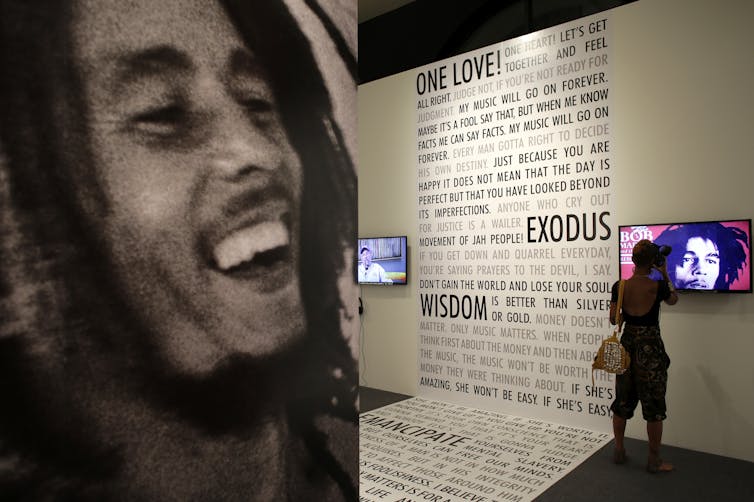
An image of Bob Marley at a Bob Marley Exhibit in Miami Oct. 16, 2013. Lynne Slakdy/AP Photo

Melanoma is a potentially deadly form of skin cancer linked to overexposure to ultraviolet (UV) rays from the sun. Sunscreen can block UV rays and therefore reduce the risk of sun burns, which ultimately reduces the risk of developing melanoma. Thus, the promotion of sunscreen as an effective melanoma prevention strategy is a reasonable public health message.

While this may be true for light-skinned people, such as individuals of European descent, this is not the case for darker skinned people, or individuals of African descent.

The public health messages promoted by many clinicians and public health groups regarding sunscreen recommendations for dark skin people is incongruent with the available evidence. Media messaging exacerbate the problem with headline after headline warning that black people can also develop melanoma and that blacks are not immune. To be sure, blacks can get melanoma, but the risk is very low.

In the same way, men can develop breast cancer, however, we do not promote mammography as a strategy to fight breast cancer in men.

This message is important to me as a black, board certified dermatologist and health services researcher at Dell Medical School at the University of Texas at Austin, where I am director of the pigmented lesion clinic. In this capacity I take care of patients at high risk for melanoma.

Melanoma in black people is not associated with UV exposure

Darker skin provides more protection from damage by the ultraviolet rays of the sun. Spotmatik/Shutterstock.com

In the U.S., melanoma is 20 to 30 times more common among whites compared to blacks.

In blacks, melanoma usually develops in parts of the body that get less sun exposure, such as the palms of the hands and soles of the feet. These cancers are called “acral melanomas,” and sunscreen will do nothing to reduce the risk of these cancers.

When was the last time you had a sunburn on the palms or soles? Even among whites, there is no relationship between sun exposure and the risk of acral melanomas. Famously, Bob Marley died from an acral melanoma on his great toe, but sunscreen would not have helped.

The research on the association of UV radiation and melanoma among blacks is lacking. Most studies assessing the relationship exclude patients of darker skin types. In the largest study of this question to date, no connection was found between UV index or latitude and melanoma among black people.

Racial disparities in melanoma outcomes are not related to UV exposure

Many dermatologists often point out that black patients tend to show up to the doctor with later stage melanoma, which is true. However, this is an issue of access and awareness and has nothing to do with sunscreen application. Black people should be aware of growths on their skin and seek medical attention if they have any changing, bleeding, painful, or otherwise concerning spots, particularly on the hands and feet.

However, the notion that regular application of daily sunscreen will reduce an already extremely rare occurrence is nonsensical.

UV radiation does affect dark skin and can cause DNA damage; however, the damage is seven to eight times lower than the damage done to white skin, given the natural sun-protective effect of increased melanin in darker skin. To be clear, using regular sunscreen may help with reducing other effects of the sun’s rays such as sun burns, wrinkling, photoaging and freckling, which are all positive, but for the average black person sunscreen is unlikely to reduce their low risk of melanoma any further.

If sunscreen was important in the prevention of melanoma in dark-skinned patients, then why have we never heard of an epidemic of melanoma in sub-Saharan Africa, a region with intense sun, a lot of black people, and little sunscreen?

In certain sub populations of black people, such as those with disorders causing sun sensitivity, albino patients, or patients with suppressed immune systems, sunscreen use may reduce risk of melanoma.

But if you don’t fall into one of these categories, any meaningful risk reduction from the application of sunscreen is unlikely.

Melanoma public health messaging must change


Sunscreens have not been shown to protect black skin from melanoma. LightField Studios/Shutterstock

When it comes to the public health message related to sunscreen, skin cancer, and black people a one-size-fits-all approach misses the mark. The facts simply do not add up for the recommendation of sunscreen as prevention of melanoma in black people. Many dermatology and skin cancer focused organizations (a few of which I’m a member), promote the public health message of sunscreen use to reduce melanoma risk among black patients. However, this message is not supported by evidence.

There exists no study that demonstrates sunscreen reduces skin cancer risk in black people. Period.

This issue of regular sunscreen use in black people was made even more pressing after the release of a study last week on sunscreen absorption in the Journal of the American Medical Association. This study showed that significant amounts of certain chemical sunscreen ingredients can get in the blood when used at maximal conditions, with unknown impacts on human health. To me, the most shocking part of the study was that most of the participants were black, the group least likely to derive any meaningful associated health benefits from sunscreen, while being exposed to potentially harmful levels of chemicals.

As dermatologists and public health advocates, we can do a better job educating patients and the public about melanoma prevention, without promoting public health messages that are grounded in fear and/or lack evidence. Black people should be informed that they are at risk of developing melanoma, but that risk is low. 

Any dark skinned person who develops a new, changing or symptomatic mole should see their doctor, particularly if the mole is on the palms or soles. We don’t know what the risk factors are for melanoma in black or dark skinned people, but they certainly are not UV rays.

The Conversation
Adewole S. Adamson, Assistant Professor of Internal Medicine (Division of Dermatology), University of Texas at Austin
This article is republished from The Conversation under a Creative Commons license.

Friday, July 12, 2019

Policing forums demand state of emergency in “gang-infested” areas

Bheki Cele announced on Thursday night that the SANDF would be deployed to several townships on the Cape Flats to assist with policing measures to curb crime

Photo of picketers
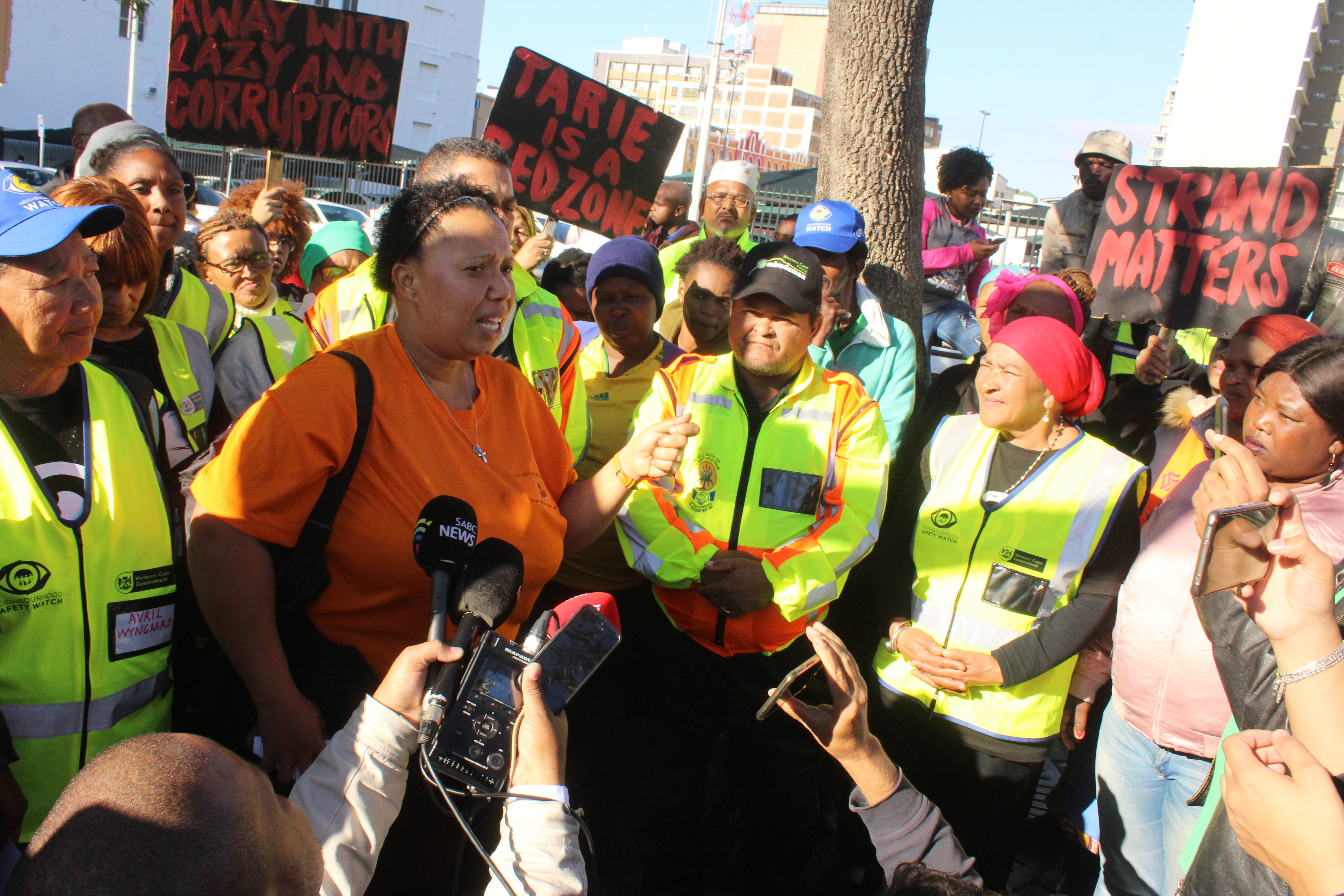
Mitchells Plain Community Policing Forum chairperson, Lucinder Evans (centre in orange), says children were confined to their homes during the recent school holidays because of gang violence in the area. Photo: Velani Ludidi
“We demand that a state of emergency is declared in gang-infested areas,” said Fransina Lukas, chairperson of the Western Cape Community Policing Forum (CPF) board.

On Thursday, Lukas joined over a dozen members of CPFs and neighbourhood watches from across Cape Town to picket outside Parliament ahead of Police Minister Bheki Cele’s budget vote speech.

Hours after the picket, Cele announced that the SANDF would be deployed to support policing in Cape Flats precincts with soaring murder rates and incidents of gang violence.

“All we want is for the government to work with us and include us when making decisions about our communities,” said Lukas. She said the picket was to highlight growing concerns about crime in the province ahead of a crime summit expected to take place in Paarl over the weekend.

Among their demands was for the deployment of additional resources to stabilise gang-ridden areas. The group also said that interventions by all three spheres of government was needed to resolve the problem.

“We demand special courts for gangsters and that there is no bail for people arrested for gang-related activities,” said Lukas. She also called for job creation projects and social development in crime hotspots.

Lucinder Evans, Mitchells Plain CPF cluster chairperson, said children were confined to their homes during the recent school holidays because of shootings in the area. “The municipality must invest in townships not just in rich areas. We want to see cooperation between the Metro police and the South African Police,” she said.

Shanaaz Sullie from Strand said, “We are prisoners in our own homes because of the gangs. No one is safe. All we are asking from the minister and others is that they help us fight this.”

Before dispersing, the group stood in a circle and said a prayer. “God must give us direction now. He [Cele] has been silent and our children are dying like flies,” said CFP member, Dumsani Mziki.

Alvin Rapea, Chief Secretary for Police, accepted the CPFs’ memorandum and promised to deliver it to Cele. Alluding to Cele’s annoucement on the deployment of the army, Rapea told picketers, “Expect a positive response because he has been listening.”

 12 July 2019   By
© 2019 GroundUp.

Sunday, July 7, 2019

“There are only two pit toilets for the whole school,” says Limpopo learner

Premier announces R192-million spend to fix sanitation infrastructure backlog at 100 schools

Photo of learners protesting
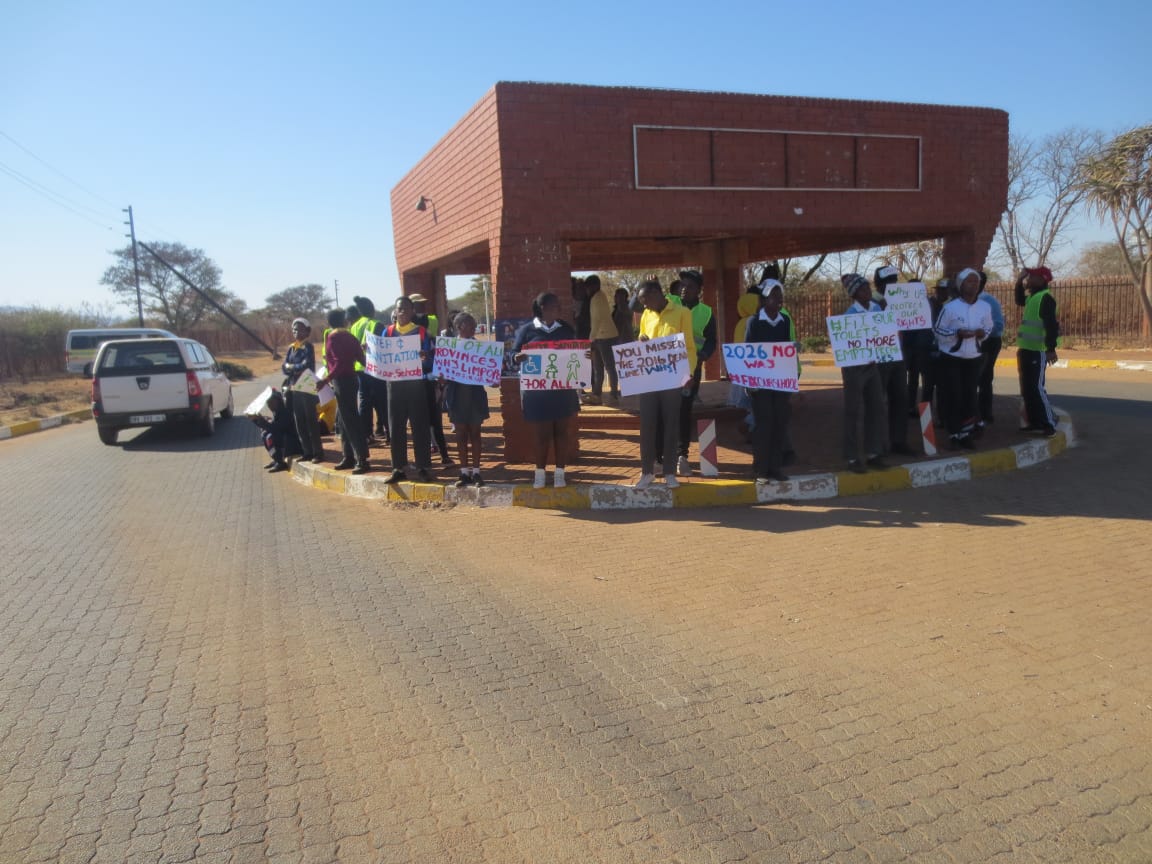
Equal Education (EE) members picket outside the provincial legislature in Limpopo on Friday. They are demanding that government prioritise the provision of water and adequate toilets to schools. Photo: Bernard Chiguvare
A group of 34 Equal Education (EE) members picketed outside the provincial legislature in Limpopo during Premier Stan Mathabatha’s State of the Province Address on Friday. They were demanding that government prioritise the provision of water and adequate toilets to schools.

Early in 2018 SECTION27 took the Limpopo Education Department to court on behalf of the parents of five-year-old Michael Komape, who drowned after falling into a dilapidated pit latrine at his school in January 2014.

But in April 2018, four years after Michael’s death, the judge in the Komape case ordered the department to give the court “a list containing names and locations of all the schools in rural areas [of Limpopo province] with pit toilets for use by the learners”.

In April this year, learners from the Rivoni School for the Blind in Elim blockaded roads after their complaints about broken toilets and showers went unanswered.

During his speech on Friday, Mathabhatha announced that R192 million would be spent to “address the backlog of school sanitation infrastructure in 100 schools across the province”.

Outside, learners and EE supporters chanted and held up posters. “There are only two pit toilets for the whole school. So during break time, there is a long queue,” said a grade 12 learner at Seipone Secondary.

EE member Sibongile Teffo said, “We are picketing to remind Premier Mathabhatha about the state of toilets and access to water at schools in the province and that the department [of education] should meet the [Norms and Standards for School Infrastructure] deadline in November 2020.”

In a statement, Equal Education said, “We are appalled at the Limpopo Department of Education’s ‘plan’ to fix school toilets. The ‘plan’ submitted by the provincial department and the Department of Basic Education (DBE) to the Polokwane High Court, in accordance with an order of court in the Michael Komape case, is an insult to Limpopo learners and teachers.”

 5 July 2019   By
© 2019 GroundUp

Happiness may be a choice – except that it's constrained by vested economic interests


Shutterstock

Our knowledge about what it is that people need to feel happy and satisfied with in their lives keeps growing, yet the extent to which people actually feel happy and satisfied with their lives has largely stagnated. There might be small shifts each year that may enable one country to claim it is “happier” than another, but these shifts rest on narrow definitions of happiness and are rarely the result of government policies that would warrant any real celebration.

Decades of research into happiness and well-being have shown us that the key determinants of well-being are the quality of our relationships, mental and physical health, our capacity to meet basic needs, social and emotional skills, having a purpose in life, and stability. More money, beyond the point of meeting basic needs, rarely brings that much extra happiness.

Yet it is economic growth that nearly always takes policy precedence. And this concern for the economy often fails to account for economic injustices and the ever mounting climate crisis that will undermine the well-being of future generations.

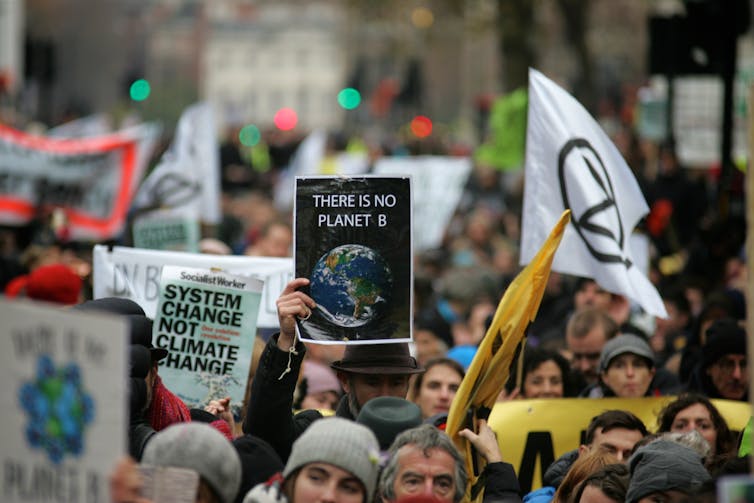
Climate change will massively affect our future happiness. Rupert Rivett/Shutterstock.com

Some might believe that happiness and well-being are purely a matter of personal choice. Yes, a person might be able to “choose” a different lifestyle, or to look at their unchangeable life circumstances differently, to enable them to experience more happiness and greater well-being. But our societies rarely facilitate making these choices. Nor do they instil us with many life skills that may help us perceive our life circumstances in a different way.

Our choices are instead constrained by the needs of the economy. We are constantly encouraged to buy things that will not fulfil our deepest human needs, we may face the stark choice of working very long, sometimes irregular, hours, or having no job at all, and we are compelled to learn things for the sake of productivity and not our passions.

Over to Bhutan

There is never an easy path to happiness. Even for those with less acute economic pressures there is struggle. Yet could we create societies that are more supportive in helping us all live lives that bring greater well-being? I spent more than ten years carrying out research into happiness and well-being, and I believe so.

Most of my research has focused on the relationship between the economy and well-being. I argued, backed up with evidence, that by aspiring to ever higher incomes – at both an individual and societal level – in the hope of obtaining greater happiness, we may end up sacrificing the very things that would bring us greater happiness.

In my last job I faced my own struggle to improve my personal well-being. I recognised that even for me, the happiness and well-being researcher, it wasn’t easy to make those choices I knew would give me a more fulfilling life. My work environment didn’t actively support my ability to do so.

Read more: Why I quit my day job researching happiness and started cycling to Bhutan

Instead, there was constant pressure to perform, and even though I was successful at what I did in a narrow measurable way that kept my employer “happy” – publishing regularly and obtaining research funds – I knew I would need to look elsewhere if I wanted to be happier. That’s why in October 2017 I decided to quit my job and begin cycling to Bhutan.

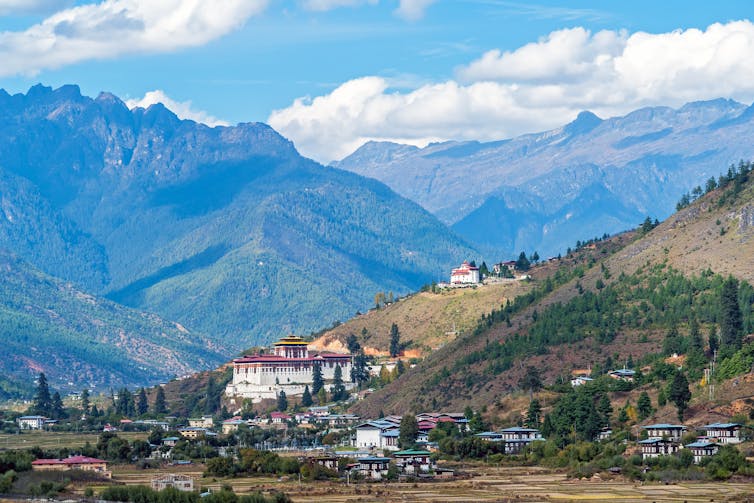
Bhutan: where happiness is valued more than GDP growth. Shutterstock

I wanted to do something more meaningful to me than writing another academic paper. I wanted understand more deeply how other countries value happiness and well-being. I wanted to learn about Bhutan, a country that has eschewed international economic agendas to develop its own notion of sustainable development based around happiness and well-being of all its citizens.

But I also wanted to travel to Bhutan in a way that supported the well-being of others and myself, so I cycled most of the way to limit my carbon footprint. And I visited places en route where people are not completely dominated by economic demands. For example Costa Rica, where there is a national pride in being able to live happily and healthily with less. Canada, which has one of the most progressive indicators of national well-being. And Vietnam, which might actually be the least underdeveloped country in the world if we were to consider modern notions of development.

Choice at every level of society

These countries are this way not by accident, but because of choice. In 1948 in Costa Rica, then president, José Figueres Ferrer abolished the military and used the saved resources to invest more fully in health and education. In 1972 in Bhutan, King Jigme Singye Wangchuck declared that “Gross National Happiness is more important than Gross National Product”. In a citizen-driven initiative, which began in 1999-2000, Canadians were given the chance to identify what constituted quality of life to them.

These were progressive choices; choices made by people in influential positions. It sits in stark contrast to the choices that have been made, and continue to be made, by influential others elsewhere to largely suit vested economic interests. Choices that ultimately put the economy, rather than people’s happiness, first.

There is, however, hope. I arrived back in Scotland in April 2019 after 18-months and more than 10,000 miles on a bicycle. The Well-being Economy Alliance, a group of countries committed to creating economies focused on sustainable well-being, of which Scotland plays an important part, is generating traction.

Care for the climate will require changes that simultaneously improve our well-being now and in the future and, thanks to activism, the climate crisis is firmly on the agenda. There is a growing awareness that many people care more about economic and social justice than economic growth. We are beginning to see through old misleading beliefs about consumption. If we want to live happier and more fulfilling lives it is time for everyone, at every level of society, to make different choices.

The Conversation

Christopher Boyce, Honorary Research Associate at the Behavioural Science Centre, University of Stirling
This article is republished from The Conversation under a Creative Commons license.