Tuesday, July 21, 2020

Arguments why God (very probably) exists


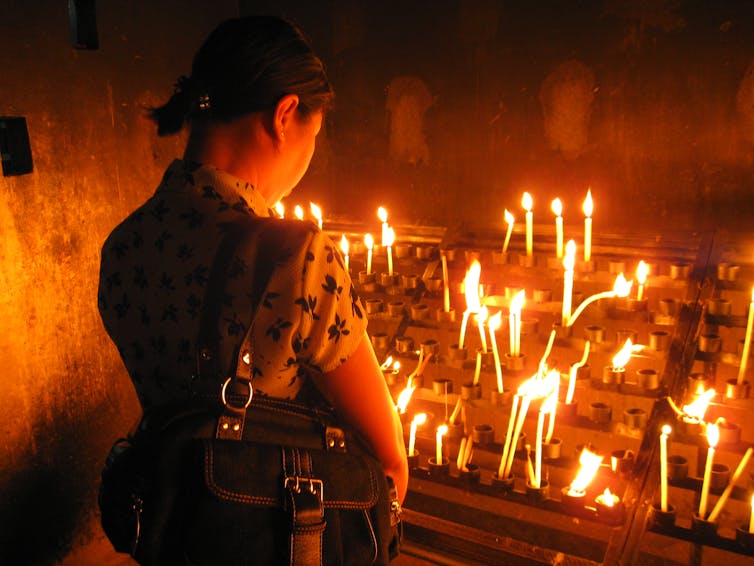
Does God exist? Michael Peligro, CC BY-ND

Note from Editor of The Conversation US: This is a revised version of the original piece. We have done so to make explicit the author’s expertise with regard to the subject of this article. We have also incorporated important context that was missing in the original version.

The question of whether a god exists is heating up in the 21st century. According to a Pew survey, the percent of Americans having no religious affiliation reached 23 percent in 2014. Among such “nones,” 33 percent said that they do not believe in God – an 11 percent increase since only 2007.

Such trends have ironically been taking place even as, I would argue, the probability for the existence of a supernatural god have been rising. In my 2015 book, “God? Very Probably: Five Rational Ways to Think about the Question of a God,” I look at physics, the philosophy of human consciousness, evolutionary biology, mathematics, the history of religion and theology to explore whether such a god exists. I should say that I am trained originally as an economist, but have been working at the intersection of economics, environmentalism and theology since the 1990s.

Laws of math

In 1960 the Princeton physicist – and subsequent Nobel Prize winner – Eugene Wigner raised a fundamental question: Why did the natural world always – so far as we know – obey laws of mathematics?

As argued by scholars such as Philip Davis and Reuben Hersh, mathematics exists independent of physical reality. It is the job of mathematicians to discover the realities of this separate world of mathematical laws and concepts. Physicists then put the mathematics to use according to the rules of prediction and confirmed observation of the scientific method.

But modern mathematics generally is formulated before any natural observations are made, and many mathematical laws today have no known existing physical analogues.
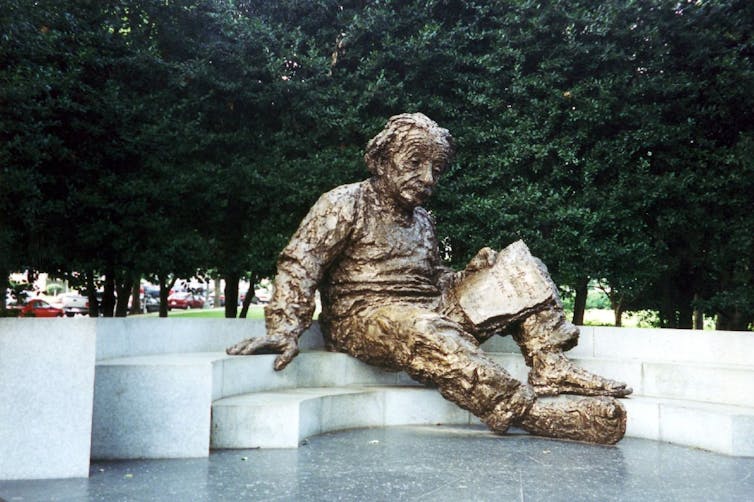
Einstein Memorial, National Academy of Sciences, Washington, D.C. Wally Gobetz, CC BY-ND

Einstein’s 1915 general theory of relativity, for example, was based on theoretical mathematics developed 50 years earlier by the great German mathematician Bernhard Riemann that did not have any known practical applications at the time of its intellectual creation.

In some cases the physicist also discovers the mathematics. Isaac Newton was considered among the greatest mathematicians as well as physicists of the 17th century. Other physicists sought his help in finding a mathematics that would predict the workings of the solar system. He found it in the mathematical law of gravity, based in part on his discovery of calculus.

At the time, however, many people initially resisted Newton’s conclusions because they seemed to be “occult.” How could two distant objects in the solar system be drawn toward one another, acting according to a precise mathematical law? Indeed, Newton made strenuous efforts over his lifetime to find a natural explanation, but in the end he could say only that it is the will of God.

Despite the many other enormous advances of modern physics, little has changed in this regard. As Wigner wrote, “the enormous usefulness of mathematics in the natural sciences is something bordering on the mysterious and there is no rational explanation for it.”

In other words, as I argue in my book, it takes the existence of some kind of a god to make the mathematical underpinnings of the universe comprehensible.

Math and other worlds

In 2004 the great British physicist Roger Penrose put forward a vision of a universe composed of three independently existing worlds – mathematics, the material world and human consciousness. As Penrose acknowledged, it was a complete puzzle to him how the three interacted with one another outside the ability of any scientific or other conventionally rational model.

How can physical atoms and molecules, for example, create something that exists in a separate domain that has no physical existence: human consciousness?

It is a mystery that lies beyond science.
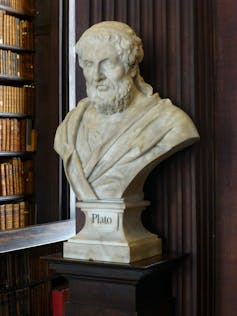
Plato. Elizabethe, CC BY-NC-ND

This mystery is the same one that existed in the Greek worldview of Plato, who believed that abstract ideas (above all mathematical) first existed outside any physical reality. The material world that we experience as part of our human existence is an imperfect reflection of these prior formal ideals. As the scholar of ancient Greek philosophy, Ian Mueller, writes in “Mathematics And The Divine,” the realm of such ideals is that of God.

Indeed, in 2014 the MIT physicist Max Tegmark argues in “Our Mathematical Universe” that mathematics is the fundamental world reality that drives the universe. As I would say, mathematics is operating in a god-like fashion.

The mystery of human consciousness

The workings of human consciousness are similarly miraculous. Like the laws of mathematics, consciousness has no physical presence in the world; the images and thoughts in our consciousness have no measurable dimensions.

Yet, our nonphysical thoughts somehow mysteriously guide the actions of our physical human bodies. This is no more scientifically explicable than the mysterious ability of nonphysical mathematical constructions to determine the workings of a separate physical world.

Until recently, the scientifically unfathomable quality of human consciousness inhibited the very scholarly discussion of the subject. Since the 1970s, however, it has become a leading area of inquiry among philosophers.

Recognizing that he could not reconcile his own scientific materialism with the existence of a nonphysical world of human consciousness, a leading atheist, Daniel Dennett, in 1991 took the radical step of denying that consciousness even exists.

Finding this altogether implausible, as most people do, another leading philosopher, Thomas Nagel, wrote in 2012 that, given the scientifically inexplicable – the “intractable” – character of human consciousness, “we will have to leave [scientific] materialism behind” as a complete basis for understanding the world of human existence.

As an atheist, Nagel does not offer religious belief as an alternative, but I would argue that the supernatural character of the workings of human consciousness adds grounds for raising the probability of the existence of a supernatural god.

Evolution and faith

Evolution is a contentious subject in American public life. According to Pew, 98 percent of scientists connected to the American Association for the Advancement of Science “believe humans evolved over time” while only a minority of Americans “fully accept evolution through natural selection.”

As I say in my book, I should emphasize that I am not questioning the reality of natural biological evolution. What is interesting to me, however, are the fierce arguments that have taken place between professional evolutionary biologists. A number of developments in evolutionary theory have challenged traditional Darwinist – and later neo-Darwinist – views that emphasize random genetic mutations and gradual evolutionary selection by the process of survival of the fittest.

From the 1970s onwards, the Harvard evolutionary biologist Stephen Jay Gould created controversy by positing a different view, “punctuated equilibrium,” to the slow and gradual evolution of species as theorized by Darwin.

In 2011, the University of Chicago evolutionary biologist James Shapiro argued that, remarkably enough, many micro-evolutionary processes worked as though guided by a purposeful “sentience” of the evolving plant and animal organisms themselves. “The capacity of living organisms to alter their own heredity is undeniable,” he wrote. “Our current ideas about evolution have to incorporate this basic fact of life.”

A number of scientists, such as Francis Collins, director of the U.S. National Institutes of Health, “see no conflict between believing in God and accepting the contemporary theory of evolution,” as the American Association for the Advancement of Science points out.

For my part, the most recent developments in evolutionary biology have increased the probability of a god.

Miraculous ideas at the same time?

For the past 10,000 years at a minimum, the most important changes in human existence have been driven by cultural developments occurring in the realm of human ideas.

In the Axial Age (commonly dated from 800 to 200 B.C.), world-transforming ideas such as Buddhism, Confucianism, the philosophies of Plato and Aristotle, and the Hebrew Old Testament almost miraculously appeared at about the same time in India, China, ancient Greece and among the Jews in the Middle East, groups having little interaction with one another.
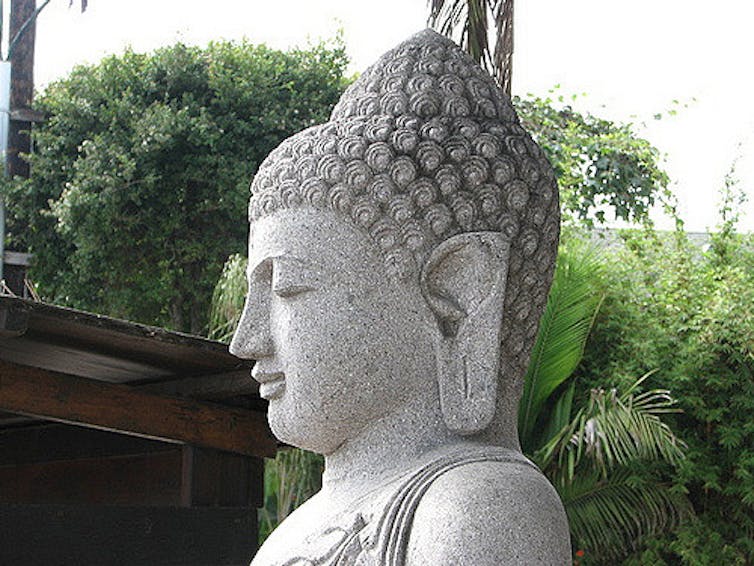
Many world-transforming ideas, such as Buddhism, appeared in the world around the same time. Karyn Christner, CC BY

The development of the scientific method in the 17th century in Europe and its modern further advances have had at least as great a set of world-transforming consequences. There have been many historical theories, but none capable, I would argue, of explaining as fundamentally transformational a set of events as the rise of the modern world. It was a revolution in human thought, operating outside any explanations grounded in scientific materialism, that drove the process.

That all these astonishing things happened within the conscious workings of human minds, functioning outside physical reality, offers further rational evidence, in my view, for the conclusion that human beings may well be made “in the image of [a] God.”

Different forms of worship

In his commencement address to Kenyon College in 2005, the American novelist and essayist David Foster Wallace said that: “Everybody worships. The only choice we get is what to worship.”

Even though Karl Marx, for example, condemned the illusion of religion, his followers, ironically, worshiped Marxism. The American philosopher Alasdair MacIntyre thus wrote that for much of the 20th century, Marxism was the “historical successor of Christianity,” claiming to show the faithful the one correct path to a new heaven on Earth.

In several of my books, I have explored how Marxism and other such “economic religions” were characteristic of much of the modern age. So Christianity, I would argue, did not disappear as much as it reappeared in many such disguised forms of “secular religion.”

That the Christian essence, as arose out of Judaism, showed such great staying power amidst the extraordinary political, economic, intellectual and other radical changes of the modern age is another reason I offer for thinking that the existence of a god is very probable.The Conversation

Robert H. Nelson, Professor of Public Policy, University of Maryland

This article is republished from The Conversation under a Creative Commons license.

South Africa is failing on COVID-19 because its leaders want to emulate the First World


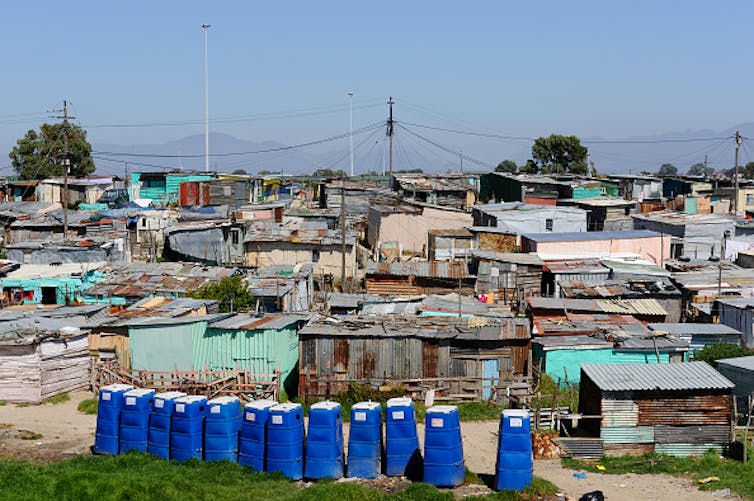
The township of Khayelitsha in Cape Town. South Africa has adopted First World COVID-19 responses for Third World reality.

COVID-19 infections are rising sharply in South Africa – and Latin America. This is fitting: South Africa resembles the countries of South America more than those of its home continent.

It has become common to point out that COVID-19 has highlighted South Africa’s inequalities. It is less common, but just as important, to recognise that inequality shapes how the country is governed, ensuring that, while South Africa is located in Africa, those who govern it may be closer to their counterparts in Latin America.

The first reason South Africa has been unable to stem the tide of infections is that its strategy always assumed a severe epidemic was inevitable. It is hard to fight anything if you assume you are bound to lose. This followed advice from South Africa’s medical scientists, almost all of whom embrace this view despite the fact that scientists in other parts of the world have helped to prevent great damage.

Why is this? Possibly because their points of comparison on the pandemic were not Asia and parts of Africa where infections were curbed, but the rich countries of the global North, many of which were overwhelmed. They also probably assumed that while some countries might be able to prevent a severe outbreak, South Africa could not.

If so, this would reveal a common way of thinking in South Africa: the belief that the country must compare itself to the rich countries of the North – but that it will never match up.

Capacity problems

This pessimism is born of the view that South Africa’s government has very limited capacity. The failure to curb COVID-19 does show glaring capacity gaps. But the problem is not, as critics usually assume, a lack of technical know-how. It is, rather, a particular view of the world and the difficult relationship between those who govern and the governed.

Despite appearing to give up before the fight began, South Africa could have contained COVID-19 had it done what its government said it would do: create an effective testing and tracing programme which would identify people with the virus, trace their contacts and isolate them if they were infected.

The government likes to boast about the large number of tests its many community health workers have conducted. It talks much less about why testing has not stemmed the virus: a bottleneck at the National Health Laboratory Service, which supports provincial and national government health departments.

In May, doctors complained that it took on average a week to receive COVID-19 test results for outpatients and three to four days for patients in hospitals. Other doctors reported cases in which it took weeks to receive results. At the end of May, Gauteng, the country’s economic hub, was waiting for test results for over 20,000 people.

Testing can contain COVID-19 only if results are received speedily so that the contacts of infected people can be traced. The laboratory backlog meant that testing and tracing could not work no matter how many tests were conducted and how many health workers were hired.

This seems to be an obvious technical failure. Some test results were, according to doctors, lost, which seems to show that the lab was simply not up to the task. But the real problem may be that the government put far too much faith in a high-tech laboratory which was, because too much was expected of it, simply overwhelmed (hence the lost results).

By contrast, Senegal, a far poorer country, knowing that it had no laboratory service that could have coped, developed a test which cost only $1 and produced results very quickly.

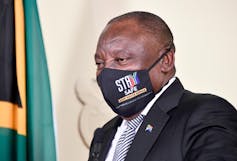
South African President Cyril Ramaphosa.

So, South Africa believed it had capacity which it lacked. It also assumed that a laboratory which operated like those in rich countries was the most effective way to test for COVID-19. And so, unlike Senegal, it failed to come up with a solution fitted to its needs. Again, the desire to be like the North made it impossible to contain the virus.

Elitist approach

The second problem is that the behaviours which are needed to stem COVID-19 are very difficult for most South Africans – those who live in the formerly blacks-only urban townships and in shack settlements. Overcrowding makes physical distancing very hard, clean water may not be available for hand washing and people are forced to travel in full minibus taxis.

The government could have overcome these problems if it had chosen to work with people in these areas to find ways to protect themselves. But it did not try – it relied on instructing people to do things they clearly could not do.

To South Africa’s elite, of which the government is now a part, people in low-income townships lack sophistication and maturity: poverty is confused with inability. And so there is no point in working with them.

The problem here is the government’s lack of political capacity, its inability to form a relationship with voters which would enable them to work together against a common threat.

Why is South Africa governed this way? Unlike other sub-Saharan African countries and like several Latin American countries, South Africa is both “First World” and “Third World”. A significant section of its people lives like, and measure themselves by the standards of, the affluent in North America and Western Europe.

This is why it has facilities other African countries lack and why it insists on relying on them.

People who live in “First World” conditions also find it much easier to lobby politicians. That is why the government’s claim that it would be guided only by the science of COVID-19 collapsed as lobby groups persuaded it to open activities which allowed the virus to spread.

But most people live in the same conditions as the poor of the “Third World”. Facilities designed for the “First World” one-third of the population cannot meet the needs of the other two-thirds. The elite’s deep admiration for the “First World” ensures that the government always wants to rely on what works only for the one-third because only this is “respectable”.

The issue is not that many South Africans are wealthy and live well – so do elites in other African countries. It is that the country is divided into two worlds. An entire economy and social system serves one-third of the people and excludes the rest from its benefits. This shapes attitudes as well as who gets what. The government may be elected by people outside the charmed circle but it is a product of it, hence its response to COVID-19.

Exceptionalism

Another consequence, common to South Africa and much of Latin America, is that those who live in “First World” conditions tend to see those who don’t as people who have not attained their exalted standards: they must be told what to do and controlled if they do not listen. Working with the majority to fight the virus isn’t possible when they are seen as “backward” embarrassments.

Many South Africans like to think the country is unique in sub-Saharan Africa. Its contrasts of wealth and poverty certainly are one of a kind. Its response to COVID-19 shows how much this prevents the government from doing what it needs to do.The Conversation

Steven Friedman, Professor of Political Studies, University of Johannesburg

This article is republished from The Conversation under a Creative Commons license.

Monday, May 11, 2020

Lockdown is riling black and white South Africans: could this be a reset moment?


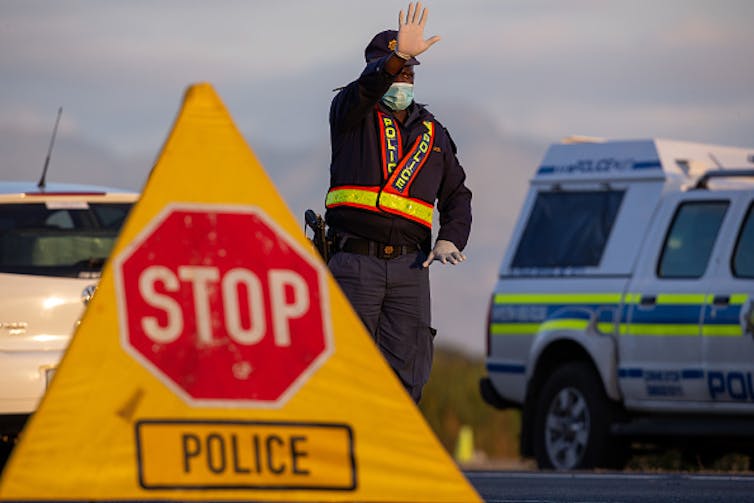
A police officer at a 24-hour roadblock in Cape Town, South Africa after the country went into lockdown. Photo by Roger Sedrus/Gallo Images via Getty Images

The South African government seems to have gone from an absence of data coupled to a firm but sensible strategy of lockdown to delay the pain of COVID-19, to a multitude of inputs and a seemingly cavalier attitude to the restrictions.

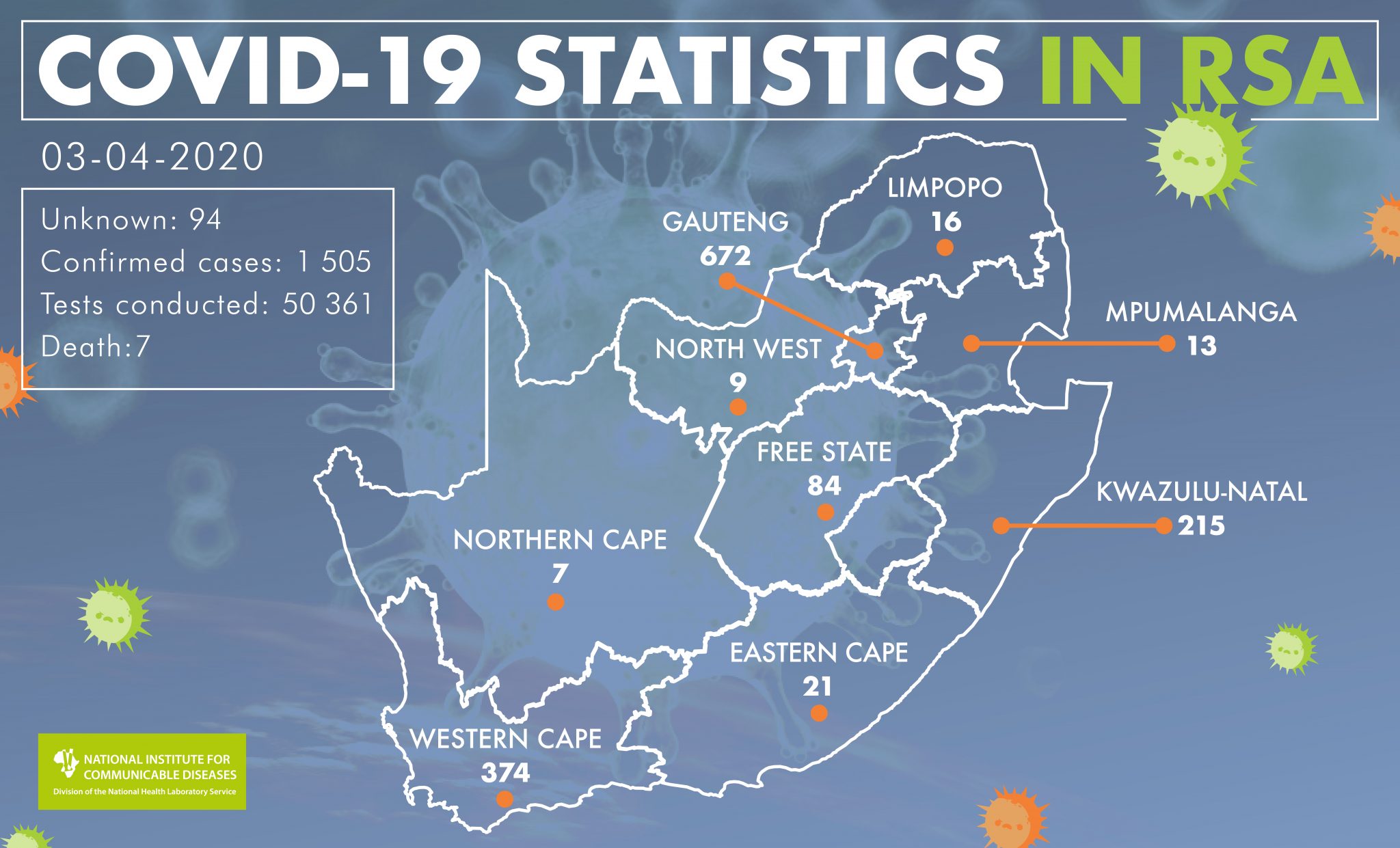
Statistics South Africa has submitted data on how the pandemic has devastated the country’s economy. Data from the Human Sciences Research Council points to overwhelming compliance with the restrictions by citizens, while regular updates by the National Institute for Communicable Diseases show the rates of infection continue to grow unabated.

Academics and NGOs have done the same, focusing primarily on the economy and poor people in particular. Many others have followed, with data or models or both.

In response, government developed a five-stage, evidence-informed strategy. This approach is meant to ease the lockdown, in place since 27 March, by assessing levels and sites of risk and adjusting accordingly. Government, and President Cyril Ramaphosa in particular, initially won global praise for their response to COVID-19 and apparent reliance on science to guide them. That was then.

Something has changed – the government or citizens?

Capriciousness

It is remarkable how quickly South Africans have lost the sense of camaraderie and support for a strong leader, and begun to complain rather about crypto-fascist authoritarianism. This was exacerbated by government as it introduced a “Stage 4” that was meant to be lighter than “Stage 5”.

It came with 73,000 more soldiers to help the police manage the new 8pm-5am curfew. So far, they have beaten up, threatened and intimidated innocent people, even killing a man. Citizens were permitted a “bonus” of three hours of exercise between 6am and 9am, making social distancing rather challenging.

On 1 May, when the relaxed restrictions kicked in, the roads were full of runners, walkers, shufflers, cyclists in their spandex, and dogs of every type. As he faced a sea of (mainly) white faces jogging on Cape Town’s Promenade, Police Minister Bheki Cele threatened:

I saw this thing of running, I think we will be making some form of recommendation to the National Command Council about it.

He added:

I saw … people running in clubs, walking with their dogs and they were even swimming – something that is [criminalised] in the regulations…

And in case anyone was in doubt about who had power, he added: “we can forget about Level 3” because such terrible behaviour meant citizens did not “deserve” it.

It is that final throw-away line that grates. This is not for citizens to “earn” or “deserve” because they behave well, it is meant to be a science-driven risk-based analysis that determines stages 1-5. But now it smacks of capriciousness, with more than a hint of pay-back.


Read more: South Africa's response to COVID-19 worsens the plight of waste reclaimers


South Africans – regardless of race or class – picked this up as they watched Cooperative Governance Minister Nkosazana Dlamini-Zuma announce the reversal of a promise of tobacco sales being allowed under “Stage 4”, made earlier by President Ramaphosa. Similar to Cele telling them whether they “deserve” stage 3 or not.

Virtually all research into racial attitudes in South Africa has shown racial differentiation growing. This was most easily shown in the 2019 elections. These differences seem increasingly to be replaced by a shared hostility towards an ANC government that appears to be making rules up as they feel like it, and whose own ministers clearly feel above COVID-19 – and above citizens.

Throwback to an inglorious past

Are citizens protected by evidence-based interventions, or are they being jerked around by mean-spirited politicians?

If the country steps back, is there not something worth learning now, particularly for white South Africans?

Think about it. You can’t go to work or school or to the park unless government says you can. Your freedom of movement is severely limited. You’re told when you’re allowed out, and you are supposed to have a permit akin to a dompas (dumb pass), to prove you’re legally out. (The dompas was the demeaning identity document all black people were required to carry during apartheid rule, which controlled their movements.)


Read more: South Africa needs to end the lockdown: here's a blueprint for its replacement


And the troops and police are there to ensure you obey, or beat the hell out of you. Your behaviours are deemed foreign, not normal. You can only enter certain shops, and only after you are sanitised (because you may be dirty or a vector of disease) and you can’t buy alcohol or cigarettes. And other than a small handful, your work is not essential and government will decide for you if you can work or not.

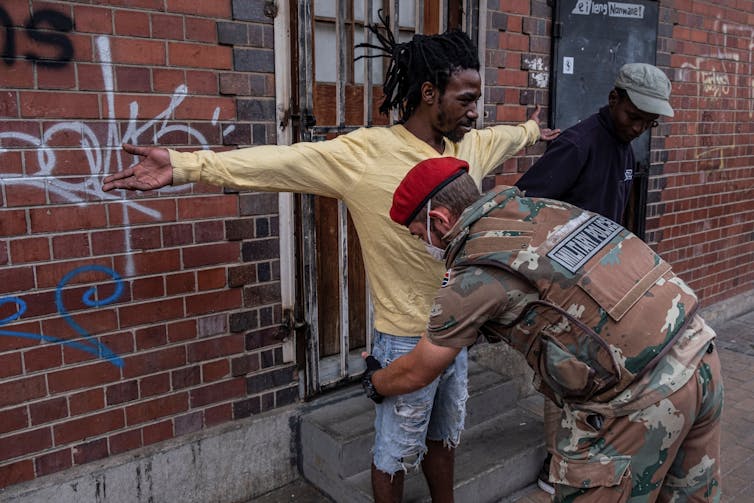
A South African military Police officer enforces the nationwide COVID-19 lockdown. Emmanuel Croset / AFP) via Getty Images

White South Africans right now have a rather comfortable, tiny insight into what life under apartheid was like. It can be a powerful moment to empathise with what it was like to be black under apartheid – and this time, blacks and whites are all being treated the same.

They are all irritated by a government that seems bent on exercising power in small, nasty ways. That’s why this can be a great moment, because black and white South Africans really are all in this together, and they all increasingly dislike their government together.

If white people can stop acting as if they are individually and personally being attacked, and understand the shared nature of both unhappiness and anger, there is real potential for some (much delayed) healing.

As the global economy tanks, whites with retirement policies and shares and businesses are being hit in the pocket. Society and the economy, they are told, are never going back to normal – they have to reset in different, as yet unknown ways.

Can they?

Never waste a good crisis

If South Africa has to reset, can its people – consciously and together – treat this as the real “miracle” moment? A lot of good work has been done since apartheid, which advantaged the white minority to the detriment of the black majority, ended in 1994. Millions of people now have clean water, water-borne sewerage, electricity, tarred roads, street lights and the like. Quite a few more have tertiary education, and some have wealth.

According to most studies, reconciliation has not fared well. Racism, racial redress and patronage have made short work of the noble goals of the early 1990s.

We should see the last 26 years as South Africans’ infrastructural investment for the real “new South Africa” to be able to emerge.

If we assume that the society matters more than simply repeating “it’s the economy, stupid!”, now is the chance to be different, and to reset to a new social reality. Wealth has been destroyed by COVID-19, and it has laid bare the lines of inequality for all to see. So, talk of a wealth tax sounds rational, not punitive, in the post-COVID-19 context.


Read more: Coronavirus: why South Africa needs a wealth tax now


South Africans can come out of lockdown as a more empathetic and united people – even if united in irritation or anger at a capricious government that seems to regard evidence-based decision-making as meaning regulations chop and change according to ministerial whim.

Can they use this moment to look beyond “race” and see a shared humanity?

It is rare that any post-authoritarian society gets two chances to reconcile. This may be just that, for white South Africans in particular.The Conversation

David Everatt, Professor, University of the Witwatersrand

This article is republished from The Conversation under a Creative Commons license.
Shipwrecked! How social isolation can enrich our spiritual lives – like Robinson Crusoe


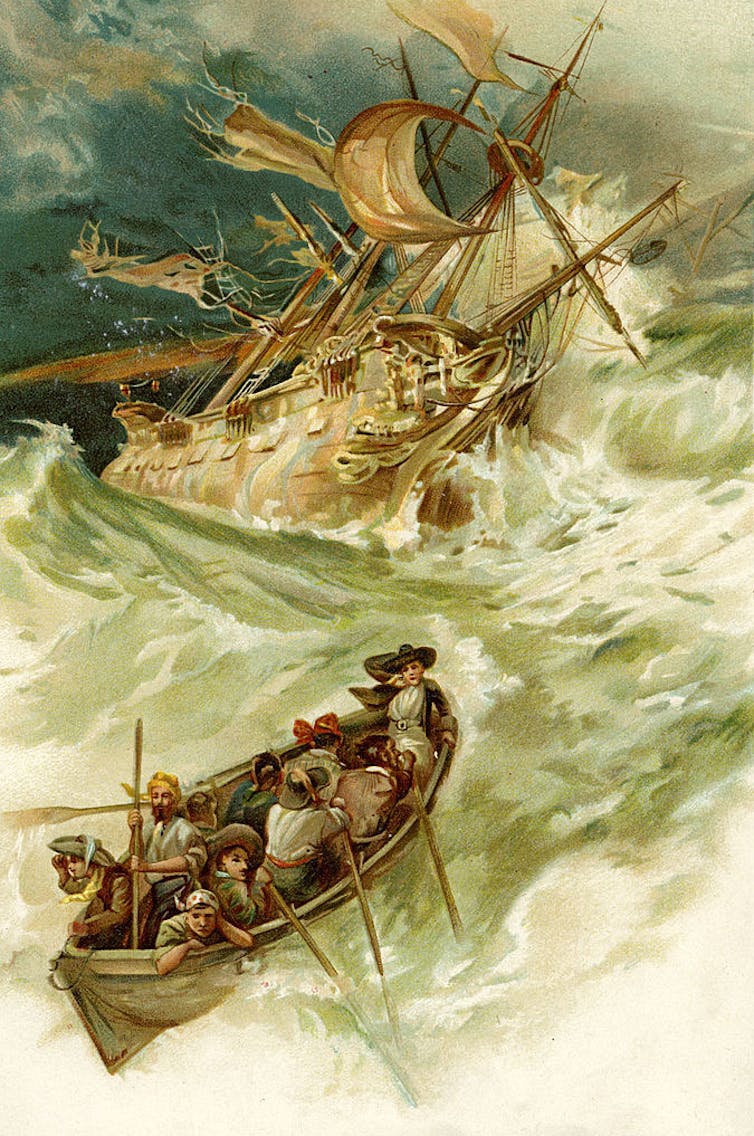
Nearly lost at sea, Robinson Crusoe lands on an island only to reckon with isolation, solitude and his own life. Culture Club/Hulton Archive via Getty Images

He survived the last great plague in London and the city’s Great Fire. He was imprisoned and persecuted for his religious and political views. There was no happy ending for the journalist Daniel Defoe, author of “A Journal of a Plague Year.” When he died in 1731, he was mired in debt and hiding from his creditors.

Yet Defoe, born in 1660, left behind a work of fiction that is one of the most widely published books in history and – other than the Bible – the most translated book in the world. Like many great works of fiction, it speaks across centuries, especially now as we face the COVID-19 pandemic.

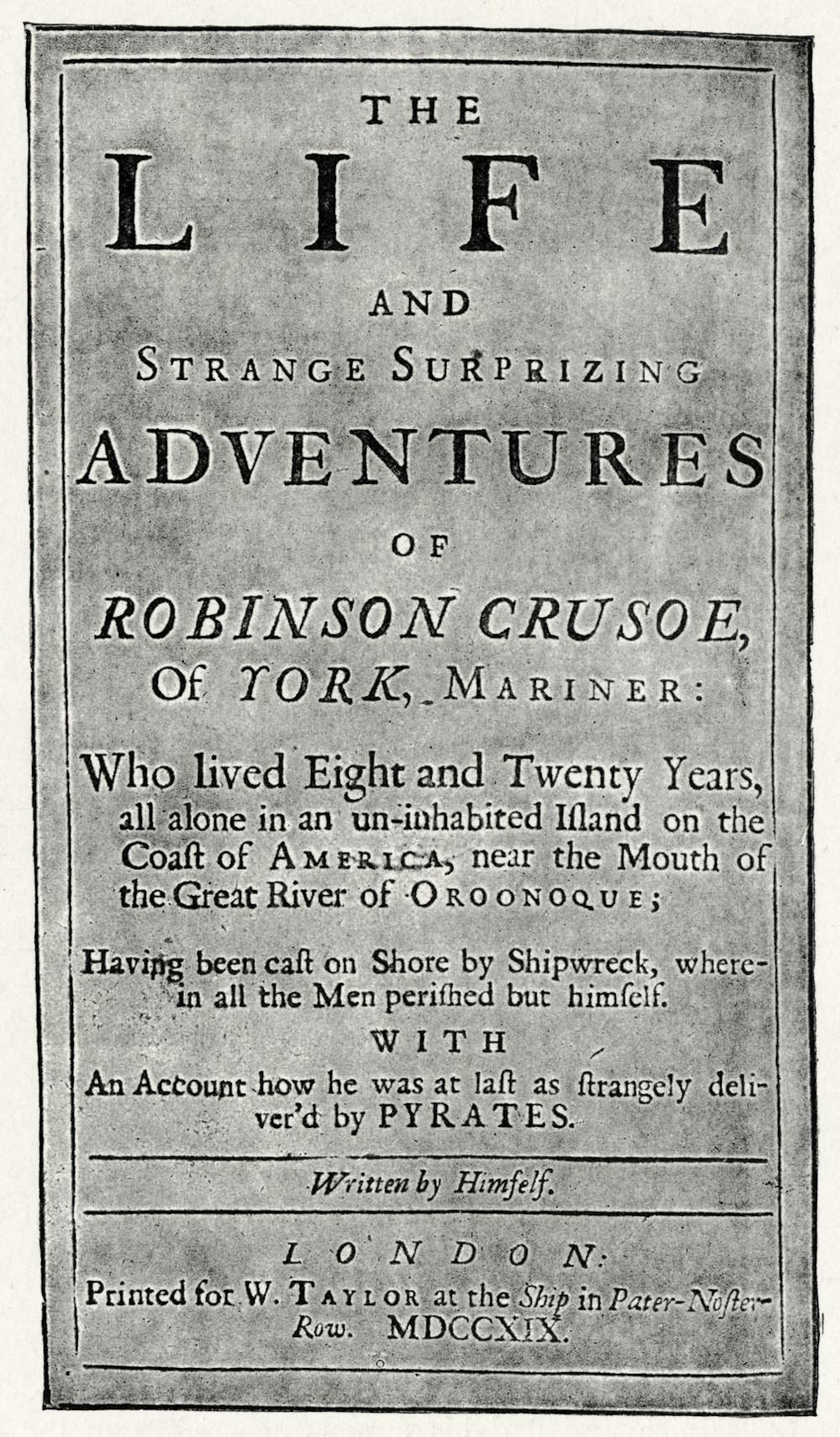
The book is “Robinson Crusoe,” written by Defoe and first published in 1719. Crusoe is an Englishman who leaves his comfortable life, goes to sea, gets captured by pirates and sold into slavery. Later, he emerges from a shipwreck the sole survivor. He sustains himself alone on a tropical island for 28 years, relying on grit, imagination and the few things he salvaged from the ship. His tale offers lessons for us all.

As a physician and scholar, I have taught Defoe’s novel many times to my students at Indiana University. I believe it is one of the best books to read as we endure the uncertainty and isolation due to COVID-19, because it invites us to reflect on existential issues at the core of a pandemic.

Title page of the first edition (1719) of Robinson Crusoe. Culture Club/Hulton Archive via Getty Images

What matters in our lives?

For those hunkered down in the midst of a pandemic, one of Robinson Crusoe’s lessons is understanding the folly of worldly goods. Crusoe finds gold but realizes it is of no value to him, not even worth “taking off of the ground.” In his former life, money had become a “drug.” Now, marooned on an island, he learns what is truly necessary and rewarding in life.

Like Crusoe’s shipwreck, sheltering in place during COVID-19 interrupts long-established habits and rhythms of life. With this interruption comes a chance to examine our lives. What is genuinely necessary in life? And what things turn out to be little more than distractions? For example, where on such a spectrum would we situate the pursuit of wealth or caring well for loved ones?

Making do with very little

Crusoe quickly learns to be open to discovery. When he first arrives on the island, he finds it barren, inhospitable and threatening, like a prison. Over time, he comes to recognize it as home. As he explores the island and learns to live in harmony with it, it protects and sustains him. The island emerges as an unending source of wonder that at first he couldn’t see.

As my family and I have sheltered in place, we have shared a similar experience. We are taking more walks and lingering longer at the dinner table. Now that we are not rushing as much from one thing to another, we’ve discovered what it means to be in one place and simply savor being together.

Necessity, the mother of invention

Alone on an island, Crusoe can’t rely on anyone but himself to provide the things he needs. On the day of his shipwreck, he is naked, hungry and homeless. He laments that, “considered by his own nature,” man is “one of the most miserable creatures of the world.” Out of necessity, he figures out how to make the things he needs.

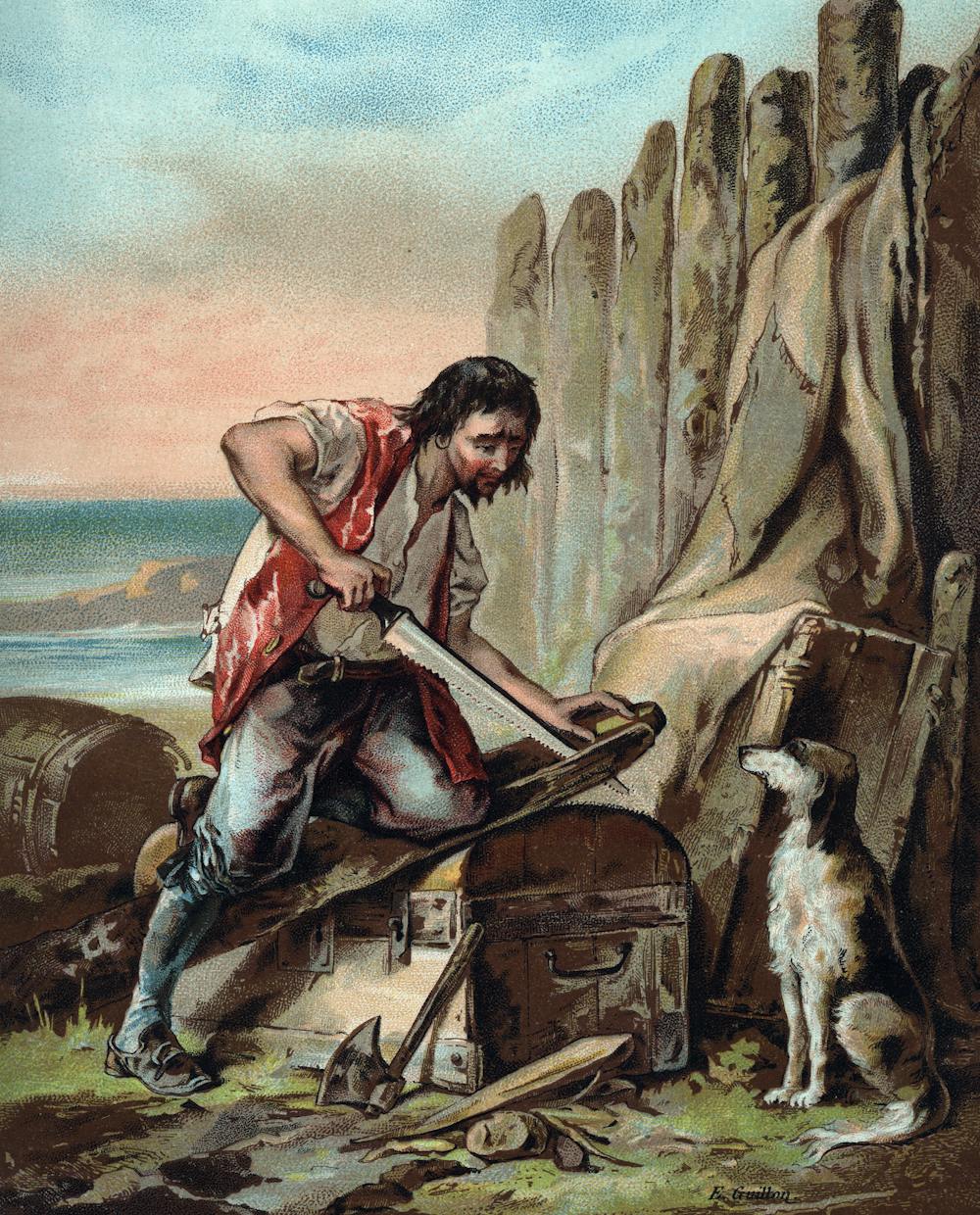
A 1900 lithograph of Robinson Crusoe building his first dwelling. Leemage/Corbis Historical via Getty Images

A pandemic renews opportunities for necessity to give birth to invention. Just as Crusoe finds within himself a resourcefulness he didn’t know he had, confinement can reveal new ways of living and creating. Even simple things such as cooking, reading, handcraft, writing and conversation may turn out to have more to offer than we supposed.

A wasted life and forgiveness

One of the greatest challenges Crusoe faces is unburdening himself of the guilt he bears for his misspent life. It had been devoted to getting rich and dominating other people – at the time of his shipwreck, he had been on a voyage to secure slaves for his plantation. But on the island, he begins to see the beauty in simple things. For example, he finds trees indescribably beautiful, a beauty so profound that it is “scarce credible.”

Something similar can transpire in the lives of the homebound. Frustration and disappointment can fade, to be replaced by new and unexpected sources of fulfillment. It may be something that we experience, such as a bird singing in the morning, but it can also be of our own doing. The tools lie at our fingertips – mail, phone and social media provide all we need to reach out to others with a kind word or helping hand.

Gratitude for what we have

One of the most profound transformations that Crusoe experiences is spiritual. Alone, he begins to meditate on the Bible he recovered from the shipwreck, reading Scripture three times per day. He attributes his newfound ability to “look on the bright side of my condition” to this habit, which gives him “such secret comforts that I cannot express them.”

By the time Crusoe is rescued after nearly three decades, he is a new man. He has formed the deepest friendship of his life with Friday, a man he rescued from death. He has learned the most profound lesson that “all our discontents about what we want spring from the want of thankfulness for what we have.”

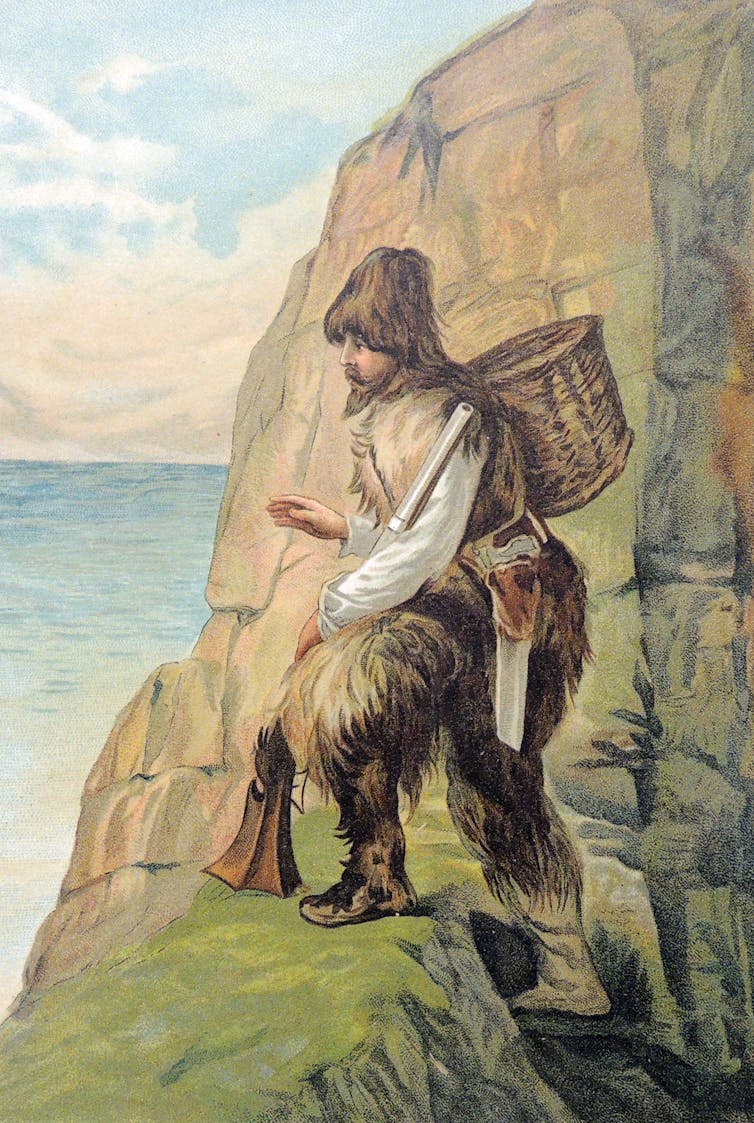
Crusoe’s social isolation changed him for the better. Universal History Archive/Universal Images Group via Getty Images

A life of isolation

Enforced quiet and separation because of coronavirus can reacquaint some of us with the value of peace, while solitude can whet our appetites for the joys of true fellowship. Just as the shipwrecked Crusoe is reborn, so trying times can clarify for us the true bounties of our lives.

A pandemic can seem like the end, but it can also serve as a beginning. We are, in a way, cut adrift. Yet a new and ultimately more fertile landfall lies ahead, at least for those of us who are not sick, broke or homeless. If we heed Defoe’s inspiration, these unprecedented challenges can transform us into wiser and more caring human beings.

[You need to understand the coronavirus pandemic, and we can help. Read The Conversation’s newsletter.]The Conversation

Richard Gunderman, Chancellor's Professor of Medicine, Liberal Arts, and Philanthropy, Indiana University

This article is republished from The Conversation under a Creative Commons license.