Monday, August 29, 2022

Monsters are everywhere in the Bible – and some are even human


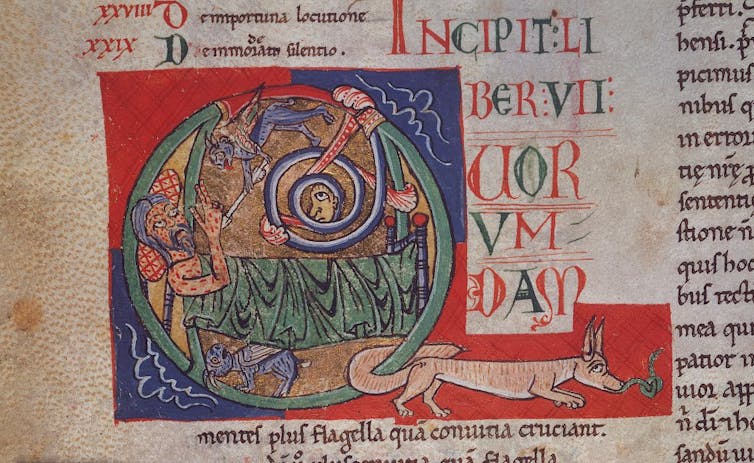
A 12th-century commentary on the Book of Job shows Satan transmitting a disease to him. DeAgostini Picture Library via Getty Images

What is a “monster”? For most Americans, this word sparks images of haunted houses and horror movies: scary creations, neither human nor animal, and usually evil.

But it can be helpful to think about “monsters” beyond these knee-jerk images. Ever since the 1990s, humanities scholars have been paying close attention to “monstrous” bodies in literature: characters whose appearance challenges common ideas about what’s normal.

Biblical scholars like me have followed in their footsteps. The Bible is full of monsters, even if they’re not Frankenstein or Bigfoot, and these characters can teach important lessons about ancient authors, texts and cultures. Monsterlike characters – even human ones – can convey ideas about what’s considered normal and good or “deviant,” disturbing and evil.

Hidden messages

Sometimes, monsters’ bodies are depicted in ways that reflect racist or sexist stereotypes about “us” versus “them.” Literary theorist Jack Halberstam, for example, has written about how Dracula and other vampires reveal antisemitic symbolism – even on Count Chocula cereal boxes. Such images often draw on antisemitic tropes that have been around for centuries, portraying Jewish people as shadowy, bloodsucking parasites.

Biblical monsters are no less revealing. In the Book of Judges, for example, the judge Ehud confronts the grotesque Moabite king Eglon, who is fatally fat and dies in an explosion of his own feces when a sword gets stuck in his stomach – though most modern translations render this a bit more chastely: “[Eglon’s] fat closed over [Ehud’s] blade, and the hilt went in after the blade – for he did not pull the dagger out of his belly – and the filth came out.”

In describing Eglon, the text also teaches Israelites how to think about their Moabite neighbors across the Jordan River. Like their emblematic king, Moabites are portrayed as excessive and disgusting – but ridiculous enough that Israelite heroes can defeat them with a few tricks.

A painting shows two soldiers on either side of a young man in a simple robe above a giant's head.
‘David with the Head of Goliath and two Soldiers,’ from 1615. Found in the Thyssen-Bornemisza Collections. Fine Art Images/Heritage Images/Hulton Fine Art Collection via Getty Images

Figures like Eglon and the famous Philistine giant Goliath, who battles the future King David, offer opportunities for biblical authors to subtly instruct readers about other groups of people that the authors consider threatening or inferior.

‘Why me?’

But the Bible sometimes draws a relatable human character and then inserts twists, playing with the audience’s expectations.

In my own recent work, I have suggested that this is exactly what’s going on with the Book of Job. In this mostly poetic book of the Bible, “The Satan” claims that Job acts righteously only because he is prosperous and healthy. God grants permission for the fiend to test Job by causing his children to be killed, his livestock to be stolen and his body to break out in painful boils.

Job is then approached by three friends, who insist that he must have done something to prompt this apparent punishment. He spends the rest of the book debating with them about the cause of his torment.

The book is full of monsters and already a familiar topic in monster studies. In chapters 40-41, God boasts about two superanimals that he has created, called Leviathan and Behemoth. A mysterious, possibly maritime monster called Rahab appears twice. Both Job and his friends refer to vague nighttime visions that terrify them.

And of course there’s another “monster,” too: Job’s test is instigated by “the Satan.” Later in history, this figure became the archfiend of Jewish and Christian theology. In the Book of Job, though, he’s simply portrayed as a crooked minion, a shifty member of God’s heavenly court.

But I’d argue there’s another “monster” hiding in plain sight: the man at the center of it all. As biblical scholars like Rebecca Raphael and Katherine Southwood have pointed out, Job’s body is central to the book’s plot.

Job stoically tolerates Satan’s attacks on his livestock and even his children. It is only after the second attack, which produces “a severe inflammation on Job from the sole of his foot to the crown of his head,” that he lets out a deluge of complaints.

To illustrate his suffering, Job repeatedly describes his bodily decay with macabre, gruesome images: “My skin, blackened, is peeling off me. My bones are charred by the heat.” And, “My flesh is covered with maggots and clods of earth; My skin is broken and festering.”

‘Monstrous’ wonder

Job’s body is so transformed that he, too, can be seen as a “monster.” But while Job might think that the deity prefers ideal human bodies, this is not necessarily the case.

In the book’s telling, God sustains unique, extraordinary monsters who would seem, at first glance, to be evil or repellent – but actually serve as prime examples of creation’s wonder and diversity. And it is Satan, not God, who decides to test Job by afflicting him physically.

Some books in the Bible indeed view monsters as simplistic, inherently evil “others.” The prophet Daniel, for example, has visions of four hybrid beasts, including a winged lion and a multiheaded leopard. These were meant to symbolize threatening ancient empires that the chapter’s author despised.

The Book of Job does something radical by pushing against this limited view. Its inclusive viewpoint portrays the “monstrous” human as a sympathetic character who has his place in a diverse, chaotic world – challenging readers’ preconceptions today, just as it might have thousands of years ago.The Conversation

Madadh Richey, Assistant Professor of Hebrew Bible, Brandeis University

This article is republished from The Conversation under a Creative Commons license.

Saturday, July 2, 2022

How many ice ages has the Earth had, and could humans live through one?


During ice ages, ice sheets like the one in Greenland have covered much of Earth’s surface. Thor Wegner/DeFodi Images via Getty Images


How many ice ages has the Earth had, and could humans live through one? – Mason C., age 8, Hobbs, New Mexico

First, what is an ice age? It’s when the Earth has cold temperatures for a long time – millions to tens of millions of years – that lead to ice sheets and glaciers covering large areas of its surface.

We know that the Earth has had at least five major ice ages. The first one happened about 2 billion years ago and lasted about 300 million years. The most recent one started about 2.6 million years ago, and in fact, we are still technically in it.

So why isn’t the Earth covered in ice right now? It’s because we are in a period known as an “interglacial.” In an ice age, temperatures will fluctuate between colder and warmer levels. Ice sheets and glaciers melt during warmer phases, which are called interglacials, and expand during colder phases, which are called glacials.

Right now we are in the most recent ice age’s warm interglacial period, which began about 11,000 years ago.

Earth’s climate goes through warming and cooling cycles that are influenced by gases in its atmosphere and variations in its orbit around the sun.

What was it like during the ice age?

When most people talk about the “ice age,” they are usually referring to the last glacial period, which began about 115,000 years ago and ended about 11,000 years ago with the start of the current interglacial period.

During that time, the planet was much cooler than it is now. At its peak, when ice sheets covered most of North America, the average global temperature was about 46 degrees Fahrenheit (8 degrees Celsius). That’s 11 degrees F (6 degrees C) cooler than the global annual average today.

That difference might not sound like a lot, but it resulted in most of North America and Eurasia being covered in ice sheets. Earth was also much drier, and sea level was much lower, since most of the Earth’s water was trapped in the ice sheets. Steppes, or dry grassy plains, were common. So were savannas, or warmer grassy plains, and deserts.

Many animals present during the ice age would be familiar to you, including brown bears, caribou and wolves. But there were also megafauna that went extinct at the end of the ice age, like mammoths, mastodons, saber-toothed cats and giant ground sloths.

There are different ideas about why these animals went extinct. One is that humans hunted them into extinction when they came in contact with the megafauna.

Scientist and workers gather around a jawbone and horns protruding out of the ground.
Excavating a mastodon skeleton at Burning Tree Golf Course in Heath, Ohio, December 1989. The skeleton, found by workers who were digging a pond, was 90% to 95% complete and more than 11,000 years old. James St. John/Flickr, CC BY

Wait, there were humans during the ice age?!

Yes, people just like us lived through the ice age. Since our species, Homo sapiens, emerged about 300,000 years ago in Africa, we have spread around the world.

During the ice age, some populations remained in Africa and did not experience the full effects of the cold. Others moved into other parts of the world, including the cold, glacial environments of Europe.

And they weren’t alone. At the beginning of the ice age, there were other species of hominins – a group that includes our immediate ancestors and our closest relatives – throughout Eurasia, like the Neanderthals in Europe and the mysterious Denisovans in Asia. Both of these groups seem to have gone extinct before the end of the ice age.

There are lots of ideas about how our species survived the ice age when our hominin cousins did not. Some think that it has to do with how adaptable we are, and how we used our social and communication skills and tools. And it appears that humans didn’t hunker down during the ice age. Instead they moved into new areas.

For a long time it was thought that humans did not enter North America until after the ice sheets started to melt. But fossilized footprints found at White Sands National Park in New Mexico show that humans have been in North America since at least 23,000 years ago – close to the peak of the last ice age.


Denise Su, Associate Professor, Arizona State University

This article is republished from The Conversation under a Creative Commons license.

Your body has an internal clock that dictates when you eat, sleep and might have a heart attack – all based on time of day


Syncing your circadian rhythm to a natural light-dark cycle could improve your health and well-being. nambitomo/iStock via Getty Images Plus

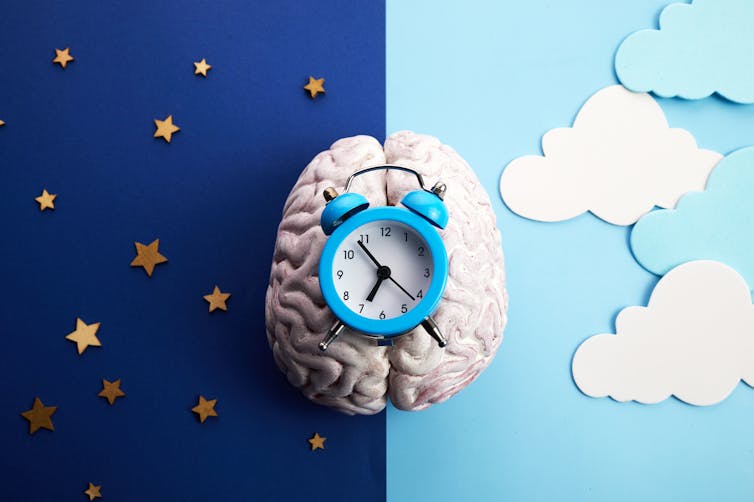
Anyone who has suffered from jet lag or struggled after turning the clock forward or back an hour for daylight saving time knows all about what researchers call your biological clock, or circadian rhythm – the “master pacemaker” that synchronizes how your body responds to the passing of one day to the next.

This “clock” is made up of about 20,000 neurons in the hypothalamus, the area near the center of the brain that coordinates your body’s unconscious functions, like breathing and blood pressure. Humans aren’t the only beings that have an internal clock system: All vertebrates – or mammals, birds, reptiles, amphibians and fish – have biological clocks, as do plants, fungi and bacteria. Biological clocks are why cats are most active at dawn and dusk, and why flowers bloom at certain times of day.

Circadian rhythms are also essential to health and well-being. They govern your body’s physical, mental and behavioral changes over each 24-hour cycle in response to environmental cues like light and food. They’re why more heart attacks and strokes occur early in the morning. They’re also why mice that are missing their biological clocks age faster and have shorter lifespans, and people with a mutation in their circadian clock genes have abnormal sleep patterns. Chronic misalignment of your circadian rhythm with external cues, as seen in night-shift workers, can lead to a wide range of physical and mental disorders, including obesity, Type 2 diabetes, cancer and cardiovascular diseases.

In short, there is ample evidence that your biological clock is critical to your health. And chronobiologists like me are studying how the day-night cycle affects your body to better understand how you can modify your behaviors to use your internal clock to your advantage.

Your body has an internal clock that helps keep it in working order.

How biological rhythms affect your health

Your biological clock affects your health by regulating your sleep-wake cycles and fluctuations in blood pressure and body temperature. It does this primarily by syncing your endocrine system to environmental light-dark cycles so that certain hormones are released in certain amounts at certain times of day.

The pineal grand in your brain, for example, produces melatonin, a hormone that helps regulate sleep in response to darkness. Doctors advise reducing exposure to artificial blue light from electronic devices before bedtime because it can disrupt melatonin secretion and sleep quality.

Your circadian rhythm also affects your metabolism. Among other things, sleep helps you regulate leptin, a hormone that controls appetite. Your leptin levels fluctuate throughout the day according to a rhythm set by your circadian clock. Insufficient or irregular sleep can disrupt leptin production, which can make us hungrier and lead to weight gain.

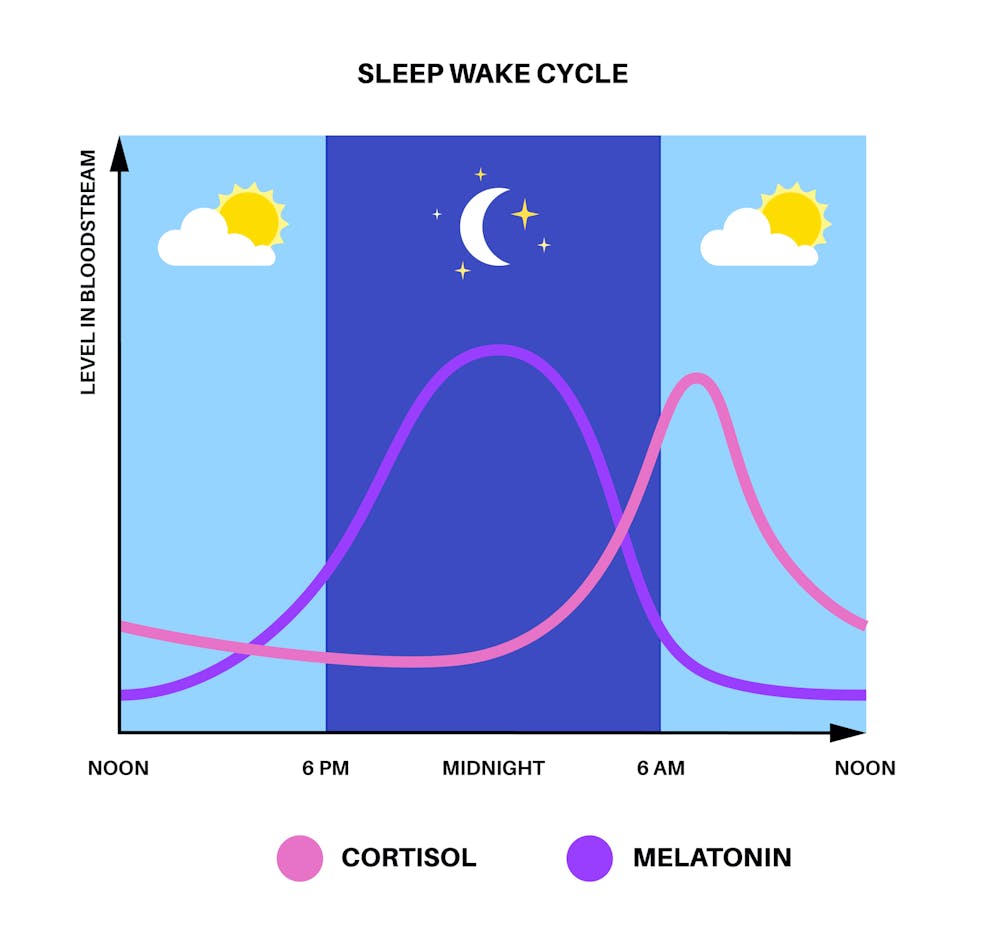
Chart showing cortisol and melatonin levels fluctuating over the course of the day, with cortisol levels peaking at around 6 AM and melatonin peaking at around midnight
Your hormones fluctuate rhythmically over the course of the day. The stress hormone cortisol typically peaks in the morning, while the sleep hormone melatonin typically peaks in the night. Pikovit44/iStock via Getty Images Plus

In recent years, researchers have discovered even more ways your circadian clock can affect your health. For example, there is now research suggesting that eating at set times of day, or time-restricted feeding, can prevent obesity and metabolic diseases. Depression and other mood disorders may also be linked to dysfunctional circadian control that lead to changes in how your genes are expressed.

The time of day when you take your medicine can also affect how well it works and how severe any side effects might be. Likewise, your biological clock is a potential target for cancer chemotherapies and anti-obesity treatments.

And finally, even your personality might be shaped by whether your internal clock make you a “morning person” or a “night person.”

Getting the most out of exercise

Circadian clocks also provide a potential answer to when is the best time of day to maximize the benefits of physical exercise.

To study this, my colleagues and I collected blood and tissue samples from the brains, hearts, muscles, livers and fat of mice that exercised either before breakfast in the early morning or after dinner in the late evening. We used a tool called a mass spectrometer to detect approximately 600 to 900 molecules each organ produced. These metabolites served as real-time snapshots of how the mice responded to exercise at specific times of day.

We stitched these snapshots together to create a map of how exercise in the morning versus evening affected each of the mice’s different organ systems – what we called an atlas of exercise metabolism.

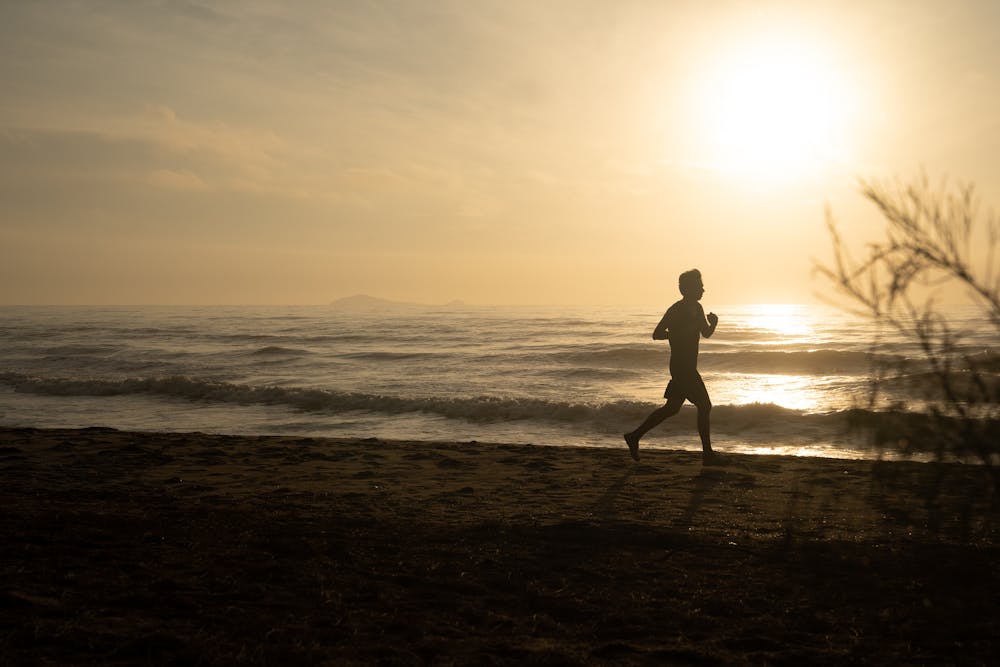
Silhouette of person running by the sea at sunrise
The best time of day to exercise might be the time when you feel you perform best. Anuruk Charoenamornrat/EyeEm via Getty Images

Using this atlas, we saw that time of day affects how each organ uses energy during exercise. For instance, we found that early morning exercise reduced blood glucose levels more than late evening exercise. Exercise in the late evening, however, allowed the mice to benefit from energy they stored from their meals and increased their endurance.

Of course, mice and humans have many differences along with their similarities. For one, mice are more active at night than during the day. Still, we believe that our findings could help researchers better understand how exercise affects your health and, if timed appropriately, can be optimized based on time of day to meet your personal health goals.

Getting along with your biological clock

I believe that the field of chronobiology is growing, and we will produce even more research providing practical applications and insights into health and well-being in the future.

In my own work, for example, a better understanding of how exercising at different times of day affects your body could help tailor exercise plans to maximize specific benefits for patients with obesity, Type 2 diabetes and other diseases.

There is still much to learn about how your circadian clock works. But in the meantime, there are some tried and true ways people can synchronize their internal clocks for better health. These include regular exposure to sunlight to trigger the endocrine system to produce vitamin D, staying active during the day so you fall asleep more easily at night and avoiding caffeine and reducing your exposure to artificial light before bedtime.The Conversation

Shogo Sato, Assistant Professor of Biology, Texas A&M University

This article is republished from The Conversation under a Creative Commons license.

Monday, April 18, 2022

A large solar storm could knock out the power grid and the internet – an electrical engineer explains how


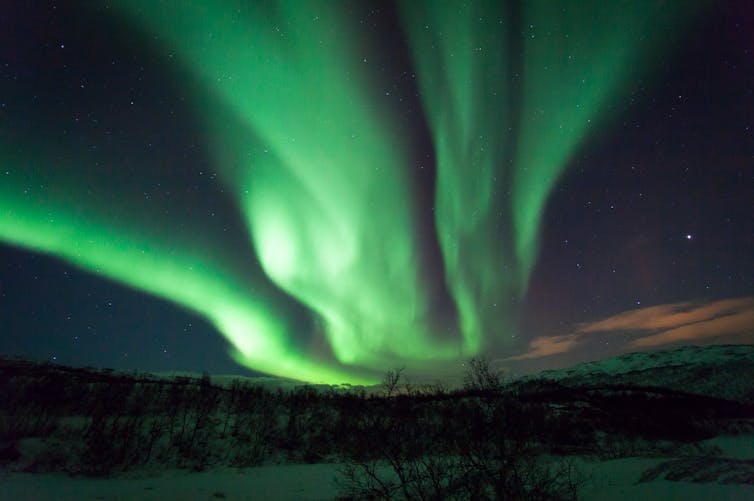
Typical amounts of solar particles hitting the earth’s magnetosphere can be beautiful, but too much could be catastrophic. Svein-Magne Tunli - tunliweb.no/Wikimedia, CC BY-NC-SA

On Sept. 1 and 2, 1859, telegraph systems around the world failed catastrophically. The operators of the telegraphs reported receiving electrical shocks, telegraph paper catching fire, and being able to operate equipment with batteries disconnected. During the evenings, the aurora borealis, more commonly known as the northern lights, could be seen as far south as Colombia. Typically, these lights are only visible at higher latitudes, in northern Canada, Scandinavia and Siberia.

What the world experienced that day, now known as the Carrington Event, was a massive geomagnetic storm. These storms occur when a large bubble of superheated gas called plasma is ejected from the surface of the sun and hits the Earth. This bubble is known as a coronal mass ejection.

The plasma of a coronal mass ejection consists of a cloud of protons and electrons, which are electrically charged particles. When these particles reach the Earth, they interact with the magnetic field that surrounds the planet. This interaction causes the magnetic field to distort and weaken, which in turn leads to the strange behavior of the aurora borealis and other natural phenomena. As an electrical engineer who specializes in the power grid, I study how geomagnetic storms also threaten to cause power and internet outages and how to protect against that.

Geomagnetic storms

The Carrington Event of 1859 is the largest recorded account of a geomagnetic storm, but it is not an isolated event.

Geomagnetic storms have been recorded since the early 19th century, and scientific data from Antarctic ice core samples has shown evidence of an even more massive geomagnetic storm that occurred around A.D. 774, now known as the Miyake Event. That solar flare produced the largest and fastest rise in carbon-14 ever recorded. Geomagnetic storms trigger high amounts of cosmic rays in Earth’s upper atmosphere, which in turn produce carbon-14, a radioactive isotope of carbon.

A geomagnetic storm 60% smaller than the Miyake Event occurred around A.D. 993. Ice core samples have shown evidence that large-scale geomagnetic storms with similar intensities as the Miyake and Carrington events occur at an average rate of once every 500 years.

Nowadays the National Oceanic and Atmospheric Administration uses the Geomagnetic Storms scale to measure the strength of these solar eruptions. The “G scale” has a rating from 1 to 5 with G1 being minor and G5 being extreme. The Carrington Event would have been rated G5.

It gets even scarier when you compare the Carrington Event with the Miyake Event. Scientist were able to estimate the strength of the Carrington Event based on the fluctuations of Earth’s magnetic field as recorded by observatories at the time. There was no way to measure the magnetic fluctuation of the Miyake event. Instead, scientists measured the increase in carbon-14 in tree rings from that time period. The Miyake Event produced a 12% increase in carbon-14. By comparison, the Carrington Event produced less than 1% increase in Carbon-14, so the Miyake Event likely dwarfed the G5 Carrington Event.

Knocking out power

Today, a geomagnetic storm of the same intensity as the Carrington Event would affect far more than telegraph wires and could be catastrophic. With the ever-growing dependency on electricity and emerging technology, any disruption could lead to trillions of dollars of monetary loss and risk to life dependent on the systems. The storm would affect a majority of the electrical systems that people use every day.

The National Weather Service operates the Space Weather Prediction Center, which watches for solar flares that could lead to geomagnetic storms.

Geomagnetic storms generate induced currents, which flow through the electrical grid. The geomagnetically induced currents, which can be in excess of 100 amperes, flow into the electrical components connected to the grid, such as transformers, relays and sensors. One hundred amperes is equivalent to the electrical service provided to many households. Currents this size can cause internal damage in the components, leading to large scale power outages.

A geomagnetic storm three times smaller than the Carrington Event occurred in Quebec, Canada, in March 1989. The storm caused the Hydro-Quebec electrical grid to collapse. During the storm, the high magnetically induced currents damaged a transformer in New Jersey and tripped the grid’s circuit breakers. In this case, the outage led to five million people being without power for nine hours.

Breaking connections

In addition to electrical failures, communications would be disrupted on a worldwide scale. Internet service providers could go down, which in turn would take out the ability of different systems to communicate with each other. High-frequency communication systems such as ground-to-air, shortwave and ship-to-shore radio would be disrupted. Satellites in orbit around the Earth could be damaged by induced currents from the geomagnetic storm burning out their circuit boards. This would lead to disruptions in satellite-based telephone, internet, radio and television.

Also, as geomagnetic storms hit the Earth, the increase in solar activity causes the atmosphere to expand outward. This expansion changes the density of the atmosphere where satellites are orbiting. Higher density atmosphere creates drag on a satellite, which slows it down. And if it isn’t maneuvered to a higher orbit, it can fall back to Earth.

One other area of disruption that would potentially affect everyday life is navigation systems. Virtually every mode of transportation, from cars to airplanes, use GPS for navigation and tracking. Even handheld devices such as cell phones, smart watches and tracking tags rely on GPS signals sent from satellites. Military systems are heavily dependent on GPS for coordination. Other military detection systems such as over-the-horizon radar and submarine detection systems could be disrupted, which would hamper national defense.

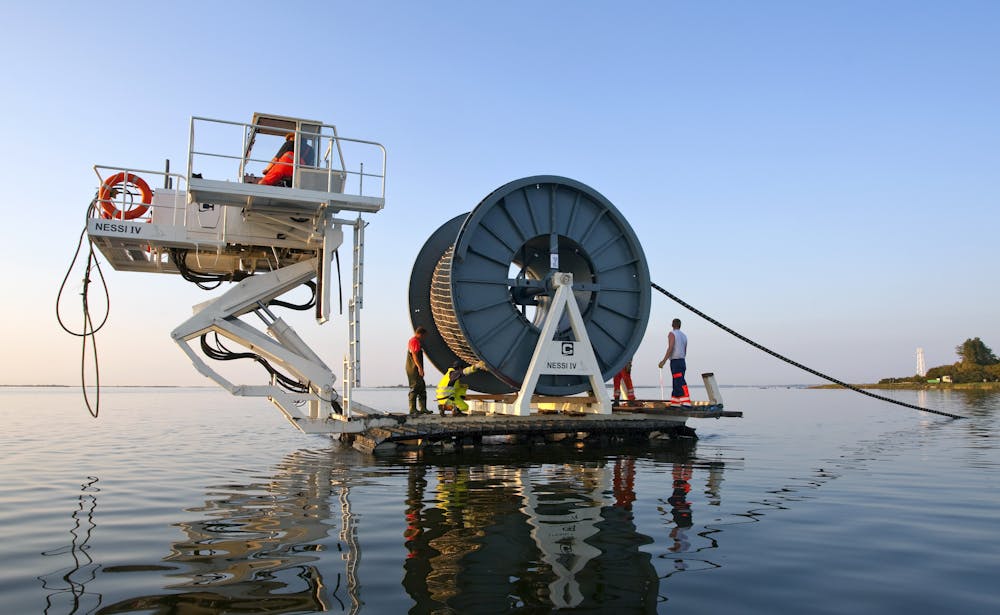
A crew works on a machine with a giant spool laying a cable in the water
The global internet is held together by a network of cables crisscrossing the world’s oceans. Jens Köhler/ullstein bild via Getty Images

In terms of the internet, a geomagnetic storm on the scale of the Carrington Event could produce geomagnetically induced currents in the submarine and terrestrial cables that form the backbone of the internet as well as the data centers that store and process everything from email and text messages to scientific data sets and artificial intelligence tools. This would potentially disrupt the entire network and prevent the servers from connecting to each other.

Just a matter of time

It is only a matter of time before the Earth is hit by another geomagnetic storm. A Carrington Event-size storm would be extremely damaging to the electrical and communication systems worldwide with outages lasting into the weeks. If the storm is the size of the Miyake Event, the results would be catastrophic for the world with potential outages lasting months if not longer. Even with space weather warnings from NOAA’s Space Weather Prediction Center, the world would have only a few minutes to a few hours notice.

I believe it is critical to continue researching ways to protect electrical systems against the effects of geomagnetic storms, for example by installing devices that can shield vulnerable equipment like transformers and by developing strategies for adjusting grid loads when solar storms are about to hit. In short, it’s important to work now to minimize the disruptions from the next Carrington Event.The Conversation

David Wallace, Assistant Clinical Professor of Electrical Engineering, Mississippi State University

This article is republished from The Conversation under a Creative Commons license.