Monday, September 15, 2025

How to avoid seeing disturbing content on social media and protect your peace of mind


Social media often serves up disturbing images but you can minimize your exposure. Jacob Wackerhausen/iStock via Getty Images

When graphic videos go viral, like the recent fatal shooting of Charlie Kirk, it can feel impossible to protect yourself from seeing things you did not consent to see. But there are steps you can take.

Social media platforms are designed to maximize engagement, not protect your peace of mind. The major platforms have also reduced their content moderation efforts over the past year or so. That means upsetting content can reach you even when you never chose to watch it.

You do not have to watch every piece of content that crosses your screen, however. Protecting your own mental state is not avoidance or denial. As a researcher who studies ways to counteract the negative effects of social media on mental health and well-being, I believe it’s a way of safeguarding the bandwidth you need to stay engaged, compassionate and effective.

Why this matters

Research shows that repeated exposure to violent or disturbing media can increase stress, heighten anxiety and contribute to feelings of helplessness. These effects are not just short-term. Over time, they erode the emotional resources you rely on to care for yourself and others.

Protecting your attention is a form of care. Liberating your attention from harmful content is not withdrawal. It is reclaiming your most powerful creative force: your consciousness.

Just as with food, not everything on the table is meant to be eaten. You wouldn’t eat something spoiled or toxic simply because it was served to you. In the same way, not every piece of media laid out in your feed deserves your attention. Choosing what to consume is a matter of health.

And while you can choose what you keep in your own kitchen cabinets, you often have less control over what shows up in your feeds. That is why it helps to take intentional steps to filter, block and set boundaries.

Practical steps you can take

Fortunately, there are straightforward ways to reduce your chances of being confronted with violent or disturbing videos. Here are four that I recommend:

  1. Turn off autoplay or limit sensitive content. Note that these settings can vary depending on device, operating system and app version, and can change.

  1. Use keyword filters. Most platforms allow you to mute or block specific words, phrases or hashtags. This reduces the chance that graphic or violent content slips into your feed.

  2. Curate your feed. Unfollow accounts that regularly share disturbing images. Follow accounts that bring you knowledge, connection or joy instead.

  3. Set boundaries. Reserve phone-free time during meals or before bed. Research shows that intentional breaks reduce stress and improve well-being.

a settings screen with a red rectangle around one option
Where to turn off autoplay in your account on Facebook’s website. Screen capture by The Conversation, CC BY-ND

Reclaim your agency

Social media is not neutral. Its algorithms are engineered to hold your attention, even when that means amplifying harmful or sensational material. Watching passively only serves the interests of the social media companies. Choosing to protect your attention is a way to reclaim your agency.

The urge to follow along in real time can be strong, especially during crises. But choosing not to watch every disturbing image is not neglect; it is self-preservation. Looking away protects your ability to act with purpose. When your attention is hijacked, your energy goes into shock and outrage. When your attention is steady, you can choose where to invest it.

You are not powerless. Every boundary you set – whether it is turning off autoplay, filtering content or curating your feed – is a way of taking control over what enters your mind. These actions are the foundation for being able to connect with others, help people and work for meaningful change.

More resources

I’m the executive director of the Post-Internet Project, a nonprofit dedicated to helping people navigate the psychological and social challenges of life online. With my team, I designed the evidence-backed PRISM intervention to help people manage their social media use.

Our research-based program emphasizes agency, intention and values alignment as the keys to developing healthier patterns of media consumption. You can try the PRISM process for yourself with an online class I am launching through Coursera in October 2025. You can find the course, Values Aligned Media Consumption, by searching for Annie Margaret at the University of Colorado Boulder on Coursera. The course is aimed at anyone 18 and over, and the videos are free to watch.The Conversation

Annie Margaret, Teaching Assistant Professor of Creative Technology & Design, ATLAS Institute, University of Colorado Boulder

This article is republished from The Conversation under a Creative Commons license. Read the original article.

Tuesday, August 19, 2025

What is the ‘way of the warrior’? Students investigate the arts of war and peace in this course about virtue and the ethics of violence


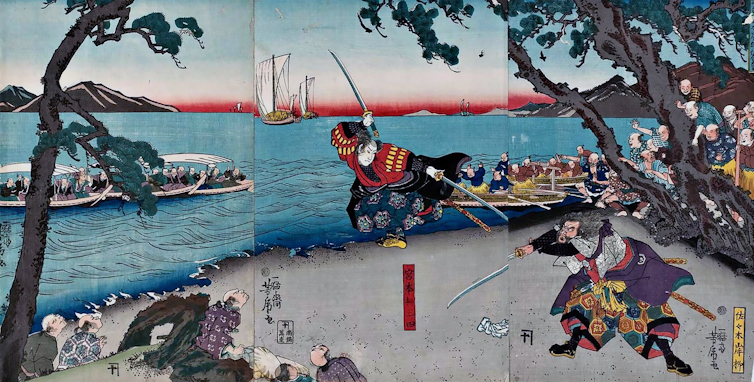
A painting by Yoshifusa Utagawa shows the famous samurai Miyamoto Musashi, left, fighting Sasaki Kojiro. Artelino via Wikimedia Commons

Title of course:

The Way of the Warrior

What prompted the idea for the course?

I am a lifelong martial artist who grew up training in both taekwondo and karate. During a pivotal point in graduate school, I realized that the study of martial arts helped me better understand political philosophy – and that revelation inspired this course.

Southern California contains a unique hub of martial artists, many of whom studied with Bruce Lee. When I was working on my doctorate at The Claremont Colleges, I discovered an exceptional school just down the street from campus and began to study Filipino martial arts, Lee’s Jeet Kune Do, and Rickson Gracie Jiu Jitsu. My teacher, Guro Jason Cruz, refined the method of training the body with the training of the mind in a way that is still unmatched.

At the time, I was studying political philosophy and education in ancient Greece, including the significance of the “palaestra” and the “gymnasia,” which were sites for boxing, wrestling and the pankration – a practice akin to mixed martial arts today – but also intellectual cultivation.

The intensity of my own training helped me gain a deeper understanding not only of Greek warrior culture but also for the study of martial arts and its relationship to philosophy: physical and intellectual development were both indispensable in a virtuous life.

After I started teaching at Hamilton, I created this course to compare different views of warrior ethics.

What does the course explore?

Our class investigates the ways of life for warriors and the ethical codes that emerge in their political communities. We compare themes such as virtue, or human excellence, justice, life and death, while looking at Western and non-Western views in dialogue.

Aristotle, for example, emphasized the truly noble and good human being: someone who had achieved complete virtue and deserved the greatest goods, such as honor. Yamamoto Tsunetomo, when describing “Bushido” – the code of the Japanese samurai – prioritized being prepared to die and serving one’s lord in the pursuit of honor.

One crucial issue we examine is whether the true “way of the warrior” really involves destruction or is finally about something akin to the power of love. One might presume that the warrior way requires killing, but we challenge that assumption and consider whether there are higher principles at stake. To paraphrase Morihei Ueshiba, the founder of aikido, in injuring others, do you injure yourself?

Why is this course relevant now?

The use of violence and the ethics of war are perennial issues. In particular, conflicts are oftentimes initiated, prolonged or supported by people who have no experience with battle, fighting or even sparring.

One way people can take debates over the use of violence more seriously, and whether force is justified when responding to injustice, is by paying close attention to the writings of these experienced warriors and philosophers.

What will the course prepare students to do?

Ultimately, the course connects back to the overarching concept of liberal education: Are the principles we discuss in class universal? Are the arts of war and peace useful in other pursuits?

For example, the works of Sun Tzu, the ancient Chinese general, and Miyamoto Musashi, the undefeated samurai, are frequently read in economics and business.

Musashi stated that the way “is based on excelling others in anything and everything,” a character made “possible by the power of martial arts.” We discuss whether that is how we should approach our entire lives.

Finally, the class reflects on whether engaging with these texts from other times and places can liberate us – whether this learning process can expand our horizons beyond popular ideas today.The Conversation

Kenneth Andrew Andres Leonardo, Postdoctoral Fellow and Visiting Assistant Professor of Government, Hamilton College

This article is republished from The Conversation under a Creative Commons license. 

Friday, August 15, 2025

3 things to learn about patience − and impatience − from al-Ghazali, a medieval Islamic scholar


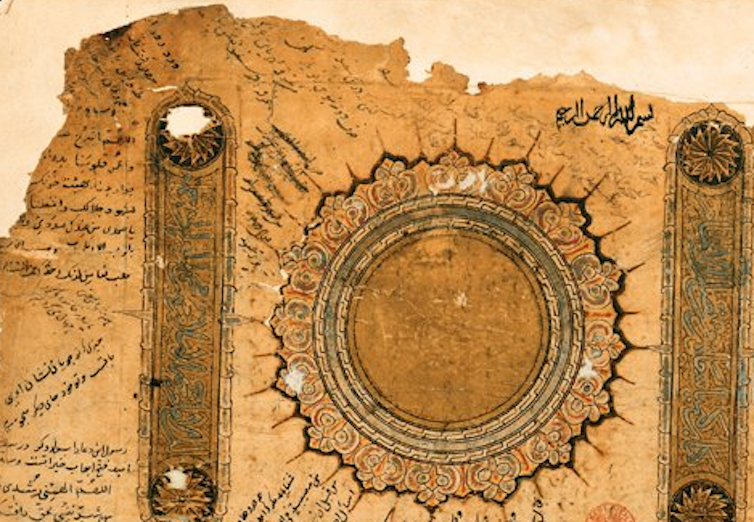
Al-Ghazali’s book ‘Alchemy of Happiness,’ held in the Bibliothèque nationale de France. Al-Ghazali - Bibliothèque nationale de France via Wikimedia Commons

From childhood, we are told that patience is a virtue and that good things will come to those who wait. And, so, many of us work on cultivating patience.

This often starts by learning to wait for a turn with a coveted toy. As adults, it becomes trying to remain patient with long lines at the Department of Motor Vehicles, misbehaving kids or the slow pace of political change. This hard work can have mental health benefits. It is even correlated with per capita income and productivity.

But it is also about trying to become a good person.

It’s clear to me, as a scholar of religious ethics, that patience is a term many of us use, but we all could benefit from understanding its meaning a little better.

In religious traditions, patience is more than waiting, or even more than enduring a hardship. But what is that “more,” and how does being patient make us better people?

The writings of medieval Islamic thinker Abu Hamid al-Ghazali can give us insights or help us understand why we need to practice patience – and also when not to be patient.

Who was al-Ghazali?

Born in Iran in 1058, al-Ghazali was widely respected as a jurist, philosopher and theologian. He traveled to places as far as Baghdad and Jerusalem to defend Islam and argued there was no contradiction between reason and revelation. More specifically, he was well known for reconciling Aristotle’s philosophy, which he likely read in Arabic translation, with Islamic theology.

Al-Ghazali was a prolific writer, and one of his most important works – “Revival of the Religious Sciences,” or the “Iḥyāʾ ʿulūm al-dīn” – provides a practical guide for living an ethical Muslim life.

This work is composed of 40 volumes in total, divided into four parts of 10 books each. Part 1 deals with Islamic rituals; Part 2, local customs; Part 3, vices to be avoided; and Part 4, virtues one should strive for. Al-Ghazali’s discussion of patience comes in Volume 32 of Part 4, “On Patience and Thankfulness,” or the “Kitāb al-sabr waʾl-shukr.”

He describes patience as a fundamental human characteristic that is crucial to achieving value-driven goals, and he provides a caveat for when impatience is called for.

1. What is patience?

Humans, according to al-Ghazali, have competing impulses: the impulse of religion, or “bāʿith al-dīn,” and the impulse of desire, or “bāʿith al-hawā.”

Life is a struggle between these two impulses, which he describes with the metaphor of a battle: “Support for the religious impulse comes from the angels reinforcing the troops of God, while support for the impulse of desire comes from the devils reinforcing the enemies of God.”

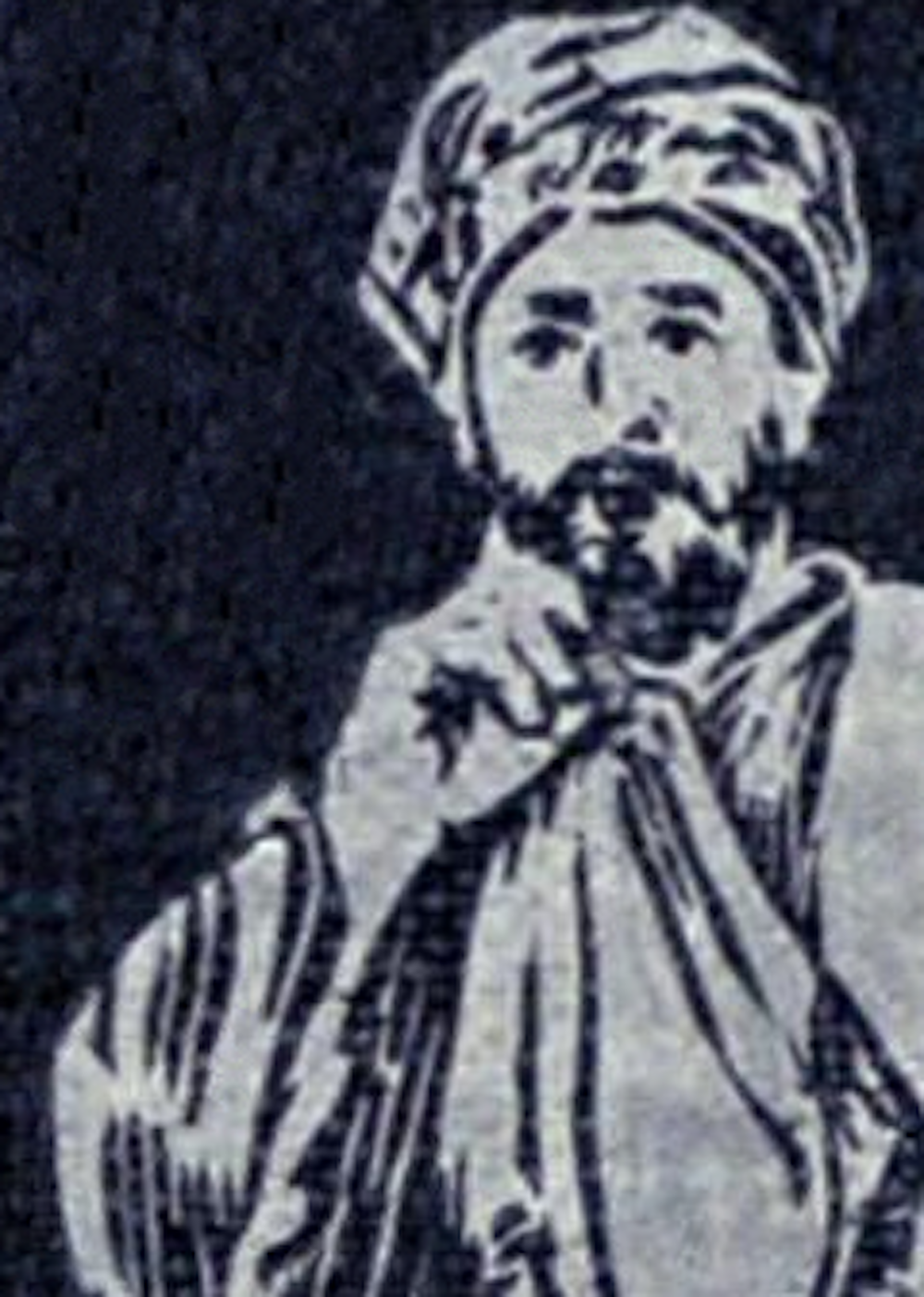
A black and white sketch of a man wearing a headdress and a loose garment.
Muslim scholar Abū Ḥāmid Muḥammad ibn Muḥammad al-Ghazālī. From the cover illustration of 'The Confessions of Al-Ghazali,' via Wikimedia Commons

The amount of patience we have is what decides who wins the battle. As al-Ghazali puts it, “If a man remains steadfast until the religious impulse conquers … then the troops of God are victorious and he joins the troops of the patient. But if he slackens and weakens until appetite overcomes him … he joins the followers of the devils.” In other words, for al-Ghazali, patience is the deciding factor of whether we are living up to our full human potential to live ethically.

2. Patience, values and goals

Patience is also necessary for being a good Muslim, in al-Ghazali’s view. But his understanding of how patience works rests on a theory of ethics and can be applied outside of his explicitly Islamic worldview.

It all starts with commitments to core values. For a Muslim like al-Ghazali, those values are informed by the Islamic tradition and community, or “umma,” and include things like justice and mercy. These specific values might be universally applicable. Or you might also have another set of values that are important to you. Perhaps a commitment to social justice, or being a good friend, or not lying.

Living in a way that is consistent with these core values is what the moral life is all about. And patience, according to al-Ghazali, is how we consistently make sure our actions serve this purpose.

That means patience is not just enduring the pain of a toddler’s temper tantrum. It is enduring that pain with a goal in mind. The successful application of patience is measured not by how much pain we endure but by our progress toward a specific goal, such as raising a healthy and happy child who can eventually regulate their emotions.

In al-Ghazali’s understanding of patience, we all need it in order to remain committed to our core principles and ideas when things aren’t going our way.

3. When impatience is called for

One critique of the idea of patience is that it can lead to inaction or be used to silence justified complaints. For instance, scholar of Africana studies Julius Fleming argues in his book “Black Patience” for the importance of a “radical refusal to wait” under conditions of systemic racism. Certainly, there are forms of injustice and suffering in the world that we should not calmly endure.

Despite his commitment to the importance of patience to a moral life, al-Ghazali makes room for impatience as well. He writes, “One is forbidden to be patient with harm (that is) forbidden; for example, to have one’s hand cut off or to witness the cutting off of the hand of a son and to remain silent.”

These are examples of harms to oneself or to loved ones. But could the necessity for impatience be extended to social harms, such as systemic racism or poverty? And as Quranic studies scholars Ahmad Ismail and Ahmad Solahuddin have argued, true patience sometimes necessitates action.

As al-Ghazali writes, “Just because patience is half of faith, do not imagine that it is all commendable; what is intended are specific kinds of patience.”

To sum up, not all patience is good; only patience that is in service of righteous goals is key to the ethical life. The question of which goals are righteous is one we must all answer for ourselves.The Conversation

Liz Bucar, Professor of Philosophy and Religion, Northeastern University

This article is republished from The Conversation under a Creative Commons license.

Sunday, August 3, 2025

IN MEMORY OF OUR FARMERS - SOUTH AFRICA


 WATCH THE VIDEO!!!


Farm murders in South Africa refer to violent attacks, often involving torture or murder, that occur on farms and rural smallholdings. These crimes affect both white and black farmers, farmworkers, and their families. While the motives vary—from robbery to labor disputes—these attacks are often brutal and have sparked national and international concern. The issue is complex and highly politicized, with debates around race, land reform, crime, and rural safety. Data on the exact number and nature of these attacks can be inconsistent, but farm murders remain a significant rural security issue in South Africa.