Monday, February 25, 2019

Shutting down the internet doesn't work -- but governments keep doing it


File 20190212 174894 7u9vts.jpg?ixlib=rb 1.1
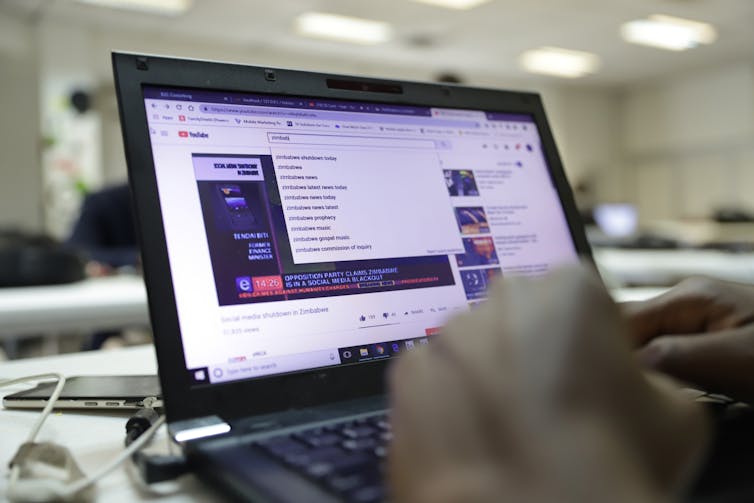
The Zimbabwean government recently shutdown the internet by ordering mobile companies to withhold mobile data. EPA-EFE/STF

As the internet continues to gain considerable power and agency around the world, many governments have moved to regulate it. And where regulation fails, some states resort to internet shutdowns or deliberate disruptions.

The statistics are staggering. In India alone, there were 154 internet shutdowns between January 2016 and May 2018. This is the most of any country in the world.

But similar shutdowns are becoming common on the African continent. Already in 2019 there have been shutdowns in Cameroon, the Democratic Republic of Congo, Republic of Congo, Chad, Sudan and Zimbabwe. Last year there were 21 such shutdowns on the continent. This was the case in Togo, Sierra Leone, Sudan and Ethiopia, among others.

The justifications for such shutdowns are usually relatively predictable. Governments often claim that internet access is blocked in the interest of public security and order. In some instances, however, their reasoning borders on the curious if not downright absurd, like the case of Ethiopia in 2017 and Algeria in 2018 when the internet was shut down apparently to curb cheating in national
examinations.

Whatever their reasons, governments have three general approaches to controlling citzens’ access to the web.

How they do it

Internet shutdowns or disruptions usually take three forms. The first and probably the most serious is where the state completely blocks access to the internet on all platforms. It’s arguably the most punitive, with significant social, economic and political costs.

The financial costs can run into millions of dollars for each day the internet is blocked. A Deloitte report on the issue estimates that a country with average connectivity could lose at least 1.9% of its daily GDP for each day all internet services are shut down.

For countries with average to medium level connectivity the loss is 1% of daily GDP, and for countries with average to low connectivity it’s 0.4%. It’s estimated that Ethiopia, for example, could lose up to US$500,000 a day whenever there is a shutdown. These shutdowns, then, damage businesses, discourage investments, and hinder economic growth.

The second way that governments restrict internet access is by applying content blocking techniques. They restrict access to particular sites or applications. This is the most common strategy and it’s usually targeted at social media platforms. The idea is to stop or limit conversations on these platforms.

Online spaces have become the platform for various forms of political expression that many states especially those with authoritarian leanings consider subversive. Governments argue, for example, that social media platforms encourage the spread of rumours which can trigger public unrest.

This was the case in 2016 in Uganda during the country’s presidential elections. The government restricted access to social media, describing the shutdown as a “security measure to avert lies … intended to incite violence and illegal declaration of election results”.

In Zimbabwe, the government blocked social media following demonstrations over an increase in fuel prices. It argued that the January 2019 ban was because the platforms were being “used to coordinate the violence”.

The third strategy, done almost by stealth, is the use of what is generally known as “bandwidth throttling”. In this case telecom operators or internet service providers are forced to lower the quality of their cell signals or internet speed. This makes the internet too slow to use. “Throttling” can also target particular online destinations such as social media sites.

What drives governments

In most cases the desire to control the internet is rooted in governments’ determination to control the political narrative. Many see the internet as an existential threat that must be contained, no matter what consequences it will have on other sectors.

The internet is seen as a threat because it disrupts older forms of government political control, particularly the control of information. The stranglehold on the production and dissemination of information has always been an invaluable political tool for many African governments.

The loss of this control, at a time when the media has brought politics closer to the people, presents governments with a distinctly unsettling reality. Social media, for example, inherently encourages political indiscipline and engenders the production and circulation of alternative political narratives.

In addition, because it is a networked platform, users are simultaneously and instantaneously local and international and are engaged in an information carnival that is difficult to police. Quite often the narratives therein are at variance with the self-preserving and carefully constructed ideologies of the state.

The shutdown trend

The irony, however, is that as these shutdowns continue, even proliferate, there is scant evidence they actually work. Instead, they seem to animate dissent and encourage precisely the kind of responses considered subversive by many governments This has been the case in Burkina Faso and Uganda, for example, where such bans have simply increased the profile of the causes being agitated.

Internet shutdowns don’t stop demonstrations. Nor do they hinder the production and circulation of rumours: they encourage them instead. Many people are also circumventing the shutdowns through the use of virtual private networks (VPNs). These are networks that redirect internet activity to a computer in a different geographical location thus enabling access to sites blocked in one’s own country. VPNS are now par for the course in countries like Zimbabwe.

The future of unfettered internet access in Africa looks precarious should governments continue on this trajectory. The absence in many African countries of enforceable constitutional guarantees that protect the public’s right to information means there are few opportunities for legal redress. This makes the development of legislative regimes that recognise and protect access to the internet both urgent and necessary.


The Conversation

George Ogola, Reader in Journalism, University of Central Lancashire
This article is republished from The Conversation under a Creative Commons license.

Wednesday, January 16, 2019

Who owns the moon? A space lawyer answers


File 20180717 44079 dricjg.jpg?ixlib=rb 1.1
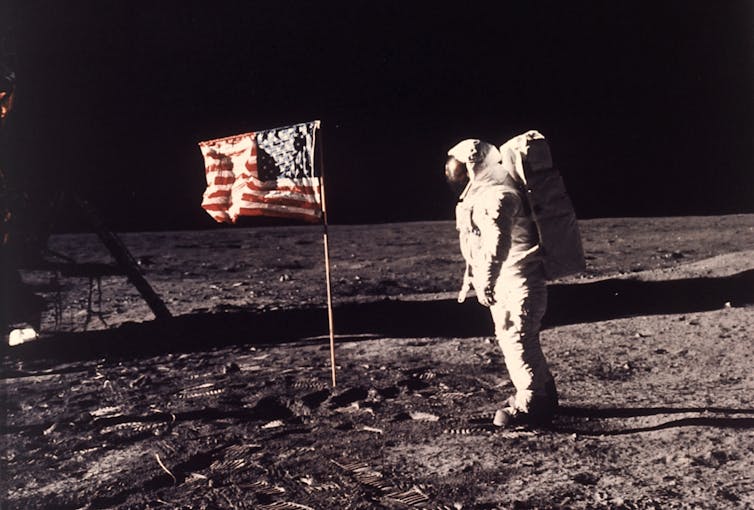
Edwin E. ‘Buzz’ Aldrin Jr. poses for a photograph beside the U.S. flag deployed on the moon during the Apollo 11 mission on July 20, 1969. Neil A. Armstrong/NASA/AP Photo

Most likely, this is the best-known picture of a flag ever taken: Buzz Aldrin standing next to the first U.S. flag planted on the Moon. For those who knew their world history, it also rang some alarm bells. Only less than a century ago, back on Earth, planting a national flag in another part of the world still amounted to claiming that territory for the fatherland. Did the Stars and Stripes on the moon signify the establishment of an American colony?

When people hear for the first time that I am a lawyer practicing and teaching something called “space law,” the question they ask most frequently, often with a big smile or a twinkle in the eye, is: “So tell me, who owns the moon?”

Of course, claiming new national territories had been very much a European habit, applied to non-European parts of the world. In particular the Portuguese, the Spanish, the Dutch, the French and the English created huge colonial empires. But while their attitude was very Europe-centric, the legal notion that planting a flag was an act of establishing sovereignty quickly stuck and became accepted worldwide as part and parcel of the law of nations.

Obviously, the astronauts had more important things on their mind than contemplating the legal meaning and consequences of that planted flag, but luckily the issue had been taken care of prior to the mission. Since the beginning of the space race the United States knew that for many people around the world the sight of a U.S. flag on the Moon would raise major political issues. Any suggestion that the moon might become, legally speaking, part of U.S. backwaters might fuel such concerns, and possibly give rise to international disputes harmful to both the U.S. space program and U.S. interests as a whole.

By 1969, decolonization may have destroyed any notion that non-European parts of the world, though populated, were not civilized and thus justifiably made subject to European sovereignty – however, there was not a single person living on the moon; even life itself was absent.

Still, the simple answer to the question of whether Armstrong and Aldrin by way of their small ceremony did transform the moon, or at least a major part thereof, into U.S. territory turns out to be “no.” They, nor NASA, nor the U.S. government intended the U.S. flag to have that effect.

The first outer space treaty


NASA Lunar Sample Return Container with moon soil on display in a vault at NASA’s Johnson Space Center. OptoMechEngineer, CC BY-SA

Most importantly, that answer was enshrined in the 1967 Outer Space Treaty, to which both the United States and the Soviet Union as well as all other space-faring nations, had become a party. Both superpowers agreed that “colonization” on Earth had been responsible for tremendous human suffering and many armed conflicts that had raged over the last centuries. They were determined not to repeat that mistake of the old European colonial powers when it came to decide on the legal status of the moon; at least the possibility of a “land grab” in outer space giving rise to another world war was to be avoided. By that token, the moon became something of a “global commons” legally accessible to all countries – two years prior to the first actual manned moon landing.

Businessman Rajzeev V. Baagree, who purchased five acres of land on the moon for 1,400 rupees (equivalent to US$31 in 2005) per acre, poses next to documents of proof, at his home in Hyderabad, India. It turned out he got scammed. Mustafa Quraishi/ AP Photo

So, the U.S. flag was not a manifestation of claiming sovereignty, but of honoring the U.S. taxpayers and engineers who made Armstrong, Aldrin, and third astronaut Michael Collins’ mission possible.

The two men carried a plaque that they “came in peace for all mankind,” and of course Neil’s famous words echoed the same sentiment: his “small step for man” was not a “giant leap” for the United States, but “for mankind.” Furthermore, the United States and NASA lived up to their commitment by sharing the moon rocks and other samples of soil from the lunar surface with the rest of the world, whether by giving them away to foreign governments or by allowing scientists from all over the globe to access them for scientific analysis and discussion. In the midst of the Cold War, this even included scientists from the Soviet Union.

Case closed, no need for space lawyers anymore then? No need for me to prepare University of Nebraska-Lincoln’s space law students for further discussions and disputes on the lunar law, right?

No space lawyers needed?

Not so fast. While the legal status of the Moon as a “global commons” accessible to all countries on peaceful missions did not meet any substantial resistance or challenge, the Outer Space Treaty left further details unsettled. Contrary to the very optimistic assumptions made at the time, so far humankind has not returned to the moon since 1972, making lunar land rights largely theoretical.

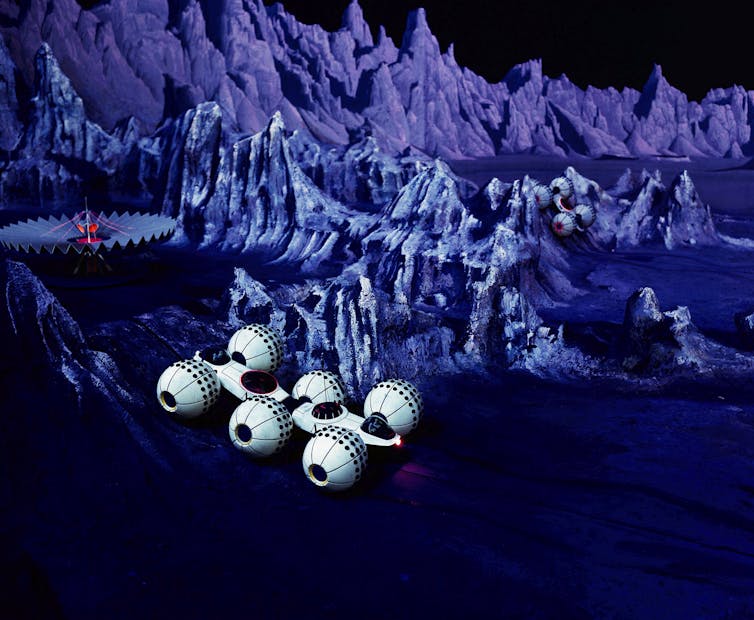
This 1964 file photo from the World’s Fair in the borough of Queens in New York shows a views of a moon colony in the Futurama 2 ride put together by General Motors. AP Photo

That is, until a few years ago when several new plans were hatched to go back to the moon. In addition at least two U.S. companies, Planetary Resources and Deep Space Industries, which have serious financial backing, have started targeting asteroids for the purpose of mining their mineral resources. Geek note: Under the aforementioned Outer Space Treaty, the moon and other celestial bodies such as asteroids, legally speaking, belong in the same basket. None of them can become the “territory” of one sovereign state or another.

The very fundamental prohibition under the Outer Space Treaty to acquire new state territory, by planting a flag or by any other means, failed to address the commercial exploitation of natural resources on the moon and other celestial bodies. This is a major debate currently raging in the international community, with no unequivocally accepted solution in sight yet. Roughly, there are two general interpretations possible.

So you want to mine an asteroid?

Countries such as the United States and Luxembourg (as the gateway to the European Union) agree that the moon and asteroids are “global commons,” which means that each country allows its private entrepreneurs, as long as duly licensed and in compliance with other relevant rules of space law, to go out there and extract what they can, to try and make money with it. It’s a bit like the law of the high seas, which are not under the control of an individual country, but completely open to duly licensed law-abiding fishing operations from any country’s citizens and companies. Then, once the fish is in their nets, it is legally theirs to sell.

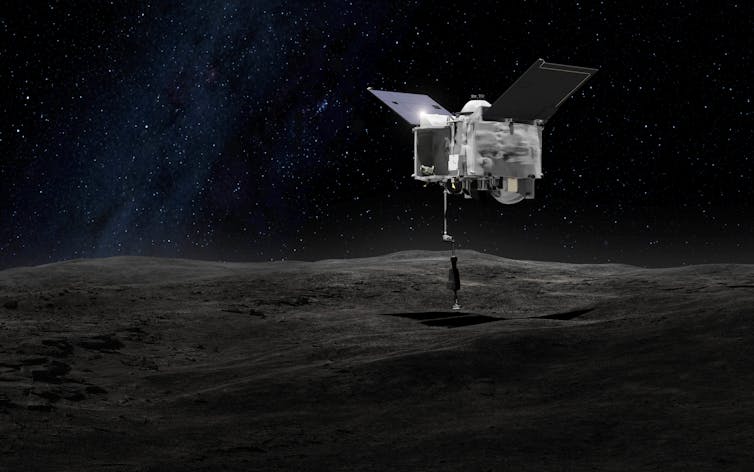
OSIRIS-REx will travel to a near-Earth asteroid called Bennu and bring a small sample back to Earth for study. The mission launched Sept. 8, 2016, from Cape Canaveral Air Force Station. As planned, the spacecraft will reach Bennu in 2018 and return a sample to Earth in 2023. NASA/Goddard Space Flight Center/ASSOCIATED PRESS

On the other hand, countries such as Russia and somewhat less explicitly Brazil and Belgium hold that the moon and asteroids belong to humanity as a whole. And therefore the potential benefits from commercial exploitation should somehow accrue for humanity as a whole – or at least should be subjected to a presumably rigorous international regime to guarantee humanity-wide benefits. It’s a bit like the regime originally established for harvesting mineral resources from the deep seabed. Here, an international licensing regime was created as well as an international enterprise, which was to mine those resources and generally share the benefits among all countries.

While in my view the former position certainly would make more sense, both legally and practically, the legal battle by no means is over. Meanwhile, the interest in the moon has been renewed as well – at least China, India and Japan have serious plans to go back there, raising the stakes even higher.

Therefore, at the University of Nebraska-Lincoln we will need to teach our students about these issues for many years to come. While ultimately it is up to the community of states to determine whether common agreement can be reached on either of the two positions or maybe somewhere in between, it is of crucial importance that agreement can be reached one way or another. Such activities developing without any law that is generally applicable and accepted would be a worst-case scenario. While not a matter of colonization anymore, it may have all the same harmful results.


The Conversation

Frans von der Dunk, Professor of Space Law, University of Nebraska-Lincoln
This article is republished from The Conversation under a Creative Commons license.
Monday, December 24, 2018

The humble origins of 'Silent Night'


File 20181216 185258 1ttjhcv.jpg?ixlib=rb 1.1
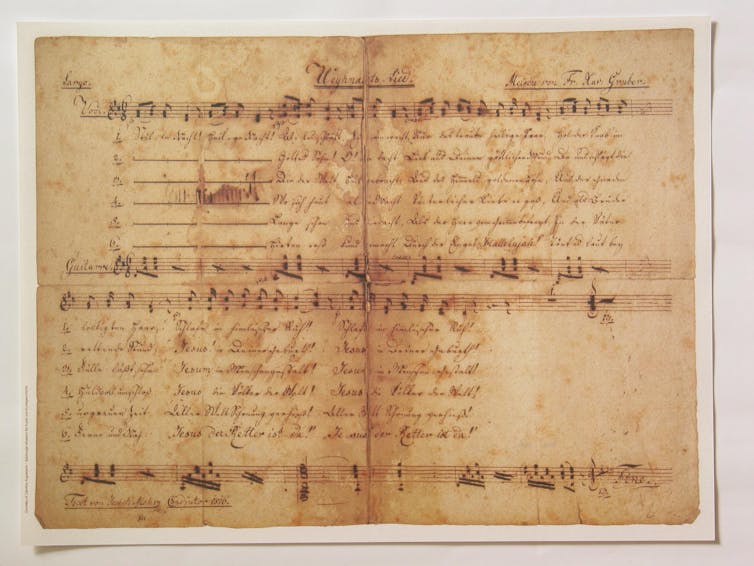
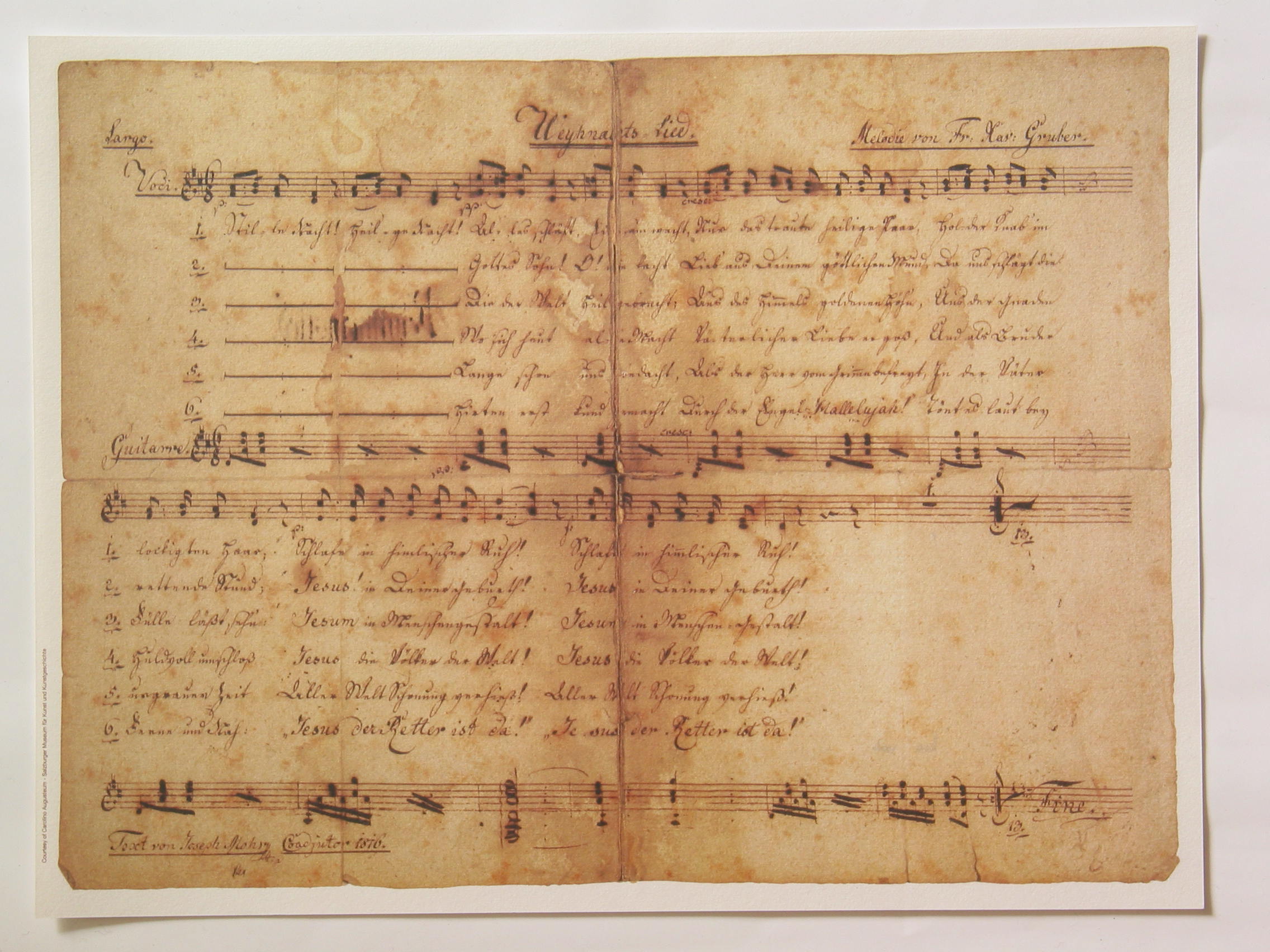
This undated score, written by Joseph Mohr and titled ‘Weynachts Lied’ (‘Christmas Carol’), is the earliest known surviving copy of ‘Silent Night.’ Salzburg Museum

One of the world’s most famous Christmas carols, “Silent Night,” celebrates its 200th anniversary this year.

Over the centuries, hundreds of Christmas carols have been composed. Many fall quickly into obscurity.

Not “Silent Night.”

Translated into at least 300 languages, designated by UNESCO as a treasured item of Intangible Cultural Heritage, and arranged in dozens of different musical styles, from heavy metal to gospel, “Silent Night” has become a perennial part of the Christmas soundscape.

Its origins – in a small Alpine town in the Austrian countryside – were far humbler.
As a musicologist who studies historical traditions of song, the story of “Silent Night” and its meteoric rise to worldwide fame has always fascinated me.

Fallout from war and famine

The song’s lyrics were originally written in German just after the end of the Napoleonic Wars by a young Austrian priest named Joseph Mohr.

In the fall of 1816, Mohr’s congregation in the town of Mariapfarr was reeling. Twelve years of war had decimated the country’s political and social infrastructure. Meanwhile, the previous year – one historians would later dub “The Year Without a Summer” – had been catastrophically cold.

The eruption of Indonesia’s Mount Tambora in 1815 had caused widespread climate change throughout Europe. Volcanic ash in the atmosphere caused almost continuous storms – even snow – in the midst of summer. Crops failed and there was widespread famine.

Mohr’s congregation was poverty-stricken, hungry and traumatized. So he crafted a set of six poetic verses to convey hope that there was still a God who cared.

“Silent night,” the German version states, “today all the power of fatherly love is poured out, and Jesus as brother embraces the peoples of the world.”

A fruitful collaboration

Mohr, a gifted violinist and guitarist, could have probably composed the music for his poem. But instead, he sought help from a friend.

In 1817, Mohr transferred to the parish of St. Nicholas in the town of Oberndorf, just south of Salzburg. There, he asked his friend Franz Xaver Gruber, a local schoolteacher and organist, to write the music for the six verses.

On Christmas Eve, 1818, the two friends sang “Silent Night” together for the first time in front of Mohr’s congregation, with Mohr playing his guitar.

The song was apparently well-received by Mohr’s parishioners, most of whom worked as boat-builders and shippers in the salt trade that was central to the economy of the region.

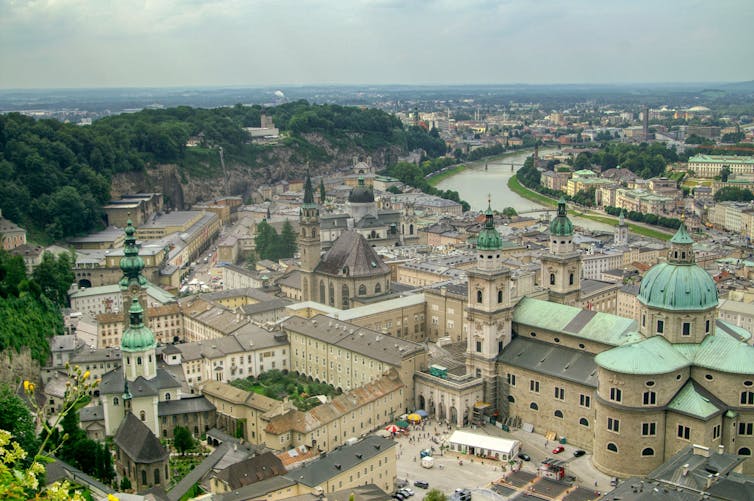
A view of the city of Salzburg and the river Salzach. Uwe Schwarzbach/flickr, CC BY-NC-SA

The melody and harmonization of “Silent Night” is actually based on an Italian musical style called the “siciliana” that mimics the sound of water and rolling waves: two large rhythmic beats, split into three parts each.

In this way, Gruber’s music reflected the daily soundscape of Mohr’s congregation, who lived and worked along the Salzach River.

‘Silent Night’ goes global

But in order to become a worldwide phenomenon, “Silent Night” would need to resonate far beyond Oberndorf.

According to a document written by Gruber in 1854, the song first became popular in the nearby Zillertal valley. From there, two traveling families of folk singers, the Strassers and the Rainers, included the tune in their shows. The song then became popular across Europe, and eventually in America, where the Rainers sang it on Wall Street in 1839.

At the same time, German-speaking missionaries spread the song from Tibet to Alaska and translated it into local languages. By the mid-19th century, “Silent Night” had even made its way to subarctic Inuit communities along the Labrador coast, where it was translated into Inuktitut as “Unuak Opinak.”

The lyrics of “Silent Night” have always carried an important message for Christmas Eve observances in churches around the world. But the song’s lilting melody and peaceful lyrics also reminds us of a universal sense of grace that transcends Christianity and unites people across cultures and faiths.

Perhaps at no time in the song’s history was this message more important than during the Christmas Truce of 1914, when, at the height of World War I, German and British soldiers on the front lines in Flanders laid down their weapons on Christmas Eve and together sang “Silent Night.”

The song’s fundamental message of peace, even in the midst of suffering, has bridged cultures and generations. Great songs do this. They speak of hope in hard times and of beauty that arises from pain; they offer comfort and solace; and they are inherently human and infinitely adaptable.

So, happy anniversary, “Silent Night.” May your message continue to resonate across future generations.The Conversation

A compilation of ‘Silent Night’ performances in different languages at various Christmas in Vienna concerts.

Sarah Eyerly, Assistant Professor of Musicology and Director of the Early Music Program, Florida State University
This article is republished from The Conversation under a Creative Commons license.

Sunday, December 16, 2018

This Christmas tell your children the real Santa Claus story


Santa Claus will soon be coming to town, bringing gifts to children.

Santa has several aliases, depending on the part of the world you live in. The English call him Father Christmas, the French know him as Père Noël, and Kris Kringle seems be a version of the Christkind, or Christ Child, who leaves treats for good German Lutherans.

In the Netherlands, he arrives in town on a steamboat or horse from Spain. On the night of Dec. 5, Dutch children put their shoes on the hearth – these days near the central heating duct – hoping that he will fill them with sweet rewards rather than a reprimand for poor behavior. The Dutch call him Sinterklaas – which has come into American English as ‘S

St. Nicholas and Santa Claus are historically the same man. But unlike the jolly figure who purportedly flies on a sleigh from the North Pole, the saint came originally from the balmy Mediterranean coast.

Who was St. Nicholas really?


As a historian of religions who has written books about ancient saints, I caution against reading accounts of saints’ lives as factual history. However, the earliest stories of St. Nicholas seem to correlate with histories and church documents of the period.

According to these early medieval texts, Nicholas was born around 260 A.D. into a Christian family. His birthplace was near the town of Myra, now called Demre, on the southwest coast of modern Turkey. At the time, Christianity was illegal under the Roman empire.

He studied to be a priest and spent time in prison for his beliefs. However, after Emperor Constantine legalized Christianity, Nicholas was elected Bishop of Myra.

During his lifetime, he became famous for defending his people against imperial taxes and other forms of oppression. According to the earliest document about Nicholas, from the fifth century, he prevented three loyal generals from unjust execution for treason.

A ninth-century Greek legend claims he revived three scholars who had been murdered and stashed in a pickling tub. He also saved three girls whose poverty-stricken father wanted to sell them into prostitution.

After his death, people believed that Nicholas continued to work miracles. His burial place, below the floor of his church, became a popular destination for pilgrims who begged Nicholas to relay their petitions to God.

Proof that Nicholas was listening, they believed, was in the “manna” – holy oil or water – that dripped from the tomb. Pilgrims took this manna home in little bottles or used rags to sop up the moisture that dripped from the saint’s tomb in its subterranean crypt. This was a common pilgrimage practice at Christian shrines.

Visitors to the coastal town of Myra spread Nicholas’ fame along sea routes across the Mediterranean. From there, word passed to the Latin West, and upriver to Russia. Soon, pilgrims from all over Christendom were journeying to Myra to seek the gifts of protection and healing from the saint, who was said to be especially attentive to children.

Italians steal the body

This pilgrimage was disrupted in the 11th century when Seljuk Turks invaded Anatolia. Christians feared that the Muslims who now governed Demre would disregard the saint’s tomb. So, one crew of pious Italian Christians decided to take action.

In 1087, three ships laden with grain set out from Bari, on Italy’s southeast coast, bound for Antioch. However, according to a monk named Nicephorus who wrote immediately after the event, their real mission was to steal St. Nicholas’ body.

In Antioch they heard a rumor that the Venetians too were planning a similar heist. The Barian sailors hastily sold off their grain and headed for Myra in search of St. Nicholas’ church. Priestly custodians there became suspicious when the sailors asked to see the saint’s body.

The Barians claimed that the pope had a vision directing him to fetch Nicholas to Italy. When the priests refused, they offered gold for the relics, but the offer “was tossed aside like dung.” Done with arguing, the Barians caught and bound the priests. Suddenly, a phial of manna fell to the pavement and broke. It seemed that St. Nicholas spoke to them: “It is my will that I leave here with you.”

So, the Barians broke through marble floor with picks and hammers. A delicious aroma filled the church as they opened the tomb. They found the bones swimming in a small sea of manna. They carefully wrapped the relics in a silk case brought for the purpose.

Nicephorus describes how they fled to their ship, pursued by outraged priests and a howling crowd of citizens demanding that they “give back the father who has by his protection kept us safe from visible foes.”

Yet the crew made it back to the harbor at Bari, where the townsfolk and clergy processed, singing joyous hymns, to greet the saint.

St. Nicholas gets a reputation

A new church was built for Nicholas in the court of the governor of Bari. A few years later, Pope Urban II — the one who would preach the First Crusade – formally enshrined the relics of the saint.

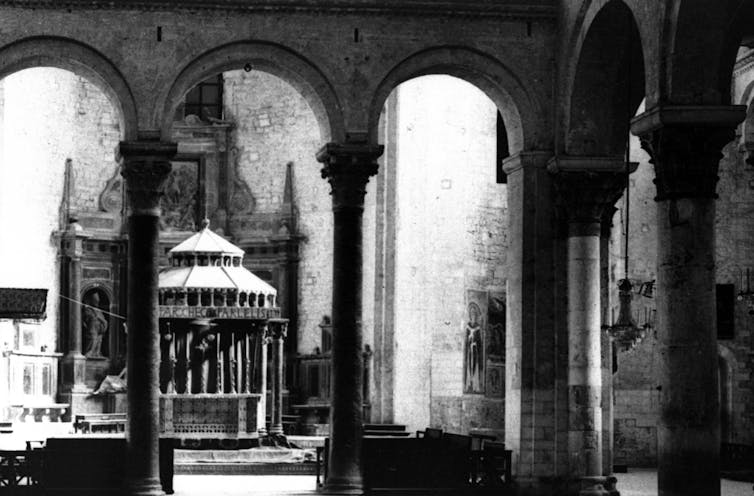
A view of the interior of the church of St. Nicholas, built in the 11th century, at Bari. AP Photo

The Barians believed that manna continued to ooze from Nicholas’ coffin. And going by the claim on the basilica’s website, the belief persists to this day.

Within a decade of the saint’s arrival in 1087, the Basilica di San Nicola was one of Europe’s most popular pilgrimage destinations. May 9 is still celebrated as the day that Nicholas moved shrines or was “translated.”

For at least five centuries, the region, which includes Bari and its saint, was caught in constant wars for possession of southern Italy. In 1500, Bari fell into the hands of King Ferdinand of Aragon, whose marriage to Queen Isabella of Spain created a global naval power.

Because Nicholas was a patron saint of sailors, Spanish sailors and explorers carried stories of the saint wherever they went: Mexico, the Caribbean, Florida and other ports around the world.

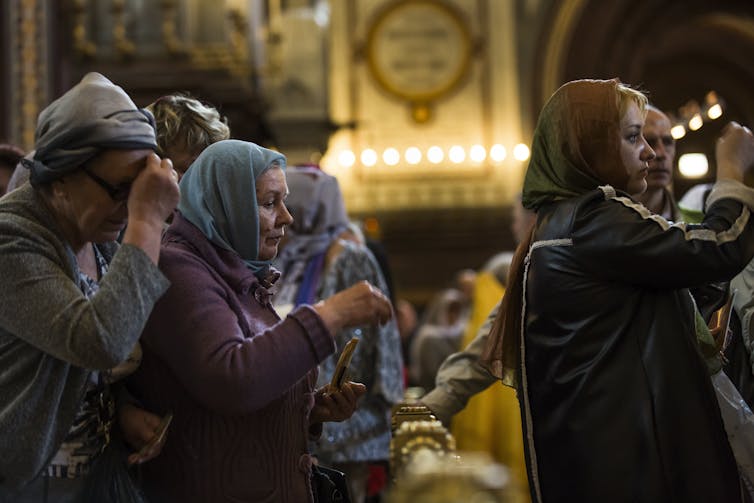
St. Nicholas around the world: Russian Orthodox believers line up to kiss the relics of St. Nicholas that were brought from an Italian church where they have lain for 930 years. AP Photo/Alexander Zemlianichenko

Even the Dutch, who rebelled against Catholic Spain and formed a Calvinist republic in 1581, somehow maintained their devotion to Sinterklass. In other parts of Europe, St. Nicholas lost his feast day but his concern for children helped link him to the gift-giving tradition of another December feast day: Christmas.

How true is this story?

In the 1950s, Italian scientists examined the bones enshrined in the Basilica di San Nicola, seeking evidence of authenticity.

They found the skull and incomplete skeleton of a man, dating to around the fourth century. More recent technology has allowed experts to use the bones to reconstruct Nicholas’ face – he looks like an old Greek man with a broad, worn face. He lacks the rosy cheeks and Anglo-Germanic features of modern Christmas decorations, but like the Santa Claus of greeting cards, he was probably bald.

Turkish archaeologists now claim that the Italians stole the wrong body and that Nicholas’ remains never left Demre. They have discovered another sarcophagus dating to the fourth century in the same church, which they claim contains the saint.

Meanwhile, historians have suggested that the story of Nicholas’ translation is a fiction purposely created to advertise a new pilgrimage center in the 11th century. Although relic theft was common in the Middle Ages, grave-robbers often made mistakes or lied about the authenticity and source of their bones. Nothing in the shrine at Bari proves that the bones inside belong to the fourth-century Bishop Nicholas.

Which Santa story will you tell this holiday season? Delta News Hub/Flickr.com, CC BY

Still, this holiday season, when you tell your children about Santa Claus, why not include the tale of Santa’s well-traveled bones? And don’t forget the manna, which is believed to still flow in Bari.


The Conversation

Lisa Bitel, Professor of History & Religion, University of Southern California – Dornsife College of Letters, Arts and Sciences
This article is republished from The Conversation under a Creative Commons license.