Sunday, September 29, 2019

The history of the cross and its many meanings over the centuries


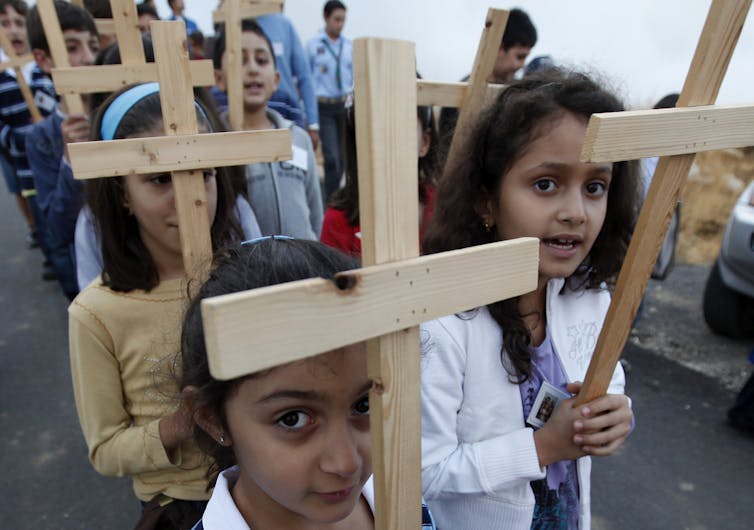
A procession of Christian girls, venerating the Cross, in the village of Qanat Bekish, Lebanon. AP Photo/Hussein Malla

In the fall, Catholics and some other Christian churches celebrate the Feast of the Holy Cross. With the feast, Christians commemorate Jesus Christ’s life, especially his salvific death on the cross and his later Resurrection, believing this offers them the promise of forgiveness and eternal life.

The feast has its roots in late antiquity, a time when the cross became an important part of Christian art and worship. The cross, once a shameful form of execution for criminals, has became a predominant symbol of Christ and Christianity.

However, the cross at times has also taken on darker meanings as a symbol of persecution, violence and even racism.

The early cross

As a scholar of medieval Christian history and worship, I have studied this complicated history.
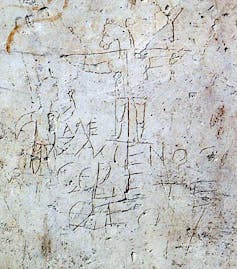
Second century pagan graffito depicting a man worshipping a crucified donkey-headed figure.

A famous piece of early-third century Roman wall art, the “Alexamenos graffito,” depicts two human figures, with the head of a donkey, arms stretched out in a T-shaped cross, with the caption “Alexamenos worships his god.”

Christianity was outlawed at the time in the Roman Empire and criticized by some as a religion for fools. The caricature of “Alexamenos,” offering prayers to this crucified figure was a way of depicting Christ with a donkey’s head and ridiculing his god.

But for Christians, the cross had deep meaning. They understood Christ’s death on the cross to be “completed” by God’s raising him from the dead three days later. This Resurrection was a sign of Christ’s “victory” over sin and death.

Believers could share in this victory by being baptized, forgiven of past sin and “reborn” into a new life in the Christian community, the church. Christians, then, frequently referred to the Christ’s cross both as the “wood of life” and as a “victorious Cross.”
 

The true cross?

In the early fourth century, Emperor Constantine legalized Christianity. He authorized excavation of some of the holy sites of Christ’s life in what came to be called the “Holy Land.” At the time, it was part of the Roman province of Syria Palestina, bracketed by the Jordan River to the east, the Mediterranean Sea to the west and Syria to the north.

By the fifth century, the legend arose that pieces of crosses were uncovered by Constantine’s mother, Helena, during these excavations. Believers said a miraculous healing took place when a sick woman was touched with one piece, proof that it was a section of the actual cross of Christ.

Constantine built a large church, the Martyrium, over what was assumed to be the location of Jesus’ tomb. The September date of that church’s dedication came to be celebrated as the feast of the “Exaltation of the Cross.”

Helena’s supposed “finding” of the cross itself was given its own feast day in May: the “Invention of the Cross.” Both feasts were celebrated in Rome by the seventh century.

One section of what was believed to be the true cross was kept and venerated on Good Friday in Jerusalem from the mid-fourth century until its conquest by a Muslim caliph in the seventh century.

Later representations

Numerous Christian churches were constructed in the Roman Empire during the fourth and fifth centuries. With imperial financial support, these large buildings were decorated with intricate mosaics depicting figures from the scriptures, especially of Christ and the apostles.

The cross that appears in mosaic is a golden cross adorned with round or square precious gems, a visual representation of the victory over sin and death achieved by Christ’s death. It was called a “crux gemmata,” or “gemmed cross.”

From the sixth century through the early Middle Ages, artistic representations of the Crucifixion became more common. Sometimes Christ was depicted on the cross alone, perhaps between the other two criminals crucified with him. More often, Christ on the cross is surrounded on either side by the figures of Mary and the apostle, Saint John.
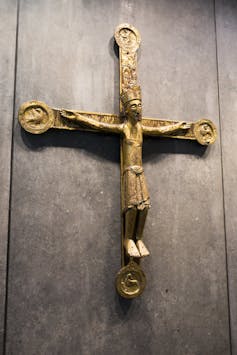
Early medieval representation of Christ on the cross. Thomas Quine, CC BY

Public veneration of the cross on Good Friday became increasingly common outside of the Holy Land, and this ritual was observed in Rome in the eighth century.

During the medieval period, the crucified Christ was commonly portrayed as a serene figure. The representation tended to change over the centuries, to Christ as a tortured, twisted victim.

Different meanings

During the Reformation, Protestant churches rejected the use of the crucifix. In their view, it was a human “invention,” not in frequent use in the primitive church. They claimed the crucifix had become the object of idolatrous Catholic veneration, and used other versions of a plain cross instead.
Differing depictions of the cross expressed deeper conflicts within Western Christianity.

But even before that, the cross was used in a divisive way. During the High Middle Ages, the cross became connected with a series of religious wars waged from Christian Europe to liberate the Holy Land from the grasp of Muslim rulers.

Those who chose to go and fight would wear a special garment, marked with a cross, over their daily clothes. They had “taken the cross” and came to be called “Crusaders.”

Of all the Crusades, only the first one in the late 11th century really accomplished its objective. These Crusaders conquered Jerusalem in a bloody battle that did not spare women and children in the effort to rid the city of “infidels.” The Crusades also sparked waves of active hostility toward European Jews, resulting in outbreaks of violence against Jewish communities for centuries.

By the 19th century, the term “crusade” came to refer more generally to any kind of struggle for a “righteous” reason, whether religious or secular. In the United States at that time, the term was used to describe a number of religious-social activists. For example, abolitionist newspaper editor William Lloyd Garrison was called a “Crusader” in his political struggle to end the evil of slavery.

Symbol of pro-white agenda

Later the cross was also literally taken up by activists demonstrating against social advances. For example, the Ku Klux Klan, as part of their terror campaign, would often burn plain wooden crosses at meetings or on the lawns of African Americans, Jews or Catholics.
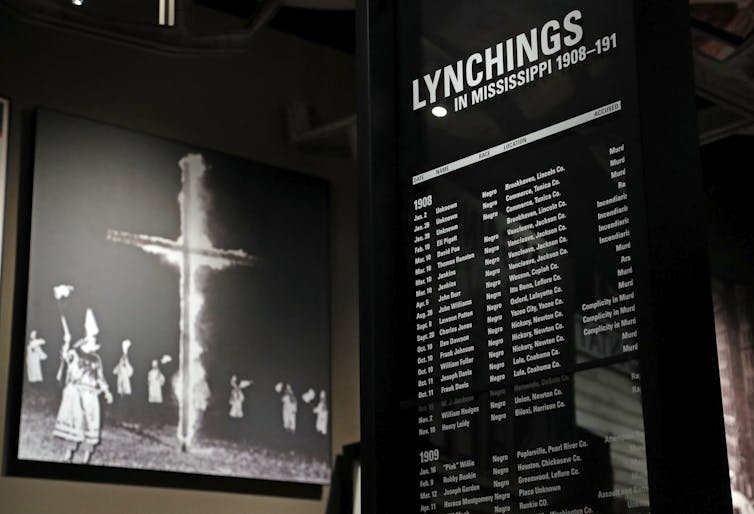
A monolith listing the names, dates and rationale for the lynching of African Americans stands in front of a photograph of a burning Ku Klux Klan cross on display in the Mississippi Civil Rights Museum in Jackson, Miss. AP Photo/Rogelio V. Solis

A few decades later, Adolf Hitler’s quest for German expansionism and persecution of Jews, based on his belief in the superiority of the “Aryan race,” came to be crystallized in the sign of the swastika. Originally a religious symbol from India, it had for centuries been used in Christian iconography as one of many artistic expressions of the cross.

Even today, the newspaper of the KKK is entitled The Crusader, and various white supremacy groups use forms of the cross as a symbol of their own pro-white agenda on flags, tattoos and clothing.
The Feast of the Holy Cross focuses on the meaning of the cross as a powerful sign of divine love and salvation for early Christians. It is tragic that the cross has also been twisted into a vivid sign of hatred and intolerance.

[ Deep knowledge, daily. Sign up for The Conversation’s newsletter. ]The Conversation
Joanne M. Pierce, Professor of Religious Studies, College of the Holy Cross
This article is republished from The Conversation under a Creative Commons license.
Joanne M. Pierce, College of the Holy Cross

Friday, August 9, 2019

The Lottery-funded library with empty shelves

#DodgyLottery part three: R20 million has been spent on the Credo Mutwa Museum and Library, with very little to show for it

Photo of empty bookshelves
Nearly all the bookshelves in the Credo Mutwa museum and library are empty. Photo: Raymond Joseph
Even though the National Lotteries Commission has pumped over R19.6 million into a library and museum complex to celebrate the life and work of one of Kuruman’s most famous sons, there is very little other than a building to show for it.

And, although the Lottery funding was granted in 2017, the complex was only completed earlier this year.

Two companies, PKT Consulting Engineers and Kaone Wethu, which were involved in the construction of the complex have links to NLC Chief Operating Officer Phillemon Letwaba and members of his family.

The complex is intended to preserve the heritage of the world-famous sangoma, author, and African storyteller, Credo Mutwa, now 98 and sickly, who lives across the road from the newly-built brick building.

“In 2017, the NLC approved funding for the library and museum for the preservation and display of the work of Dr Vusamazulu Credo Mutwa, a well-known African healer, shaman and a writer. The establishment will contribute to the documentation and preservation of the indigenous knowledge systems (IKS) of South Africa,” the NLC said in a media statement late in February this year, shortly before the centre was opened.

At the height of Mutwa’s fame, famous people and celebrities, including Nelson Mandela, Princess Diana and her brother, Earl Charles Spencer, sought Mutwa’s counsel.

But despite the NLC’s stated plans, the museum building is largely an empty shell and negotiations with Mutwa’s family to display his work and the collection of books, artefacts and art he has collected over a lifetime are yet to bear fruit.


To be fair not every bookshelf is empty. The left bookshelf pictured above is filled with copies of Mutwa’s seminal work Indaba My Children. Photo: Raymond Joseph

We visited the site in mid-July.

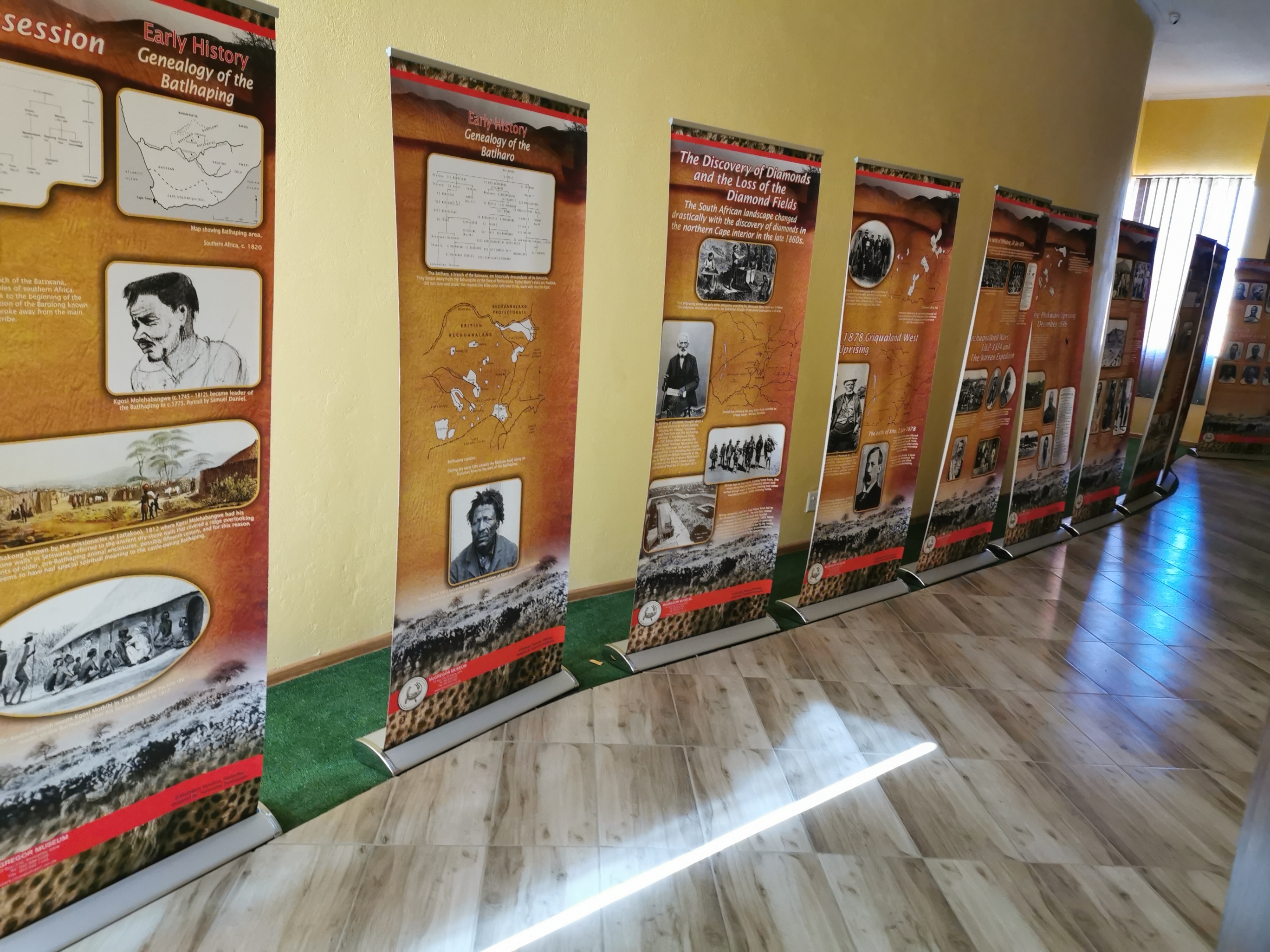
The only exhibit in the museum is a travelling one consisting of a series of illustrated banners that tell the history of the Northern Cape. It is on loan from the McGregor Museum in Kimberley.

There is also an audio-visual presentation of an SABC series about Mutwa, which is played when people visit the museum. In spite of the millions from the Lottery, curator Asandiswa Manatha says that funds are not yet available to stock the museum with exhibits.

In the library section, there is only one rack with any books – including several shelves of copies of Mutwa’s seminal work, Indaba My Children, and an eclectic mix of paperbacks and some children’s books. The rest of the shelves are bare and gathering dust, apparently because there are no funds to stock the library.

The NLC says it will continue to support the museum and the library, after spending almost R20 million on the building.

“The NLC has funded the construction of the museum in honour of Credo Mutwa,” NLC spokesman Ndivhuho Mafela said in response to emailed questions.

“We have handed over the facility to the community and we are informed that curators are appointed to assist the facility. The Commission will continuously provide support where necessary and required to ensure that the facility fully operates to its potential.”

After GroundUp published Part One of this series on Friday, the NLC released a statement saying:

“The Credo Mutwa Museum has since been completed and handed over to the community. The NLC is assisting the community and the appointed curators to finalise issues surrounding intellectual property of Sanusi Credo Mutwa.”


This travelling exhibit is the only display in the museum. It tells the history of the Northern Cape and is on loan from the McGregor Museum in Kimberley. Photo: Raymond Joseph

For the record

As this reporter’s tour of the facility was ending, I was confronted by local activist Sandra Melato, who earlier in my investigation, had complained during phone calls with me of “corruption” involving the museum and some other NLC projects in Kuruman. She told me that her life was “in danger” because she had spoken out about corruption.

But now she accused me of being “against black development”, saying: “When the NLC gives money to white people you do and say nothing, but when they help blacks you say they are corrupt.”

Mafela said that Melato had made “serious allegations of intimidation” against me.


R20 million of Lottery money has gone to the Credo Mutwa museum and library in Kuruman. Photo: Raymond Joseph
© 2019 GroundUp.

Sunscreen wouldn't have saved Bob Marley from melanoma, and it won't help other dark-skinned people


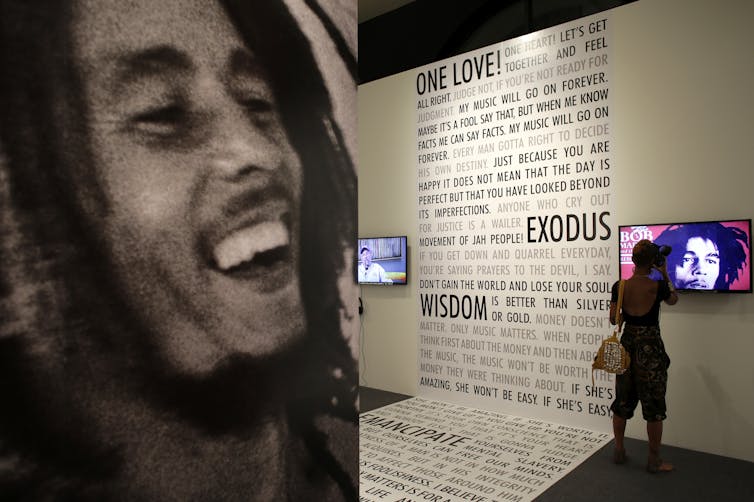
An image of Bob Marley at a Bob Marley Exhibit in Miami Oct. 16, 2013. Lynne Slakdy/AP Photo

Melanoma is a potentially deadly form of skin cancer linked to overexposure to ultraviolet (UV) rays from the sun. Sunscreen can block UV rays and therefore reduce the risk of sun burns, which ultimately reduces the risk of developing melanoma. Thus, the promotion of sunscreen as an effective melanoma prevention strategy is a reasonable public health message.

While this may be true for light-skinned people, such as individuals of European descent, this is not the case for darker skinned people, or individuals of African descent.

The public health messages promoted by many clinicians and public health groups regarding sunscreen recommendations for dark skin people is incongruent with the available evidence. Media messaging exacerbate the problem with headline after headline warning that black people can also develop melanoma and that blacks are not immune. To be sure, blacks can get melanoma, but the risk is very low.

In the same way, men can develop breast cancer, however, we do not promote mammography as a strategy to fight breast cancer in men.

This message is important to me as a black, board certified dermatologist and health services researcher at Dell Medical School at the University of Texas at Austin, where I am director of the pigmented lesion clinic. In this capacity I take care of patients at high risk for melanoma.

Melanoma in black people is not associated with UV exposure


Darker skin provides more protection from damage by the ultraviolet rays of the sun. Spotmatik/Shutterstock.com

In the U.S., melanoma is 20 to 30 times more common among whites compared to blacks.

In blacks, melanoma usually develops in parts of the body that get less sun exposure, such as the palms of the hands and soles of the feet. These cancers are called “acral melanomas,” and sunscreen will do nothing to reduce the risk of these cancers.

When was the last time you had a sunburn on the palms or soles? Even among whites, there is no relationship between sun exposure and the risk of acral melanomas. Famously, Bob Marley died from an acral melanoma on his great toe, but sunscreen would not have helped.

The research on the association of UV radiation and melanoma among blacks is lacking. Most studies assessing the relationship exclude patients of darker skin types. In the largest study of this question to date, no connection was found between UV index or latitude and melanoma among black people.

Racial disparities in melanoma outcomes are not related to UV exposure

Many dermatologists often point out that black patients tend to show up to the doctor with later stage melanoma, which is true. However, this is an issue of access and awareness and has nothing to do with sunscreen application. Black people should be aware of growths on their skin and seek medical attention if they have any changing, bleeding, painful, or otherwise concerning spots, particularly on the hands and feet.

However, the notion that regular application of daily sunscreen will reduce an already extremely rare occurrence is nonsensical.

UV radiation does affect dark skin and can cause DNA damage; however, the damage is seven to eight times lower than the damage done to white skin, given the natural sun-protective effect of increased melanin in darker skin. To be clear, using regular sunscreen may help with reducing other effects of the sun’s rays such as sun burns, wrinkling, photoaging and freckling, which are all positive, but for the average black person sunscreen is unlikely to reduce their low risk of melanoma any further.

If sunscreen was important in the prevention of melanoma in dark-skinned patients, then why have we never heard of an epidemic of melanoma in sub-Saharan Africa, a region with intense sun, a lot of black people, and little sunscreen?

In certain sub populations of black people, such as those with disorders causing sun sensitivity, albino patients, or patients with suppressed immune systems, sunscreen use may reduce risk of melanoma.

But if you don’t fall into one of these categories, any meaningful risk reduction from the application of sunscreen is unlikely.

Melanoma public health messaging must change


Sunscreens have not been shown to protect black skin from melanoma. LightField Studios/Shutterstock

When it comes to the public health message related to sunscreen, skin cancer, and black people a one-size-fits-all approach misses the mark. The facts simply do not add up for the recommendation of sunscreen as prevention of melanoma in black people. Many dermatology and skin cancer focused organizations (a few of which I’m a member), promote the public health message of sunscreen use to reduce melanoma risk among black patients. However, this message is not supported by evidence.

There exists no study that demonstrates sunscreen reduces skin cancer risk in black people. Period.

This issue of regular sunscreen use in black people was made even more pressing after the release of a study last week on sunscreen absorption in the Journal of the American Medical Association. This study showed that significant amounts of certain chemical sunscreen ingredients can get in the blood when used at maximal conditions, with unknown impacts on human health. To me, the most shocking part of the study was that most of the participants were black, the group least likely to derive any meaningful associated health benefits from sunscreen, while being exposed to potentially harmful levels of chemicals.

As dermatologists and public health advocates, we can do a better job educating patients and the public about melanoma prevention, without promoting public health messages that are grounded in fear and/or lack evidence. Black people should be informed that they are at risk of developing melanoma, but that risk is low. 

Any dark skinned person who develops a new, changing or symptomatic mole should see their doctor, particularly if the mole is on the palms or soles. We don’t know what the risk factors are for melanoma in black or dark skinned people, but they certainly are not UV rays.

The Conversation
Adewole S. Adamson, Assistant Professor of Internal Medicine (Division of Dermatology), University of Texas at Austin
This article is republished from The Conversation under a Creative Commons license.

Friday, July 12, 2019

Policing forums demand state of emergency in “gang-infested” areas

Bheki Cele announced on Thursday night that the SANDF would be deployed to several townships on the Cape Flats to assist with policing measures to curb crime

Photo of picketers
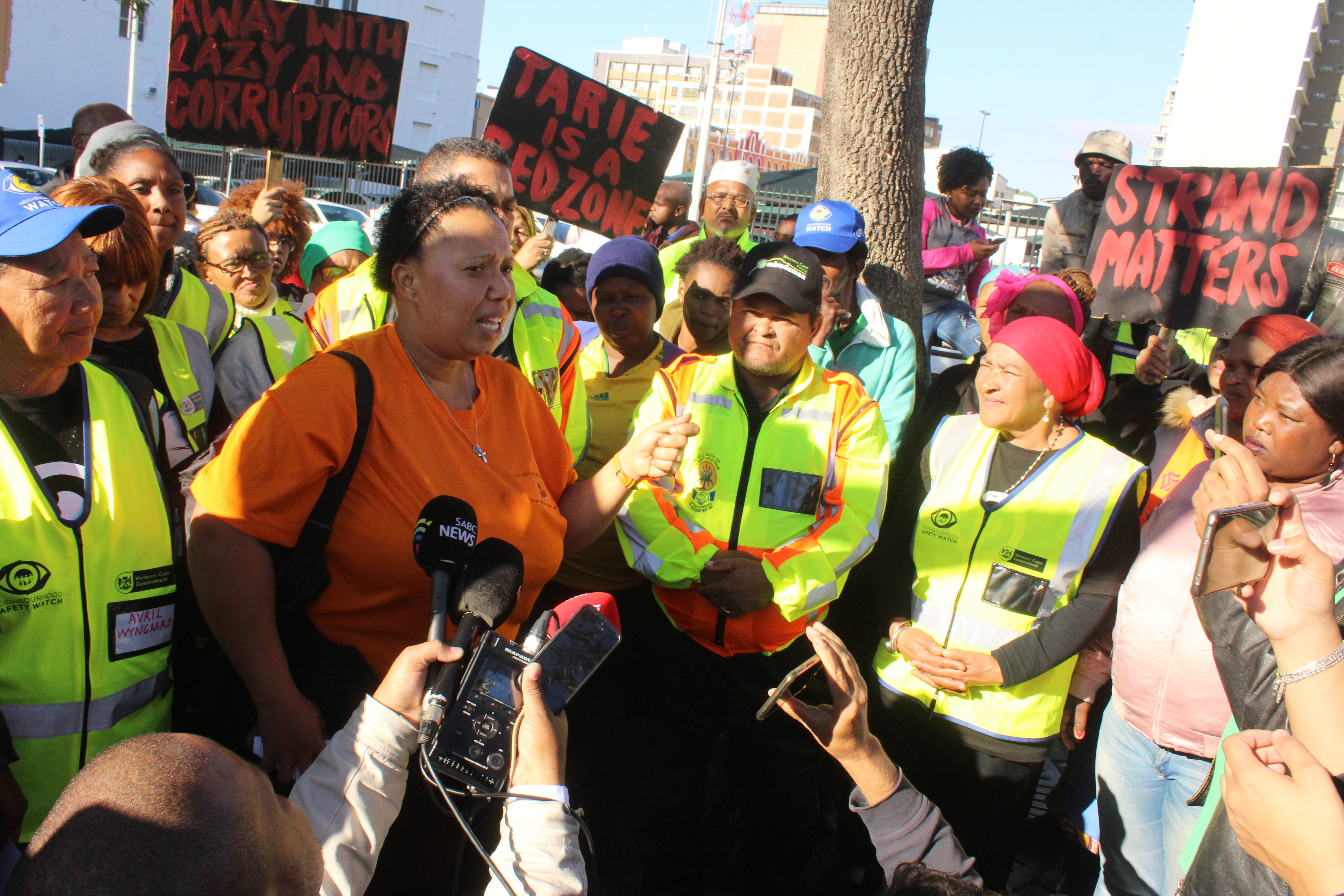
Mitchells Plain Community Policing Forum chairperson, Lucinder Evans (centre in orange), says children were confined to their homes during the recent school holidays because of gang violence in the area. Photo: Velani Ludidi
“We demand that a state of emergency is declared in gang-infested areas,” said Fransina Lukas, chairperson of the Western Cape Community Policing Forum (CPF) board.

On Thursday, Lukas joined over a dozen members of CPFs and neighbourhood watches from across Cape Town to picket outside Parliament ahead of Police Minister Bheki Cele’s budget vote speech.

Hours after the picket, Cele announced that the SANDF would be deployed to support policing in Cape Flats precincts with soaring murder rates and incidents of gang violence.

“All we want is for the government to work with us and include us when making decisions about our communities,” said Lukas. She said the picket was to highlight growing concerns about crime in the province ahead of a crime summit expected to take place in Paarl over the weekend.

Among their demands was for the deployment of additional resources to stabilise gang-ridden areas. The group also said that interventions by all three spheres of government was needed to resolve the problem.

“We demand special courts for gangsters and that there is no bail for people arrested for gang-related activities,” said Lukas. She also called for job creation projects and social development in crime hotspots.

Lucinder Evans, Mitchells Plain CPF cluster chairperson, said children were confined to their homes during the recent school holidays because of shootings in the area. “The municipality must invest in townships not just in rich areas. We want to see cooperation between the Metro police and the South African Police,” she said.

Shanaaz Sullie from Strand said, “We are prisoners in our own homes because of the gangs. No one is safe. All we are asking from the minister and others is that they help us fight this.”

Before dispersing, the group stood in a circle and said a prayer. “God must give us direction now. He [Cele] has been silent and our children are dying like flies,” said CFP member, Dumsani Mziki.

Alvin Rapea, Chief Secretary for Police, accepted the CPFs’ memorandum and promised to deliver it to Cele. Alluding to Cele’s annoucement on the deployment of the army, Rapea told picketers, “Expect a positive response because he has been listening.”

 12 July 2019   By
© 2019 GroundUp.