Monday, October 26, 2020

The neural cruelty of captivity: Keeping large mammals in zoos and aquariums damages their brains


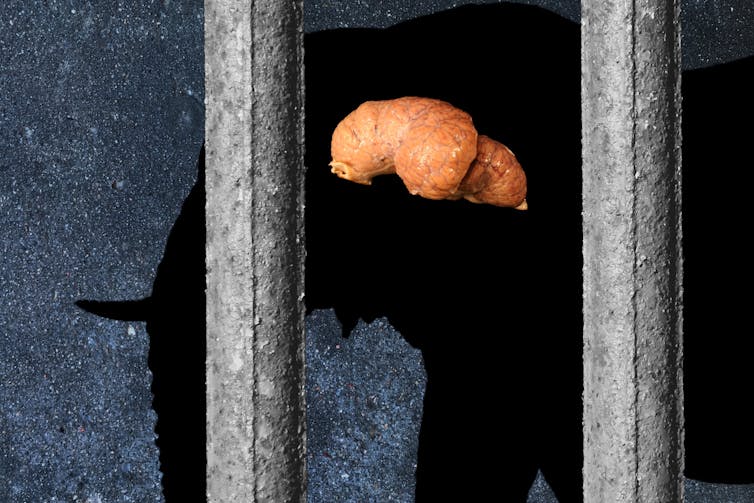
Photograph of an elephant brain. Dr. Paul Manger/ University of the Witwatersrand, Johannesburg, CC BY-ND

Hanako, a female Asian elephant, lived in a tiny concrete enclosure at Japan’s Inokashira Park Zoo for more than 60 years, often in chains, with no stimulation. In the wild, elephants live in herds, with close family ties. Hanako was solitary for the last decade of her life.

Kiska, a young female orca, was captured in 1978 off the Iceland coast and taken to Marineland Canada, an aquarium and amusement park. Orcas are social animals that live in family pods with up to 40 members, but Kiska has lived alone in a small tank since 2011. Each of her five calves died. To combat stress and boredom, she swims in slow, endless circles and has gnawed her teeth to the pulp on her concrete pool.

Unfortunately, these are common conditions for many large, captive mammals in the “entertainment” industry. In decades of studying the brains of humans, African elephants, humpback whales and other large mammals, I’ve noted the organ’s great sensitivity to the environment, including serious impacts on its structure and function from living in captivity.
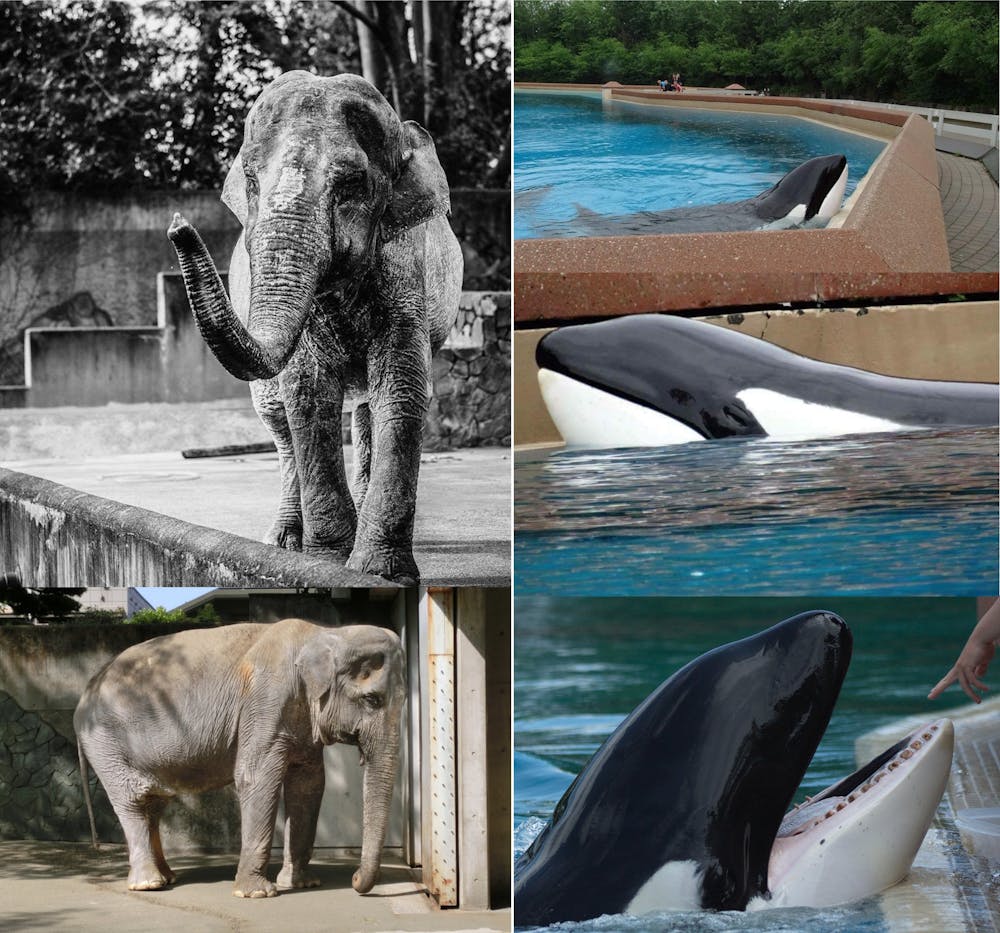
Hanako, an Asian elephant kept at Japan’s Inokashira Park Zoo; and Kiska, an orca that lives at Marineland Canada. One image depicts Kiska’s damaged teeth. Elephants in Japan (left image), Ontario Captive Animal Watch (right image), CC BY-ND

Affecting health and altering behavior

It is easy to observe the overall health and psychological consequences of life in captivity for these animals. Many captive elephants suffer from arthritis, obesity or skin problems. Both elephants and orcas often have severe dental problems. Captive orcas are plagued by pneumonia, kidney disease, gastrointestinal illnesses and infections.

Many animals try to cope with captivity by adopting abnormal behaviors. Some develop “stereotypies,” which are repetitive, purposeless habits such as constantly bobbing their heads, swaying incessantly or chewing on the bars of their cages. Others, especially big cats, pace their enclosures. Elephants rub or break their tusks.

Changing brain structure

Neuroscientific research indicates that living in an impoverished, stressful captive environment physically damages the brain. These changes have been documented in many species, including rodents, rabbits, cats and humans.

Although researchers have directly studied some animal brains, most of what we know comes from observing animal behavior, analyzing stress hormone levels in the blood and applying knowledge gained from a half-century of neuroscience research. Laboratory research also suggests that mammals in a zoo or aquarium have compromised brain function.

This illustration shows differences in the brain’s cerebral cortex in animals held in impoverished (captive) and enriched (natural) environments. Impoverishment results in thinning of the cortex, a decreased blood supply, less support for neurons and decreased connectivity among neurons. Arnold B. Scheibel, CC BY-ND

Subsisting in confined, barren quarters that lack intellectual stimulation or appropriate social contact seems to thin the cerebral cortex – the part of the brain involved in voluntary movement and higher cognitive function, including memory, planning and decision-making.

There are other consequences. Capillaries shrink, depriving the brain of the oxygen-rich blood it needs to survive. Neurons become smaller, and their dendrites – the branches that form connections with other neurons – become less complex, impairing communication within the brain. As a result, the cortical neurons in captive animals process information less efficiently than those living in enriched, more natural environments.
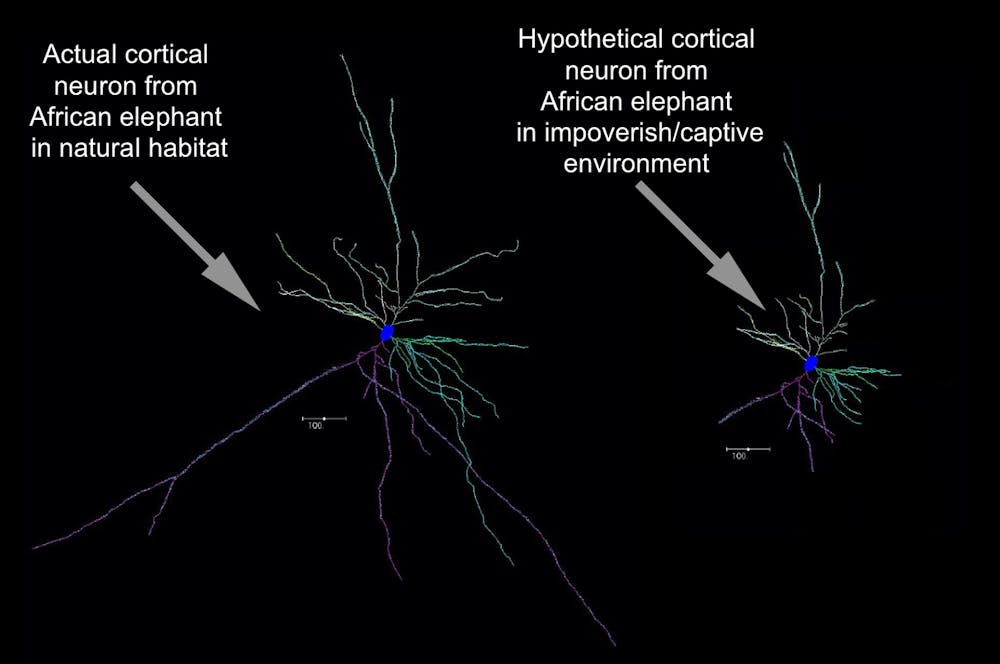
An actual cortical neuron in a wild African elephant living in its natural habitat compared with a hypothesized cortical neuron from a captive elephant. Bob Jacobs, CC BY-ND

Brain health is also affected by living in small quarters that don’t allow for needed exercise. Physical activity increases the flow of blood to the brain, which requires large amounts of oxygen. Exercise increases the production of new connections and enhances cognitive abilities.

In their native habits these animals must move to survive, covering great distances to forage or find a mate. Elephants typically travel anywhere from 15 to 120 miles per day. In a zoo, they average three miles daily, often walking back and forth in small enclosures. One free orca studied in Canada swam up to 156 miles a day; meanwhile, an average orca tank is about 10,000 times smaller than its natural home range.

Disrupting brain chemistry and killing cells

Living in enclosures that restrict or prevent normal behavior creates chronic frustration and boredom. In the wild, an animal’s stress-response system helps it escape from danger. But captivity traps animals with almost no control over their environment.

These situations foster learned helplessness, negatively impacting the hippocampus, which handles memory functions, and the amygdala, which processes emotions. Prolonged stress elevates stress hormones and damages or even kills neurons in both brain regions. It also disrupts the delicate balance of serotonin, a neurotransmitter that stabilizes mood, among other functions.

In humans, deprivation can trigger psychiatric issues, including depression, anxiety, mood disorders or post-traumatic stress disorder. Elephants, orcas and other animals with large brains are likely to react in similar ways to life in a severely stressful environment.

Damaged wiring

Captivity can damage the brain’s complex circuitry, including the basal ganglia. This group of neurons communicates with the cerebral cortex along two networks: a direct pathway that enhances movement and behavior, and an indirect pathway that inhibits them.

The repetitive, stereotypic behaviors that many animals adopt in captivity are caused by an imbalance of two neurotransmitters, dopamine and serotonin. This impairs the indirect pathway’s ability to modulate movement, a condition documented in species from chickens, cows, sheep and horses to primates and big cats.
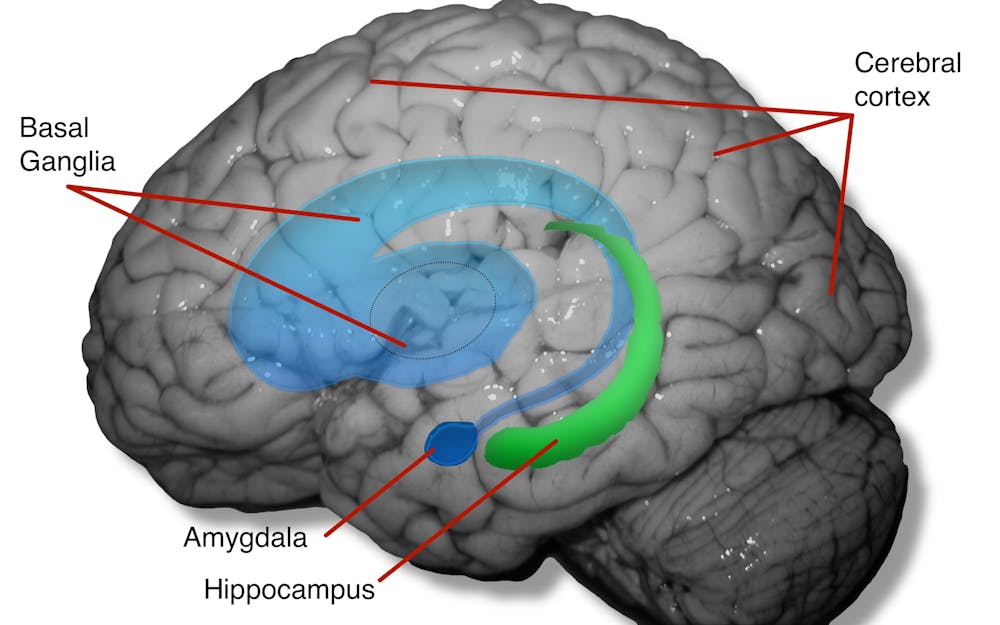
Image of brain showing areas affected by captivity
The cerebral cortex, hippocampus and amygdala are physically altered by captivity, along with brain circuitry that involves the basal ganglia. Bob Jacobs, CC BY-ND

Evolution has constructed animal brains to be exquisitely responsive to their environment. Those reactions can affect neural function by turning different genes on or off. Living in inappropriate or abusive circumstance alters biochemical processes: It disrupts the synthesis of proteins that build connections between brain cells and the neurotransmitters that facilitate communication among them.

There is strong evidence that enrichment, social contact and appropriate space in more natural habitats are necessary for long-lived animals with large brains such as elephants and cetaceans. Better conditions reduce disturbing sterotypical behaviors, improve connections in the brain, and trigger neurochemical changes that enhance learning and memory.

The captivity question

Some people defend keeping animals in captivity, arguing that it helps conserve endangered species or offers educational benefits for visitors to zoos and aquariums. These justifications are questionable, particularly for large mammals. As my own research and work by many other scientists shows, caging large mammals and putting them on display is undeniably cruel from a neural perspective. It causes brain damage.

[Deep knowledge, daily. Sign up for The Conversation’s newsletter.]

Public perceptions of captivity are slowly changing, as shown by the reaction to the documentary “Blackfish.” For animals that cannot be free, there are well-designed sanctuaries. Several already exist for elephants and other large mammals in Tennessee, Brazil and Northern California. Others are being developed for large cetaceans.

Perhaps it is not too late for Kiska.

Dr. Lori Marino, president of the Whale Sanctuary Project and a former senior lecturer at Emory University, contributed to this article.The Conversation

Bob Jacobs, Professor of Neuroscience, Colorado College

This article is republished from The Conversation under a Creative Commons license.

What is an algorithm? How computers know what to do with data


Computer algorithms can involve complicated math, but the concept of an algorithm is simple. Hill Street Studios/DigitalVision via Getty Images

The world of computing is full of buzzwords: AI, supercomputers, machine learning, the cloud, quantum computing and more. One word in particular is used throughout computing – algorithm.

In the most general sense, an algorithm is a series of instructions telling a computer how to transform a set of facts about the world into useful information. The facts are data, and the useful information is knowledge for people, instructions for machines or input for yet another algorithm. There are many common examples of algorithms, from sorting sets of numbers to finding routes through maps to displaying information on a screen.

To get a feel for the concept of algorithms, think about getting dressed in the morning. Few people give it a second thought. But how would you write down your process or tell a 5-year-old your approach? Answering these questions in a detailed way yields an algorithm.

Input

Close-up of shirts of different colors hanging in a closet
There are many variables to consider when choosing what to wear. Chris/Flickr, CC BY-NC

To a computer, input is the information needed to make decisions.

When you get dressed in the morning, what information do you need? First and foremost, you need to know what clothes are available to you in your closet. Then you might consider what the temperature is, what the weather forecast is for the day, what season it is and maybe some personal preferences.

All of this can be represented in data, which is essentially simple collections of numbers or words. For example, temperature is a number, and a weather forecast might be “rainy” or “sunshine.”

Transformation

Next comes the heart of an algorithm – computation. Computations involve arithmetic, decision-making and repetition.

So, how does this apply to getting dressed? You make decisions by doing some math on those input quantities. Whether you put on a jacket might depend on the temperature, and which jacket you choose might depend on the forecast. To a computer, part of our getting-dressed algorithm would look like “if it is below 50 degrees and it is raining, then pick the rain jacket and a long-sleeved shirt to wear underneath it.”

After picking your clothes, you then need to put them on. This is a key part of our algorithm. To a computer a repetition can be expressed like “for each piece of clothing, put it on.”

Output

Young woman with pink hair taking a selfie
The last step of an algorithm is presenting the output. Eternity in an Instant/Stone via Getty Images

Finally, the last step of an algorithm is output – expressing the answer. To a computer, output is usually more data, just like input. It allows computers to string algorithms together in complex fashions to produce more algorithms. However, output can also involve presenting information, for example putting words on a screen, producing auditory cues or some other form of communication.

So after getting dressed you step out into the world, ready for the elements and the gazes of the people around you. Maybe you even take a selfie and put it on Instagram to strut your stuff.

Machine learning

Sometimes it’s too complicated to spell out a decision-making process. A special category of algorithms, machine learning algorithms, try to “learn” based on a set of past decision-making examples. Machine learning is commonplace for things like recommendations, predictions and looking up information.

[Deep knowledge, daily. Sign up for The Conversation’s newsletter.]

For our getting-dressed example, a machine learning algorithm would be the equivalent of your remembering past decisions about what to wear, knowing how comfortable you feel wearing each item, and maybe which selfies got the most likes, and using that information to make better choices.

So, an algorithm is the process a computer uses to transform input data into output data. A simple concept, and yet every piece of technology that you touch involves many algorithms. Maybe the next time you grab your phone, see a Hollywood movie or check your email, you can ponder what sort of complex set of algorithms is behind the scenes.The Conversation

Jory Denny, Assistant Professor of Computer Science, University of Richmond

This article is republished from The Conversation under a Creative Commons license.

South Africans aren't being protected from fake sanitisers: what needs to be done


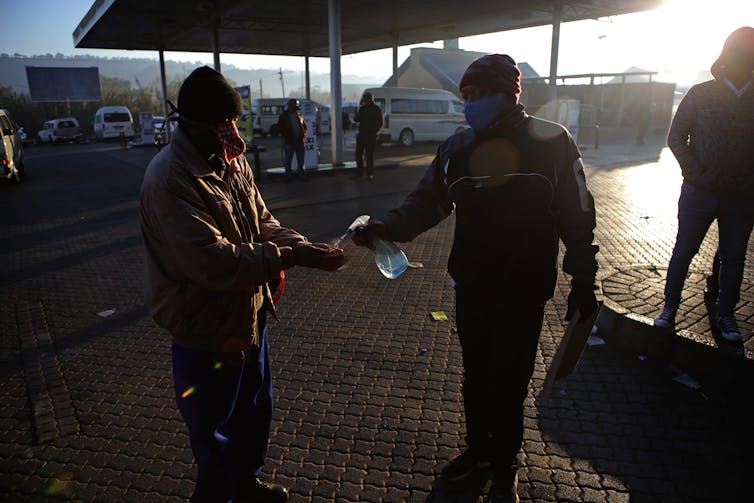
The WHO recommends sanitisers with an alcohol content of at least 70%. Phill Magakoe / AFP via Getty Images

A wave of panic buying struck many countries when national states of disaster were announced in response to the global COVID-19 pandemic. Overnight, toilet paper, cleaning products and hand sanitisers became the most sought-after products on the market.

This was true in South Africa too. Production facilities for raw materials of hand sanitisers experienced an increase of nearly 400% in bulk orders. Suppliers could not keep up with sudden mass orders for hundreds of thousands of litres.

In response to the shortage, governments across the world adopted temporary policies. These allowed for the production of hand sanitiser by entities that weren’t registered manufacturers and for alcohol distillers to shift their production to hand sanitisers.

In South Africa’s economic hub, Gauteng province, non-specialist companies were speedily registered to secure government contracts. The surge in demand also opened doors for exploitation and corruption. Some companies supplying government departments saw an opportunity to supply hand sanitisers at inflated prices – at an estimated R66 million ($398,532) above market prices.

Concern has been growing about safety issues related to hand sanitisers – in South Africa as well as other countries. But South Africa has been behind the curve in putting in place measures to ensure products are safe.

Filling a gap

In the absence of a vaccine, hand hygiene has become a critical part of the response to COVID-19. Washing hands at regular intervals during the day is viewed as essential. If water and soap are unavailable, hand sanitisers have served as a useful alternative.

The purpose of a hand sanitiser is to disrupt the enveloping lipid membrane of SARS-CoV-2. This kills the virus. The World Health Organisation (WHO) has recommended that consumers use an alcohol-based sanitiser with an alcohol content of at least 70%, based on effective and fast anti-microbial activity.

The WHO further recommends that hand sanitisers comprise ethyl alcohol (ethanol) or isopropyl alcohol (2-propanol) as the active ingredient, in addition to inactive ingredients listed as follows:

  • Water as a diluent;

  • Glycerol to prevent drying out users’ skin; and

  • Hydrogen peroxide to inactivate contaminating bacterial spores in the solution.

The guide, as well as statements issued by the US Food and Drug Administration, recommends that perfumes or dyes not be added due to risk of allergic reactions. The Australian Department of Health goes so far as to say that hand sanitisers may not contain any other active or inactive ingredients. These include colourants, fragrances or emollients.

But the policing of these conditions has been weak in countries like South Africa.

Maintaining standards

In the US, the Food and Drug Administration has played a leading role in identifying inferior products. By early October more than 200 products had been recalled that contained either methanol, 1-propanol or less than the required amount of alcohol.

Methanol is a cheaper alcohol, but repeated use of methanol-based hand sanitiser can cause it to be absorbed through the skin. This can cause chronic toxicity, hallucinations or even death in extreme cases. As for 1-propanol, not to be confused with 2-propanol, the substance can be toxic and life-threatening when ingested and is therefore not an acceptable ingredient for hand sanitisers.

Countries across the globe have detected other toxic substances in hand sanitisers that can also pose acute or chronic toxicity. These include glutaraldehyde, polyhexamethylene biguanide and ethyl acetate.

Sub-potent levels of alcohol have been recorded in the Netherlands, the UAE, Australia, Guyana, Kenya, Nigeria and Rwanda. Zambia recalled products from a number of producers, including South Africa.

In South Africa, the Bureau of Standards recently issued a press release, raising concerns about substandard sanitisers produced by “unscrupulous” manufacturers who were falsely claiming that their products had been certified. Reference was made to low-quality versions that can trigger skin allergies and can damage the skin, often presenting as a form of eczema.

In May 2020, a laboratory found that two out of the 11 hand sanitisers bought from retailers in the city of Pietermaritzburg contained 1-propanol. Four contained only between 46% and 67% alcohol while claiming to contain 70%.

Yet no hand sanitiser products in South Africa have been recalled. The country also has no regulatory system in place to assess hand sanitisers intended for household use. Companies have been required to voluntarily comply with the national standard on disinfectant alcohol-based hand-rubs, but this is woefully inadequate.

Part of the Consumer Protection Act seeks to ensure that consumers are provided with adequate evidence-based information. This is critical, especially since consumers are inundated with all sorts of brands and types of sanitisers that are intended for frequent use.

What needs to be done

A number of urgent steps need to be considered.

Firstly, labelling requirements should be standardised and enforced. The following information should be indicated on every bottle of hand sanitiser:

  • an alcohol content of at least 70%;

  • a list of the active and inactive ingredients and the adverse effects they may cause;

  • instructions for use;

  • mandatory warnings;

  • the batch code and expiry date; and

  • the full address of the manufacturer.

Secondly, public awareness programmes about correct hand hygiene techniques and the safe use, storage and effectiveness of hand sanitisers should be launched.

Thirdly, products that don’t comply with specifications or are not properly labelled should not be sold or provided in public spaces.

Fourth, a national task team should be established to investigate the regulatory framework and current levels of compliance.

Fifth, imports of raw material used in manufacturing of hand sanitisers and ready-to-use formulated products should be regulated more effectively. Likewise, products that are exported from South Africa to neighbouring countries should be monitored better.

Finally, environmental health inspectors or the National Regulator for Compulsory Specifications should mercilessly track down fake products and have them confiscated and destroyed.

Dr Tracy Muwanga, a trans-disciplinary postdoctoral fellow in the faculties of Law and Natural and Agricultural Sciences at the University of Pretoria, contributed to this article.The Conversation

Lise Korsten, Professor in the Department of Microbiology and Plant Pathology and Co-Director at the Centre of Excellence in Food Security, University of Pretoria and Willeke de Bruin, Postdoctoral fellow - Faculty of Natural and Agricultural Sciences, University of Pretoria

This article is republished from The Conversation under a Creative Commons license.
Wednesday, October 14, 2020

Anxiety in Johannesburg: new views on a global south city


iStock/Getty Images Plus

Within the media and popular culture of the global north, cities like Johannesburg, South Africa, are often presented as a site of trouble. They’re the source of the immigrants, drugs, violence, poverty, disease and environmental crisis that worry nervous citizens of more “developed” cities.

Even when they take centre stage in international media production, global south cities like Johannesburg are laden with fear or fantasy. Think of the films District 9 with its slavering Nigerian gangsters, the homeless genius of Slumdog Millionaire or Roma’s contentedly familial domestic worker. In so many instances, these urban spaces – vibrant, changeable, challenging, new – appear as nothing more than locations for the fluffy imaginaries or collective fears of the north.

In his book Liquid Times, the philosopher Zygmunt Bauman calls fear “arguably the most sinister of the demons nesting in the open societies of our time”. He writes of fear as a palpable monster that stalks the lives of late modern subjects in a world where the centres of power are diffuse and remote.

Fear is, indeed, one way of describing this condition. But anxiety is perhaps more useful, suggesting a feeling that is persistent, low-level and even, in psychologist Kopano Ratele’s term, “objectless”. Anxiety is ever-present. It does not depend on particular triggers. It is easily spread and shared, passed around on the wind, like a rumour, like a virus.

The elusive metropolis

Anxiety in Johannesburg is nothing new. Despite its intermittent glamour, the city has always felt unstable for those who live in it. South Africa’s largest and wealthiest urban centre, it is also deeply unequal and striated by the spatial markers of apartheid. According to urban planning professor Martin J. Murray, it

leads a double life. The city is a paradigmatic exemplar of first world glamour and excess and third world improvement and degradation. It is simultaneously a global marketplace of speculative investment integrally linked to the world economy via globalising space of flows.

Black migrants who were once forced into urban labour by law now face the same conditions because of poverty, unemployment and rural underdevelopment. Fears of hunger and violence mesh with a neoliberal fear of failure, of being left behind in a rapidly changing world, painfully symbolised by the city’s “branded skyline”. White suburbanites who once quailed from imaginary communists now invest enthusiastically in security technologies and report passers-by to armed private guards.

District 9 (2009) presents a fearful image of Johannesburg and of Nigerians.

In all parts of the city, from malls to taxi ranks to alleys, women worry whether they will make it home safely – or if at home, whether they will make it through the night. From hawkers in the central business district to grifters in the banking malls, nothing seems entirely fixed or reliable in this elusive metropolis. And yet conditions of anxiety within Johannesburg are seldom discussed by scholars.

Anxious Joburg

Like any other city of the south, life in Johannesburg is fraught with the feelings that are central to modernity. What then does it mean that a city like Johannesburg so casually connotes anxiety to the north? And more importantly, if fearful emotion is the base layer of the modern age, as Bauman argues, what does it mean that we think more of anxiety about southern cities than in them?

In order to properly understand city life we need to account for its emotional landscapes. We must ask what it means to be an anxious modern citizen, subject to the same epistemological insecurities as people elsewhere, in a location that is often represented as inherently unstable.

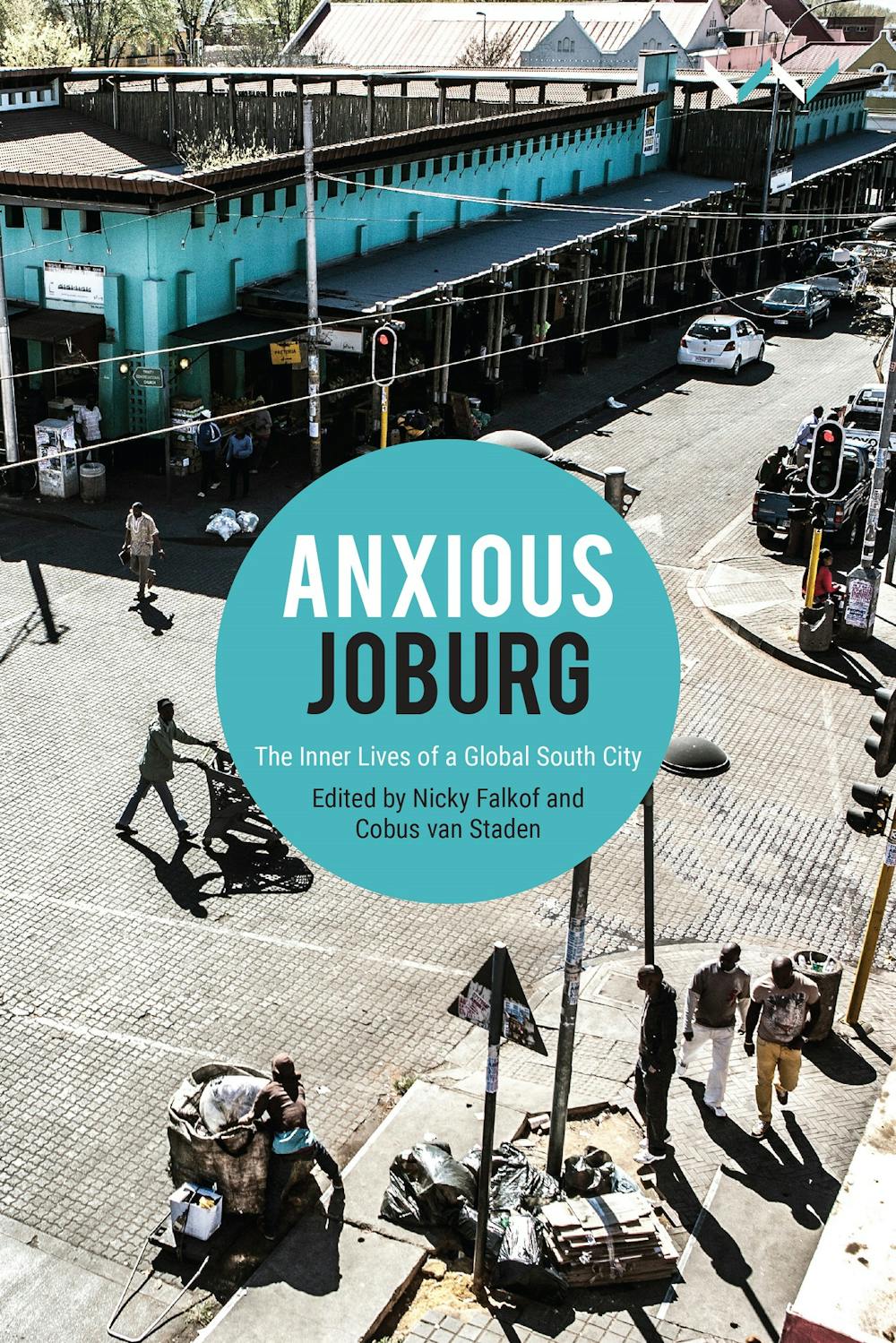
These are some of the question that we asked of contributors to our new book Anxious Joburg, a set of essays and reflections that consider the intimate inner lives of Johannesburg. Rather than classifying it as a list of developmental and economic problems to be solved, these scholars, artists and storytellers consider what it feels like to live in this complicated city.


Read more: Can COVID-19 inspire a new way of planning African cities?


A broad range of people and experiences are explored, among them inner-city religious communities, young women who navigate perilous taxi mobility, nervous white middle classes, transgender migrants coping with South Africa’s aggressive border regime and people scraping a precarious living on the city’s outskirts.

From the gated community of Dainfern in the north to the township of Soweto in the south, from the liminal suburbs of Melville and Yeoville to the back rooms of Cyrildene and the apartment buildings of Hillbrow and the central business district, Anxious Joburg investigates the city’s complex affects from multiple positions. It invokes a range of theoretical approaches – among them visual art, cultural studies, psychology and anthropology – to argue for the central role of emotion in understanding urban life in the global south.

Emotion and urban life

When city forms are lumped together as merely the source of dangers that worry the north, it becomes difficult to grasp the current shape of the urban, which is likely to reach its ultimate expression in the expanding mega-cities of the south. As academics Sarah Nuttall and Achille Mbembe argue, we must develop ways of reading African cities that are no longer “dominated by the metanarrative of urbanisation, modernisation and crisis”.

Part of this work requires us to consider intimate experiences of daily life. After all, as cultural theorist Sara Ahmed explains,

Emotions should not be regarded as psychological states, but as social and cultural practices.

In southern cities, as elsewhere, emotions are performative and collective and have social and political consequences.

Wits University Press

Johannesburg is not the most anxious or the most dangerous city in the world. It is not unique or uniquely terrifying. However its global reputation, spectacular racist history and propensity for siege architecture make it a hugely valuable site for thinking about how anxiety structures contemporary life for denizens of the southern city.

The new book Anxious Joburg: The Inner Lives of a Global South City is available from Wits University PressThe Conversation

Nicky Falkof, Associate professor, University of the Witwatersrand and Cobus van Staden, Senior Researcher: China-Africa: South African Institute of International Affairs, University of the Witwatersrand

This article is republished from The Conversation under a Creative Commons license.