Wednesday, May 3, 2023

Generative AI: 5 essential reads about the new era of creativity, job anxiety, misinformation, bias and plagiarism


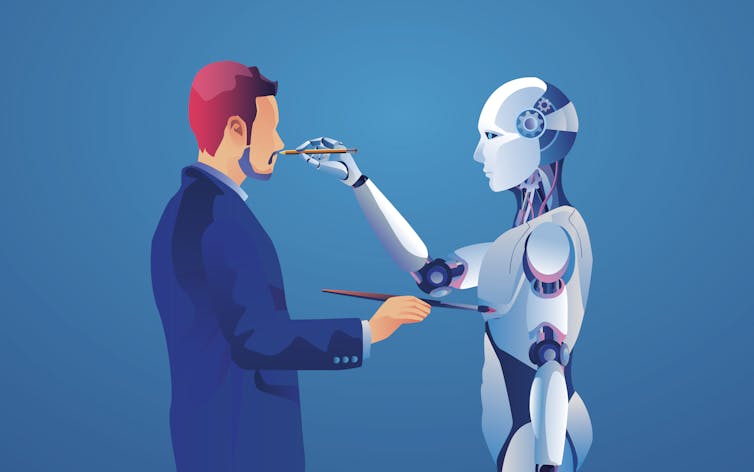
What does generative AI mean for the human need to create, work and seek the truth? Krerksak Woraphoomi/iStock via Getty Images

The light and dark sides of AI have been in the public spotlight for many years. Think facial recognition, algorithms making loan and sentencing recommendations, and medical image analysis. But the impressive – and sometimes scary – capabilities of ChatGPT, DALL-E 2 and other conversational and image-conjuring artificial intelligence programs feel like a turning point.

The key change has been the emergence within the last year of powerful generative AI, software that not only learns from vast amounts of data but also produces things – convincingly written documents, engaging conversation, photorealistic images and clones of celebrity voices.

Generative AI has been around for nearly a decade, as long-standing worries about deepfake videos can attest. Now, though, the AI models have become so large and have digested such vast swaths of the internet that people have become unsure of what AI means for the future of knowledge work, the nature of creativity and the origins and truthfulness of content on the internet.

Here are five articles from our archives that take the measure of this new generation of artificial intelligence.

1. Generative AI and work

A panel of five AI experts discussed the implications of generative AI for artists and knowledge workers. It’s not simply a matter of whether the technology will replace you or make you more productive.

University of Tennessee computer scientist Lynne Parker wrote that while there are significant benefits to generative AI, like making creativity and knowledge work more accessible, the new tools also have downsides. Specifically, they could lead to an erosion of skills like writing, and they raise issues of intellectual property protections given that the models are trained on human creations.

University of Colorado Boulder computer scientist Daniel Acuña has found the tools to be useful in his own creative endeavors but is concerned about inaccuracy, bias and plagiarism.

University of Michigan computer scientist Kentaro Toyama wrote that human skill is likely to become costly and extraneous in some fields. “If history is any guide, it’s almost certain that advances in AI will cause more jobs to vanish, that creative-class people with human-only skills will become richer but fewer in number, and that those who own creative technology will become the new mega-rich.”

Florida International University computer scientist Mark Finlayson wrote that some jobs are likely to disappear, but that new skills in working with these AI tools are likely to become valued. By analogy, he noted that the rise of word processing software largely eliminated the need for typists but allowed nearly anyone with access to a computer to produce typeset documents and led to a new class of skills to list on a resume.

University of Colorado Anschutz biomedical informatics researcher Casey Greene wrote that just as Google led people to develop skills in finding information on the internet, AI language models will lead people to develop skills to get the best output from the tools. “As with many technological advances, how people interact with the world will change in the era of widely accessible AI models. The question is whether society will use this moment to advance equity or exacerbate disparities.”

2. Conjuring images from words

Generative AI can seem like magic. It’s hard to imagine how image-generating AIs can take a few words of text and produce an image that matches the words.
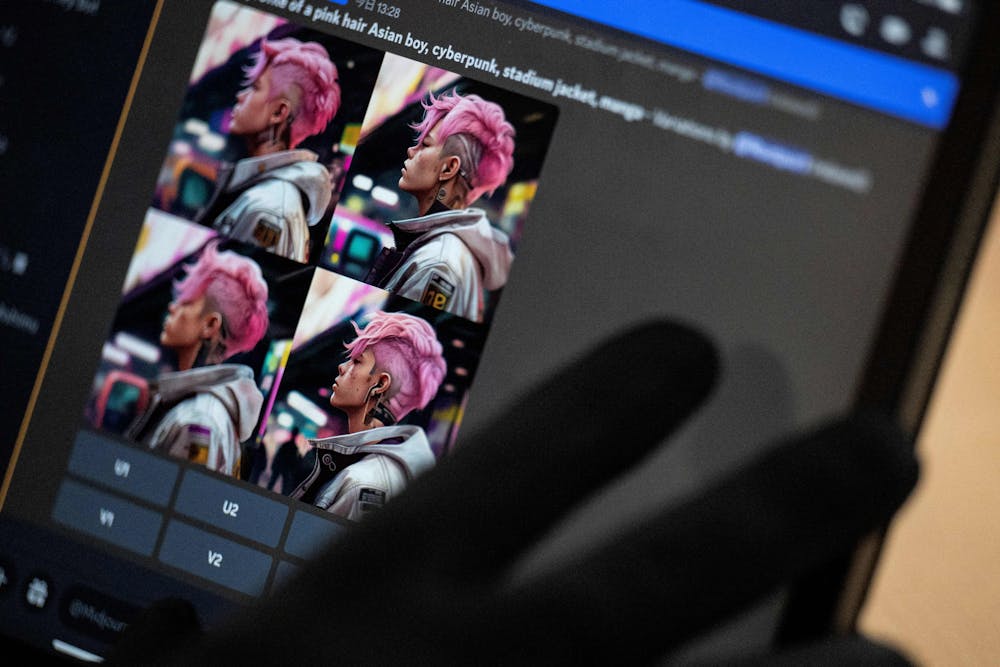
A gloved hand in the foreground partially obscures a computer screen displaying four panels of similar images of a young man in profile with pink hair
A few keywords – pink hair, Asian boy, cyberpunk, stadium jacket, Manga – yield striking and believable images of a person who never existed. Richard A. Brooks/AFP via Getty Images

Hany Farid, a University of California, Berkeley computer scientist who specializes in image forensics, explained the process. The software is trained on a massive set of images, each of which includes a short text description.

“The model progressively corrupts each image until only visual noise remains, and then trains a neural network to reverse this corruption. Repeating this process hundreds of millions of times, the model learns how to convert pure noise into a coherent image from any caption,” he wrote.

3. Marking the machine

Many of the images produced by generative AI are difficult to distinguish from photographs, and AI-generated video is rapidly improving. This raises the stakes for combating fraud and misinformation. Fake videos of corporate executives could be used to manipulate stock prices, and fake videos of political leaders could be used to spread dangerous misinformation.

Farid explained how it’s possible to produce AI-generated photos and video that contain watermarks verifying that they are synthetic. The trick is to produce digital watermarks that can’t be altered or removed. “These watermarks can be baked into the generative AI systems by watermarking all the training data, after which the generated content will contain the same watermark,” he wrote.

4. Flood of ideas

For all the legitimate concern about the downsides of generative AI, the tools are proving to be useful for some artists, designers and writers. People in creative fields can use the image generators to quickly sketch out ideas, including unexpected off-the-wall material.

AI as an idea generator for designers.

Rochester Institute of Technology industrial designer and professor Juan Noguera and his students use tools like DALL-E or Midjourney to produce thousands of images from abstract ideas – a sort of sketchbook on steroids.

“Enter any sentence – no matter how crazy – and you’ll receive a set of unique images generated just for you. Want to design a teapot? Here, have 1,000 of them,” he wrote. “While only a small subset of them may be usable as a teapot, they provide a seed of inspiration that the designer can nurture and refine into a finished product.”

5. Shortchanging the creative process

However, using AI to produce finished artworks is another matter, according to Nir Eisikovits and Alec Stubbs, philosophers at the Applied Ethics Center at University of Massachusetts Boston. They note that the process of making art is more than just coming up with ideas.

The hands-on process of producing something, iterating the process and making refinements – often in the moment in response to audience reactions – are indispensable aspects of creating art, they wrote.

“It is the work of making something real and working through its details that carries value, not simply that moment of imagining it,” they wrote. “Artistic works are lauded not merely for the finished product, but for the struggle, the playful interaction and the skillful engagement with the artistic task, all of which carry the artist from the moment of inception to the end result.”

Editor’s note: This story is a roundup of articles from The Conversation’s archives.The Conversation

Eric Smalley, Science + Technology Editor, The Conversation

This article is republished from The Conversation under a Creative Commons license.

Sunday, January 22, 2023

Your body has an internal clock that dictates when you eat, sleep and might have a heart attack – all based on time of day


Syncing your circadian rhythm to a natural light-dark cycle could improve your health and well-being. nambitomo/iStock via Getty Images Plus

Anyone who has suffered from jet lag or struggled after turning the clock forward or back an hour for daylight saving time knows all about what researchers call your biological clock, or circadian rhythm – the “master pacemaker” that synchronizes how your body responds to the passing of one day to the next.

This “clock” is made up of about 20,000 neurons in the hypothalamus, the area near the center of the brain that coordinates your body’s unconscious functions, like breathing and blood pressure. Humans aren’t the only beings that have an internal clock system: All vertebrates – or mammals, birds, reptiles, amphibians and fish – have biological clocks, as do plants, fungi and bacteria. Biological clocks are why cats are most active at dawn and dusk, and why flowers bloom at certain times of day.

Circadian rhythms are also essential to health and well-being. They govern your body’s physical, mental and behavioral changes over each 24-hour cycle in response to environmental cues like light and food. They’re why more heart attacks and strokes occur early in the morning. They’re also why mice that are missing their biological clocks age faster and have shorter lifespans, and people with a mutation in their circadian clock genes have abnormal sleep patterns. Chronic misalignment of your circadian rhythm with external cues, as seen in night-shift workers, can lead to a wide range of physical and mental disorders, including obesity, Type 2 diabetes, cancer and cardiovascular diseases.

In short, there is ample evidence that your biological clock is critical to your health. And chronobiologists like me are studying how the day-night cycle affects your body to better understand how you can modify your behaviors to use your internal clock to your advantage.

Your body has an internal clock that helps keep it in working order.

How biological rhythms affect your health

Your biological clock affects your health by regulating your sleep-wake cycles and fluctuations in blood pressure and body temperature. It does this primarily by syncing your endocrine system to environmental light-dark cycles so that certain hormones are released in certain amounts at certain times of day.

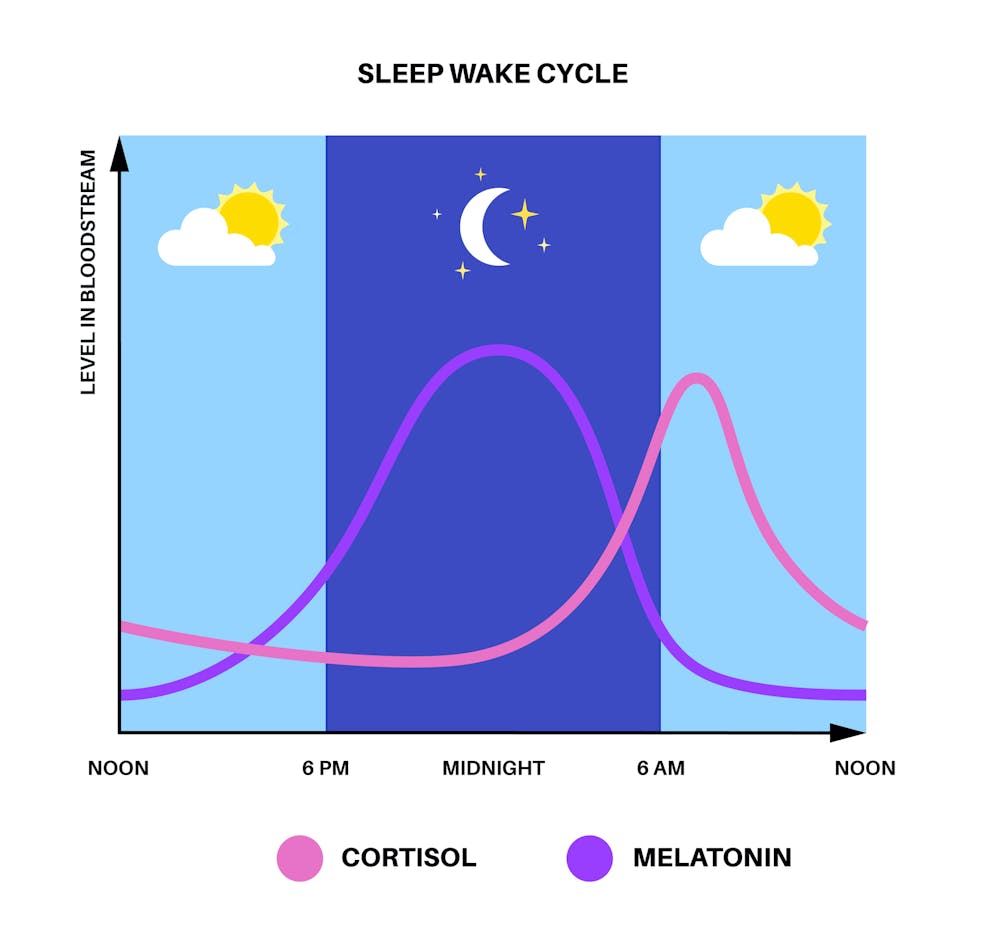
The pineal grand in your brain, for example, produces melatonin, a hormone that helps regulate sleep in response to darkness. Doctors advise reducing exposure to artificial blue light from electronic devices before bedtime because it can disrupt melatonin secretion and sleep quality.

Your circadian rhythm also affects your metabolism. Among other things, sleep helps you regulate leptin, a hormone that controls appetite. Your leptin levels fluctuate throughout the day according to a rhythm set by your circadian clock. Insufficient or irregular sleep can disrupt leptin production, which can make us hungrier and lead to weight gain.

Chart showing cortisol and melatonin levels fluctuating over the course of the day, with cortisol levels peaking at around 6 AM and melatonin peaking at around midnight
Your hormones fluctuate rhythmically over the course of the day. The stress hormone cortisol typically peaks in the morning, while the sleep hormone melatonin typically peaks in the night. Pikovit44/iStock via Getty Images Plus

In recent years, researchers have discovered even more ways your circadian clock can affect your health. For example, there is now research suggesting that eating at set times of day, or time-restricted feeding, can prevent obesity and metabolic diseases. Depression and other mood disorders may also be linked to dysfunctional circadian control that lead to changes in how your genes are expressed.

The time of day when you take your medicine can also affect how well it works and how severe any side effects might be. Likewise, your biological clock is a potential target for cancer chemotherapies and anti-obesity treatments.

And finally, even your personality might be shaped by whether your internal clock make you a “morning person” or a “night person.”

Getting the most out of exercise

Circadian clocks also provide a potential answer to when is the best time of day to maximize the benefits of physical exercise.

To study this, my colleagues and I collected blood and tissue samples from the brains, hearts, muscles, livers and fat of mice that exercised either before breakfast in the early morning or after dinner in the late evening. We used a tool called a mass spectrometer to detect approximately 600 to 900 molecules each organ produced. These metabolites served as real-time snapshots of how the mice responded to exercise at specific times of day.

We stitched these snapshots together to create a map of how exercise in the morning versus evening affected each of the mice’s different organ systems – what we called an atlas of exercise metabolism.

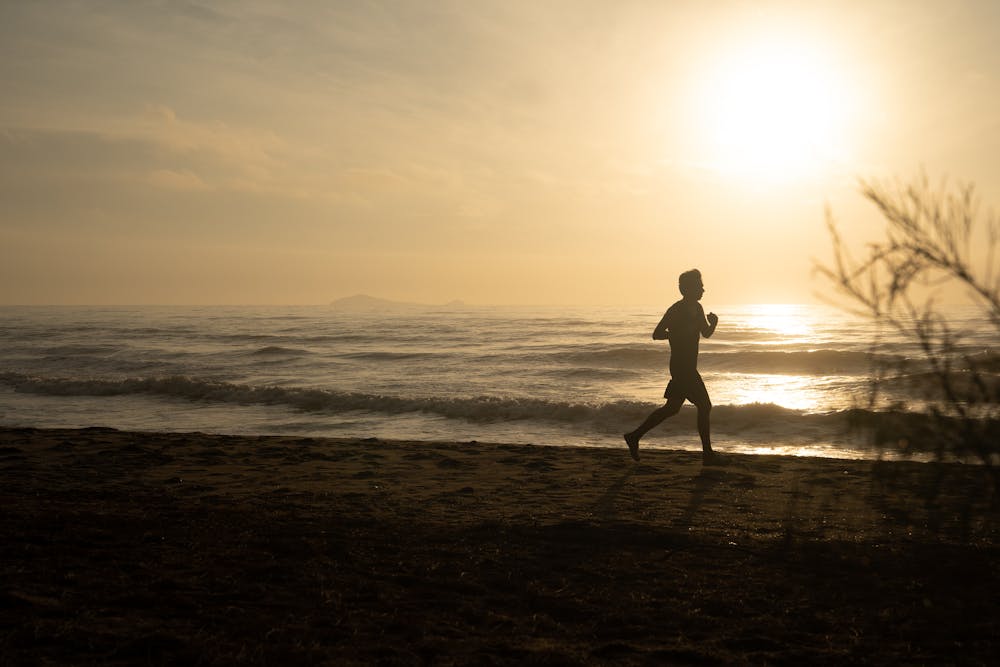
Silhouette of person running by the sea at sunrise
The best time of day to exercise might be the time when you feel you perform best. Anuruk Charoenamornrat/EyeEm via Getty Images

Using this atlas, we saw that time of day affects how each organ uses energy during exercise. For instance, we found that early morning exercise reduced blood glucose levels more than late evening exercise. Exercise in the late evening, however, allowed the mice to benefit from energy they stored from their meals and increased their endurance.

Of course, mice and humans have many differences along with their similarities. For one, mice are more active at night than during the day. Still, we believe that our findings could help researchers better understand how exercise affects your health and, if timed appropriately, can be optimized based on time of day to meet your personal health goals.

Getting along with your biological clock

I believe that the field of chronobiology is growing, and we will produce even more research providing practical applications and insights into health and well-being in the future.

In my own work, for example, a better understanding of how exercising at different times of day affects your body could help tailor exercise plans to maximize specific benefits for patients with obesity, Type 2 diabetes and other diseases.

There is still much to learn about how your circadian clock works. But in the meantime, there are some tried and true ways people can synchronize their internal clocks for better health. These include regular exposure to sunlight to trigger the endocrine system to produce vitamin D, staying active during the day so you fall asleep more easily at night and avoiding caffeine and reducing your exposure to artificial light before bedtime.The Conversation

Shogo Sato, Assistant Professor of Biology, Texas A&M University

This article is republished from The Conversation under a Creative Commons license.

Sitting all day is terrible for your health – now, a new study finds a relatively easy way to counteract it


Researchers have long known that sitting at your desk hour after hour is an unhealthy habit. Morsa Images/Digital Vision via Getty Images

The Research Brief is a short take about interesting academic work.

The big idea

To reduce the harmful health effects of sitting, take a five-minute light walk every half-hour. That’s the key finding of a new study that my colleagues and I published in the journal Medicine & Science in Sports & Exercise.

We asked 11 healthy middle-aged and older adults to sit in our lab for eight hours – representing a standard workday – over the course of five separate days. On one of those days, participants sat for the entire eight hours with only short breaks to use the bathroom. On the other days, we tested a number of different strategies to break up a person’s sitting with light walking. For example, on one day, participants walked for one minute every half-hour. On another day, they walked for five minutes every hour.

Our goal was to find the least amount of walking one could do to offset the harmful health effects of sitting. In particular, we measured changes in blood sugar levels and blood pressure, two important risk factors for heart disease.

We found that a five-minute light walk every half-hour was the only strategy that reduced blood sugar levels substantially compared with sitting all day. In particular, five-minute walks every half-hour reduced the blood sugar spike after eating by almost 60%.

That strategy also reduced blood pressure by four to five points compared with sitting all day. But shorter and less frequent walks improved blood pressure too. Even just a one-minute light walk every hour reduced blood pressure by five points.

In addition to physical health benefits, there were also mental health benefits to the walking breaks. During the study, we asked participants to rate their mental state by using a questionnaire. We found that compared with sitting all day, a five-minute light walk every half-hour reduced feelings of fatigue, put participants in a better mood and helped them feel more energized. We also found that even walks just once every hour were enough to boost mood and reduce feelings of fatigue.

Along with short, frequent walks, a long daily walk could add years to your life.

Why it matters

People who sit for hours on end develop chronic diseases including diabetes, heart disease, dementia and several types of cancer at much higher rates than people who move throughout their day. A sedentary lifestyle also puts people at a much greater risk of early death. But just exercising daily may not reverse the harmful health effects of sitting.

Because of technological advances, the amount of time adults in industrialized countries like the U.S. spend sitting has been steadily increasing for decades. Many adults now spend the majority of their day sitting. This problem has only gotten worse since the start of the COVID-19 pandemic. With the migration to more remote work, people are less inclined to venture out of the house these days. So it’s clear that strategies are needed to combat a growing 21st century public health problem.

Current guidelines recommend that adults should “sit less, move more.” But these recommendations don’t provide any specific advice or strategies for how often and how long to move.

Our work provides a simple and affordable strategy: Take a five-minute light walk every half-hour. If you have a job or lifestyle where you have to sit for prolonged periods, this one behavior change could reduce your health risks from sitting.

Our study also offers clear guidance to employers on how to promote a healthier workplace. While it may seem counterintuitive, taking regular walking breaks can actually help workers be more productive than working without stopping.

What still isn’t known

Our study primarily focused on taking regular walking breaks at a light intensity. Some of the walking strategies – for example, one-minute light walks every hour – did not lower blood sugar levels. We don’t know if more rigorous walking would have provided health benefits at these doses.

What’s next

We are currently testing over 25 different strategies for offsetting the health harms of prolonged sitting. Many adults have jobs, such as driving trucks or taxis, where they simply cannot walk every half-hour. Finding alternative strategies that yield comparable results can provide the public with several different options and ultimately allow people to pick the strategy that works best for them and their lifestyle.The Conversation

Keith Diaz, Associate Professor of Behavioral Medicine, Columbia University

This article is republished from The Conversation under a Creative Commons license.
Cold weather brings itchy, irritated, dry and scaly skin – here’s how to treat eczema and other skin conditions and when to see a doctor


For some skin conditions, keeping hydrated is key. Yuliya Shevtsova/EyeEm via Getty Images

In many parts of the U.S., the winter months bring frigid temperatures and drier conditions that can wreak havoc on the skin.

The primary role of the skin, as the largest organ in the body, is to act as a physical barrier to the external environment. When your skin is healthy, it helps protect you from allergens and infections. But in winter, when the outside temperature and humidity drop, skin can become especially irritated.

We are a dermatologist and a medical student who study a broad range of common skin conditions and the effects of the environment on skin health.

Heading into the winter months, a handful of common dermatological conditions can develop or worsen in response to the cold. These include eczema, chilblains, Raynaud’s phenomenon, cold urticaria and cold panniculitis. All are conditions that can be irritating and uncomfortable, and some are harder to treat than others. So it’s helpful to know when to manage these conditions on your own and when to see a dermatologist.

Although eczema often affects infants, one form affects people 60 and older.

Eczema

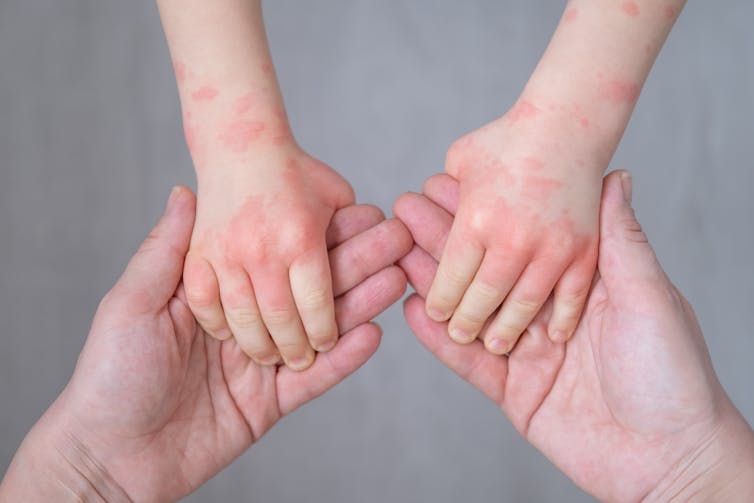
Eczema is an inflammatory skin condition that causes dry and itchy skin and may be triggered by soaps and detergents, environmental or food allergens, hormonal changes and skin infections. There are numerous types of eczema, which often have overlapping symptoms.

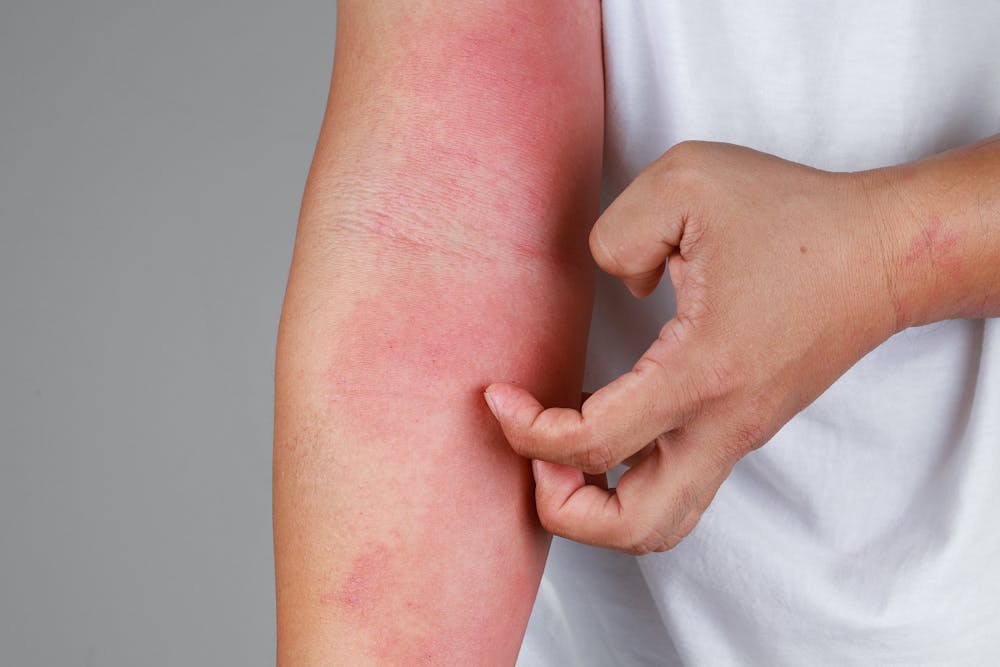
Pinkish splotches of eczema appear on an extended right arm.
According to the Cleveland Clinic, eczema affects more then 30 million Americans. tylim/iStock via Getty Images Plus

Asteatotic eczema, also known as winter itch, is common in older adults. During the winter months, skin can become drier and, in some instances, cracked, fissured and inflamed.

Severe dryness may lead to itchiness and scratching. In turn, this can create open wounds that may allow allergens and bacteria to penetrate the skin and cause a rash or an infection.

This type of eczema typically occurs on the lower legs, but eruptions can occur anywhere on the skin, such as the trunk, arms and hands.

Keeping the skin hydrated is the primary treatment. Water-based lotions may worsen skin drying, so applying moisturizers with a high oil content – like petroleum jelly, mineral oil or Vaseline – on wet or damp skin is recommended. Hypoallergenic and anti-itch moisturizers designed specifically for eczema are also available.

Other tips include replacing long hot baths with quick warm showers, switching to a milder soap, and using a room humidifier if the climate is dry. If itchiness and dryness persist, seek care from a dermatologist, who may prescribe a topical steroid.

Hand eczema may also worsen in the winter as your hands are frequently exposed to cold, dry air. Scaling, fissuring and bleeding on the hands is common. Minimizing exposure to hard or antibacterial soaps, along with using gentle cleansing products followed by applying a petroleum-based unscented moisturizer can improve symptoms.

Chilblains

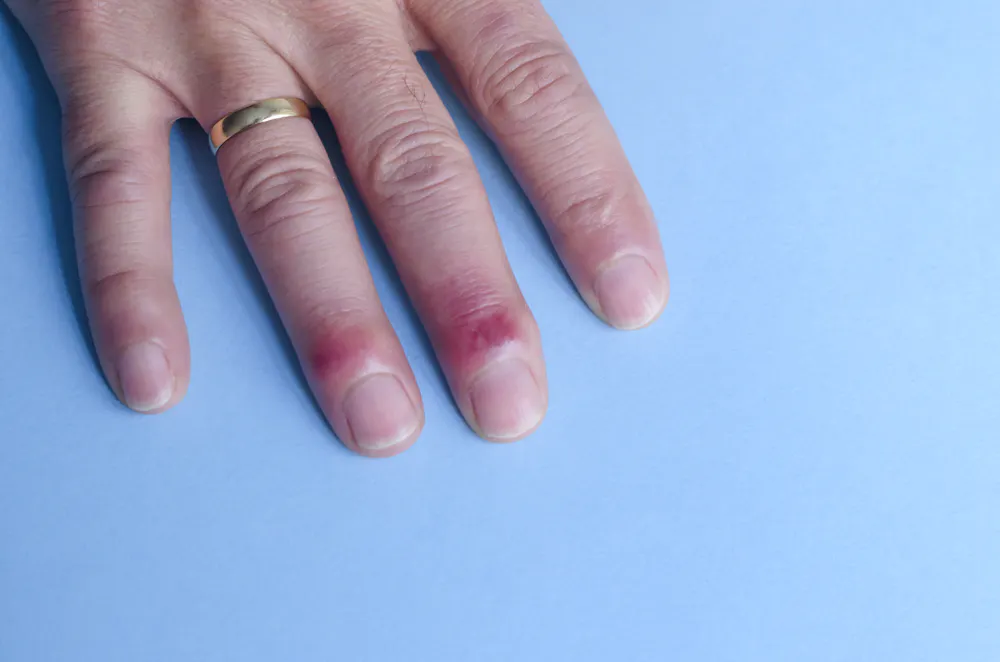
Chilblains, also known as pernio, are small, itchy patches that can occur when the skin is exposed to cold and damp weather, resulting in swollen and painful bumps that affect the fingers, toes, ears and face. Poor circulation, blood vessel constriction, a history of autoimmune disease and being underweight may predispose people to chilblains.

Against a blue background, a woman's hand shows chilblains -- swollen, bright red markings on her middle and ring fingers just below the nails.
Although they usually heal if protected from cold, chilblains can be painful. Elizabeth Fernandez/Moment via Getty Images

Afflicted areas are painful, itchy, swollen and usually have a blueish to purple hue. In severe cases, blisters and ulcers may occur. But for most people, the condition tends to spontaneously resolve within one to three weeks.

Until that happens, it’s important to keep affected areas protected from the cold. If the sensitive area starts to blister, or if fevers, muscle aches and chills develop, it’s best to see a dermatologist or physician.

Pseudo-chilblains, also known as “COVID toes,” can be caused by COVID-19 infection. Chilblains associated with COVID-19 resemble the rash in chilblains – painful red to blue-colored nodules on the toes – but it is not specific to winter.

Dry, cracked skin can lead to infections.

Raynaud’s phenomenon

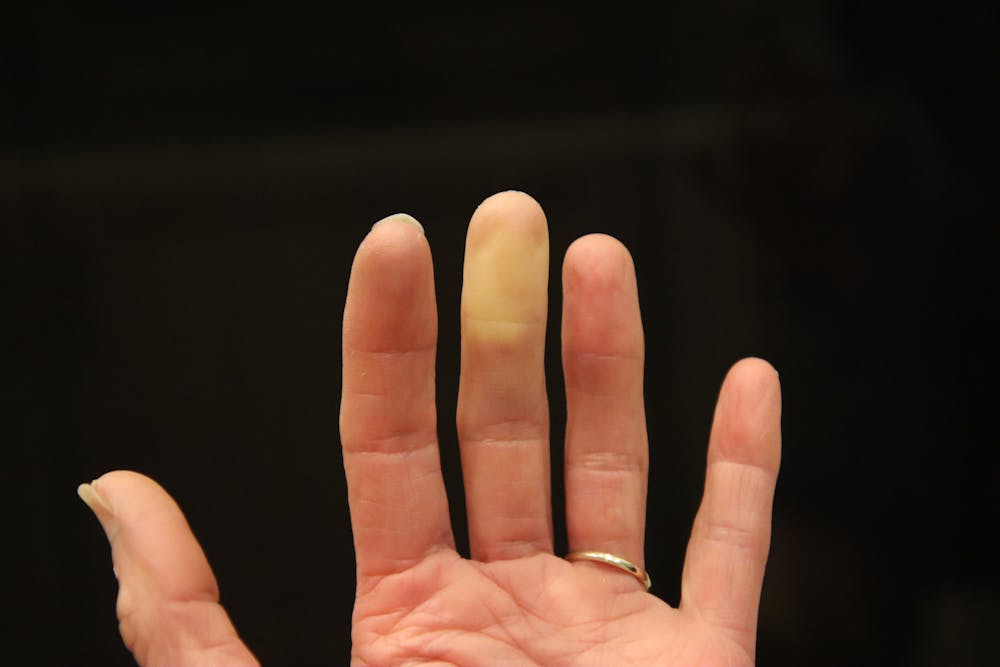
Like chilblains, Raynaud’s phenomenon is a skin condition characterized by an significant constriction of blood vessels in the fingers and toes in response to cold exposure. The digits may turn red or blue, but they quickly flush red upon rewarming. Afflicted areas may also be numb or painful, and when severe, may develop ulcers.

Against a black background, an adult hand with a pale middle finger displays Raynaud's phenomenon.
Although Raynaud’s phenomenon typically affects fingers and toes, it can also affect the nose, ears and lips. Barb Elkin/iStock via Getty Images Plus

To treat Raynaud’s phenomenon, it’s necessary to avoid cold-weather exposure. Ideally patients with Raynaud’s should dress for the cold in layers. At a minimum, make sure to wear gloves and insulated footwear. Avoid tobacco, caffeine and decongestants; they may cause blood vessels to constrict more. If symptoms don’t improve quickly – Raynaud’s due to cold typically gets better after only a few minutes – see a dermatologist or your physician, as Raynaud’s phenomenon can also be a manifestation of a more serious systemic disease, including cancer, infections and/or trauma.

Cold urticaria

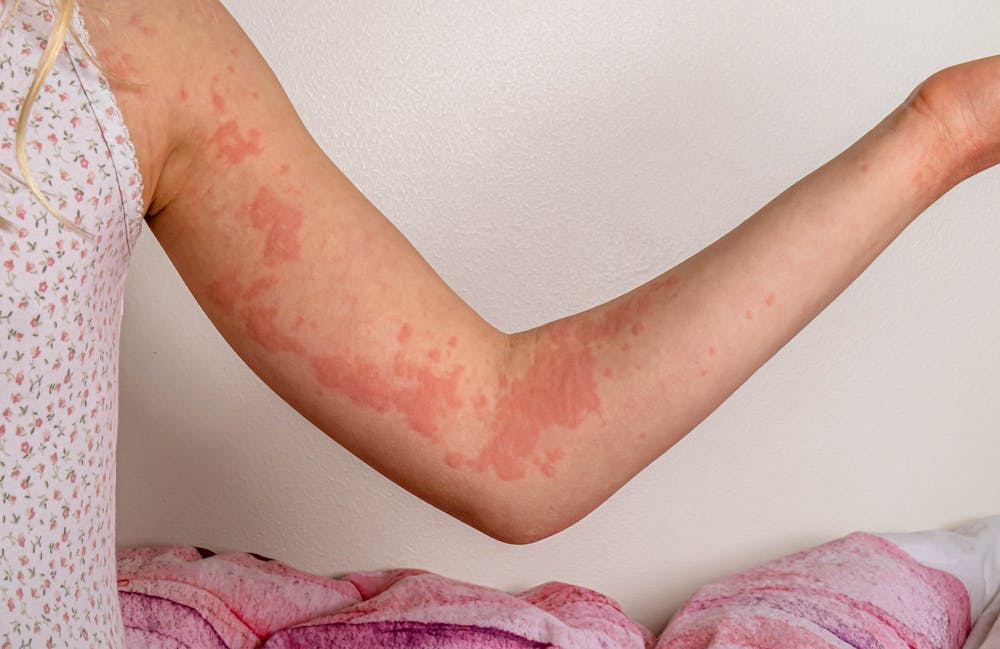
Cold urticaria is a skin rash believed to be triggered by an autoimmune response, which leads to the release of inflammatory molecules, including histamine.

A woman's arm covered in the blotchy red marks known as hives.
Cold urticaria is more commonly known as hives. Elk Scott/i Stock via Getty Images

Soon after the skin is exposed to sudden drops in temperature, wheals – also known as hives – may develop. These are reddish, itchy and swollen areas of skin. Such episodes can last for approximately two hours. Occasionally, other symptoms accompany the outbreak, including headache, chills, shortness of breath, abdominal pain and diarrhea.

People can test for cold urticaria using the ice cube test. This is done simply by placing an ice cube on an area of skin for five minutes; if you have cold urticaria, the skin will raise and itch within five to 15 minutes. Treatment involves avoiding cold exposure and using over-the-counter antihistamines.

For those who have experienced cold urticaria, swimming in cold water can be dangerous, as it can lead to loss of consciousness and drowning.

Cold panniculitis

Cold panniculitis – which appears as enlarged, red and painful nodules on the skin – develops 12 to 72 hours after cold exposure.

Cases of cold panniculitis have been documented in children eating Popsicles and in adults undergoing whole-body cryotherapy, which is often used as treatment for chronic inflammatory conditions such as rheumatoid arthritis, or for improving post-exercise recovery.

Cold panniculitis is more common during childhood and usually resolves on its own by avoiding cold exposure and direct contact with frozen products.

Symptoms from winter skin conditions are often self-limiting and resolve on their own with adequate protection from the cold. But if symptoms do not resolve, you should see a licensed dermatologist, as cold-induced rashes may be a sign of a more concerning underlying health condition.

If visiting your dermatologist in person proves difficult, you may consider seeing a dermatologist virtually, as many academic medical centers and private practices now offer telehealth dermatology.The Conversation

Sonal Choudhary, Assistant Professor of Dermatology and Dermatopathology, University of Pittsburgh Health Sciences and Jeffrey Chen, Medical Student, University of Pittsburgh Health Sciences

This article is republished from The Conversation under a Creative Commons license.