Let me share some thoughts with you. Let me be a source of encouragement and support. May you never forget your dreams and remember miracles happen every day. Let us laugh, have fun, and inspire one another.
He comes in peace.
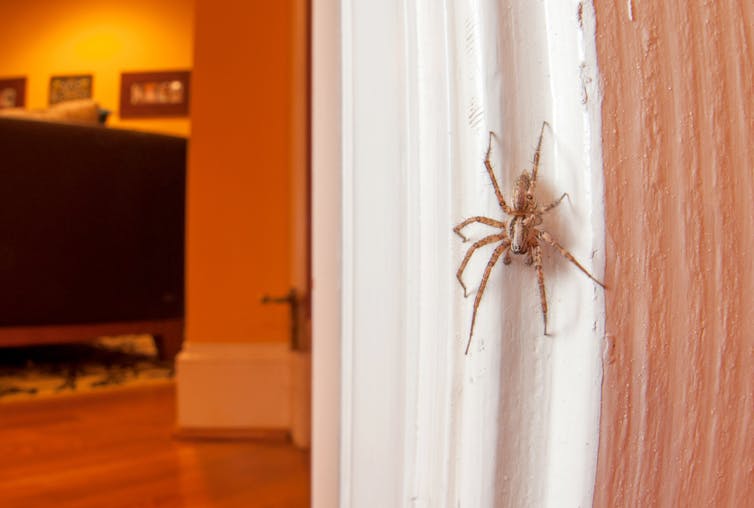
Matt Bertone, CC BY-ND
I know it may be hard to convince you, but let me try: Don’t kill the next spider you see in your home.
Why? Because spiders are an important part of nature and our indoor ecosystem – as well as being fellow organisms in their own right.
People like to think of their dwellings as safely insulated from the outside world, but many types of spiders can be found inside. Some are accidentally trapped, while others are short-term visitors. Some species even enjoy the great indoors, where they happily live out their lives and make more spiders. These arachnids are usually secretive, and almost all you meet are neither aggressive nor dangerous. And they may be providing services like eating pests – some even eat other spiders.
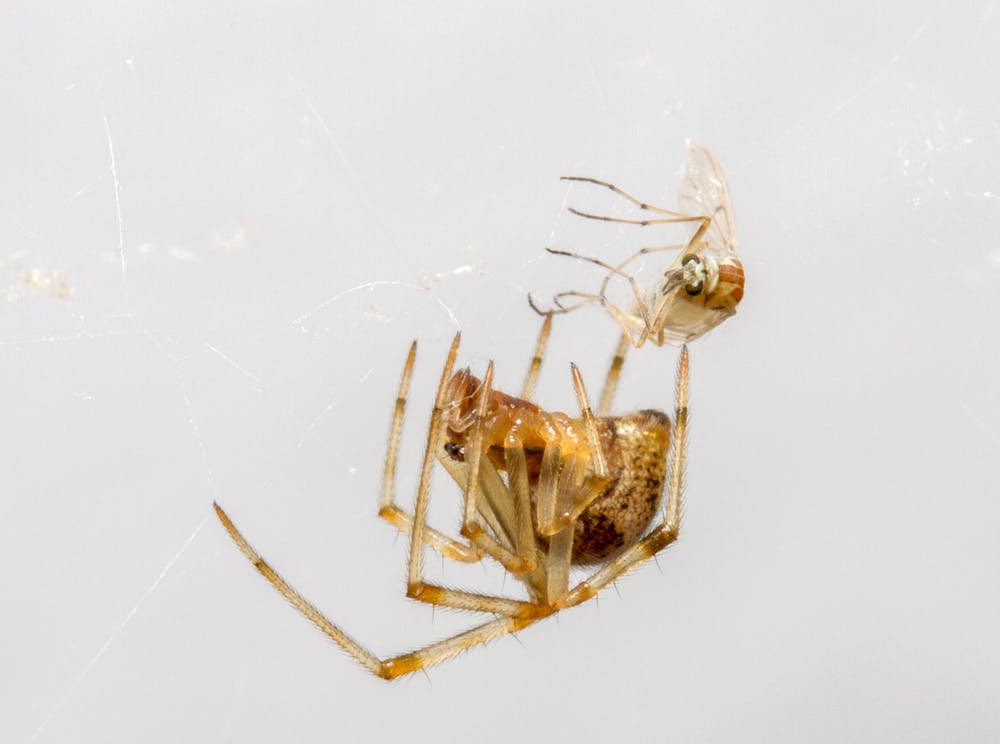
A cobweb spider dispatches some prey that got snagged in its web.Matt Bertone, CC BY-ND
My colleagues and I conducted a visual survey of 50 North Carolina homes to inventory just which arthropods live under our roofs. Every single house we visited was home to spiders. The most common species we encountered were cobweb spiders and cellar spiders.
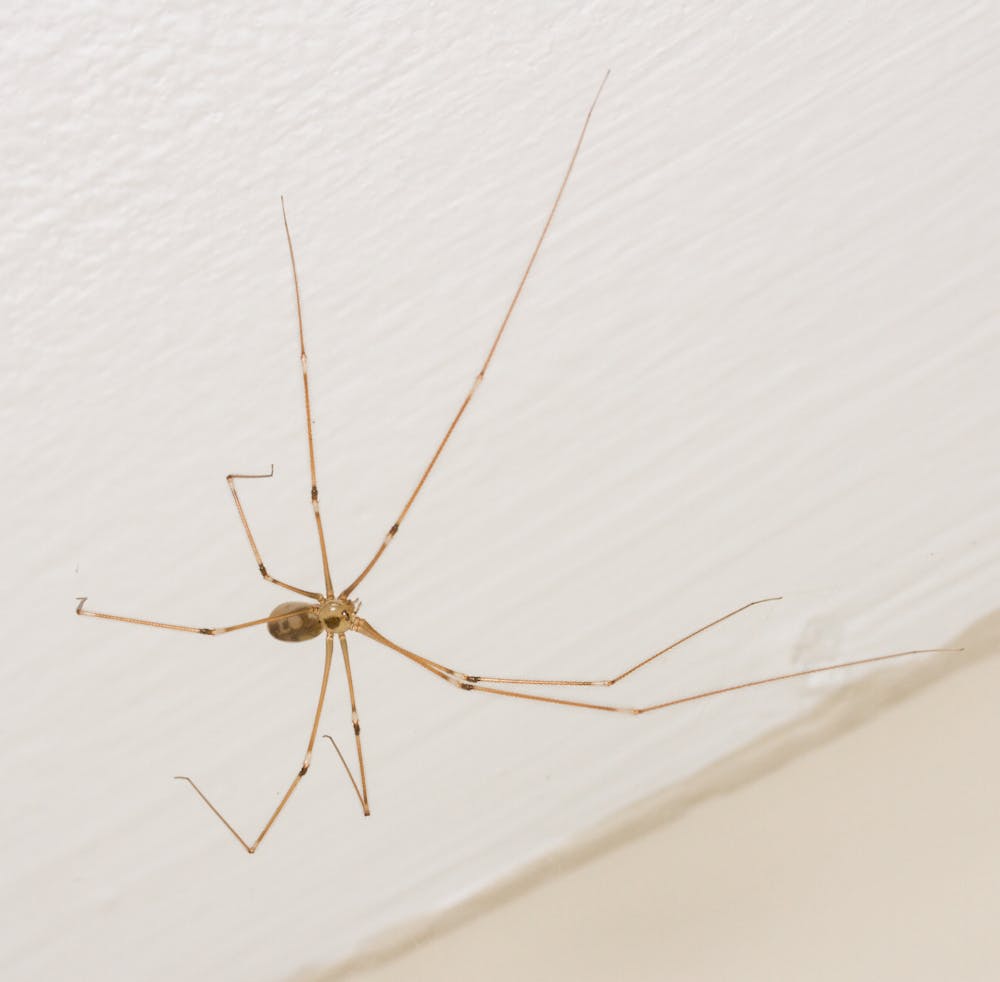
A cellar spider, sometimes called daddy longlegs (not to be confused with a harvestman).Matt Bertone, CC BY-ND
Both build webs where they lie in wait for prey to get caught. Cellar spiders sometimes leave their webs to hunt other spiders on their turf, mimicking prey to catch their cousins for dinner.
Although they are generalist predators, apt to eat anything they can catch, spiders regularly capture nuisance pests and even disease-carrying insects – for example, mosquitoes. There’s even a species of jumping spider that prefers to eat blood-filled mosquitoes in African homes. So killing a spider doesn’t just cost the arachnid its life, it may take an important predator out of your home.
It’s natural to fear spiders. They have lots of legs and almost all are venomous - though the majority of species have venom too weak to cause issues in humans, if their fangs can pierce our skin at all. Even entomologists themselves can fall prey to arachnophobia. I know a few spider researchers who overcame their fear by observing and working with these fascinating creatures. If they can do it, so can you!
An arachnologist’s story of growing up terrified of spiders but ultimately becoming fascinated by them.
Spiders are not out to get you and actually prefer to avoid humans; we are much more dangerous to them than vice versa. Bites from spiders are extremely rare. Although there are a few medically important species like widow spiders and recluses, even their bites are uncommon and rarely cause serious issues.
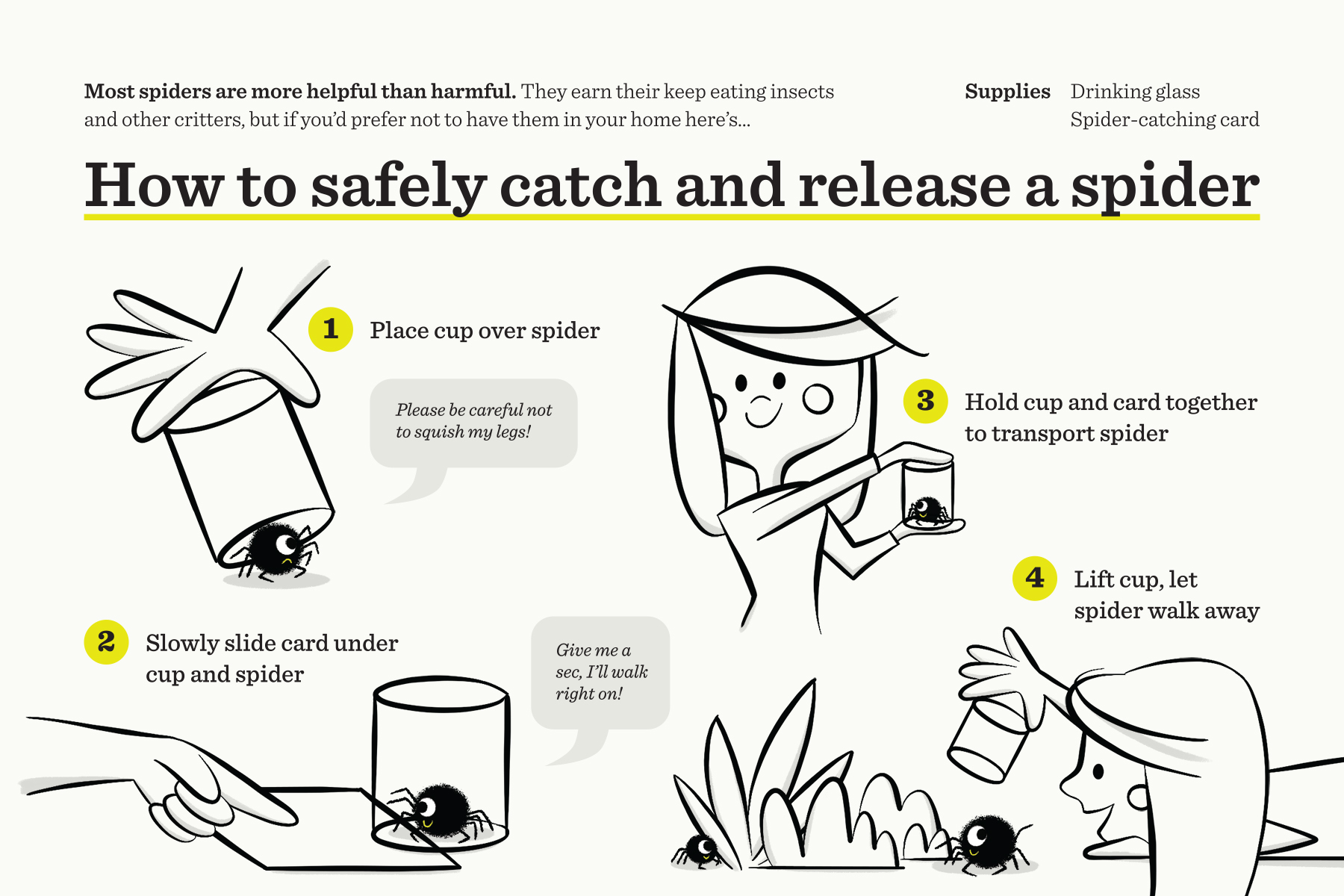
If you truly can’t stand that spider in your house, apartment, garage, or wherever, instead of smashing it, try to capture it and release it outside. It’ll find somewhere else to go, and both parties will be happier with the outcome.
But if you can stomach it, it’s OK to have spiders in your home. In fact, it’s normal. And frankly, even if you don’t see them, they’ll still be there. So consider a live-and-let-live approach to the next spider you encounter.
Harvepino / shutterstock
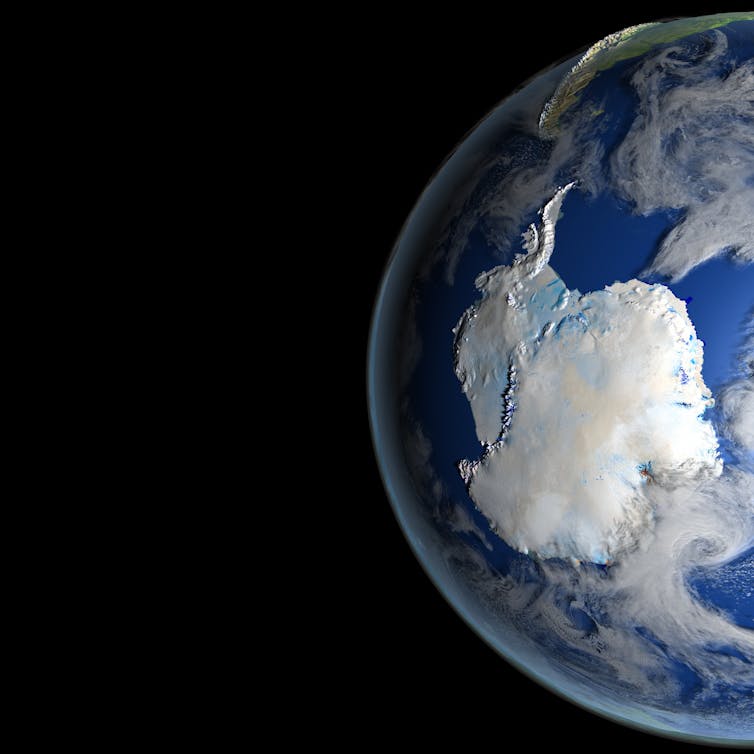
Antarctica is a vast icy wasteland covered by the world’s largest ice sheet. This ice sheet contains about 90% of fresh water on the planet. It acts as a massive heat sink and its meltwater drives the world’s oceanic circulation. Its existence is therefore a fundamental part of Earth’s climate.
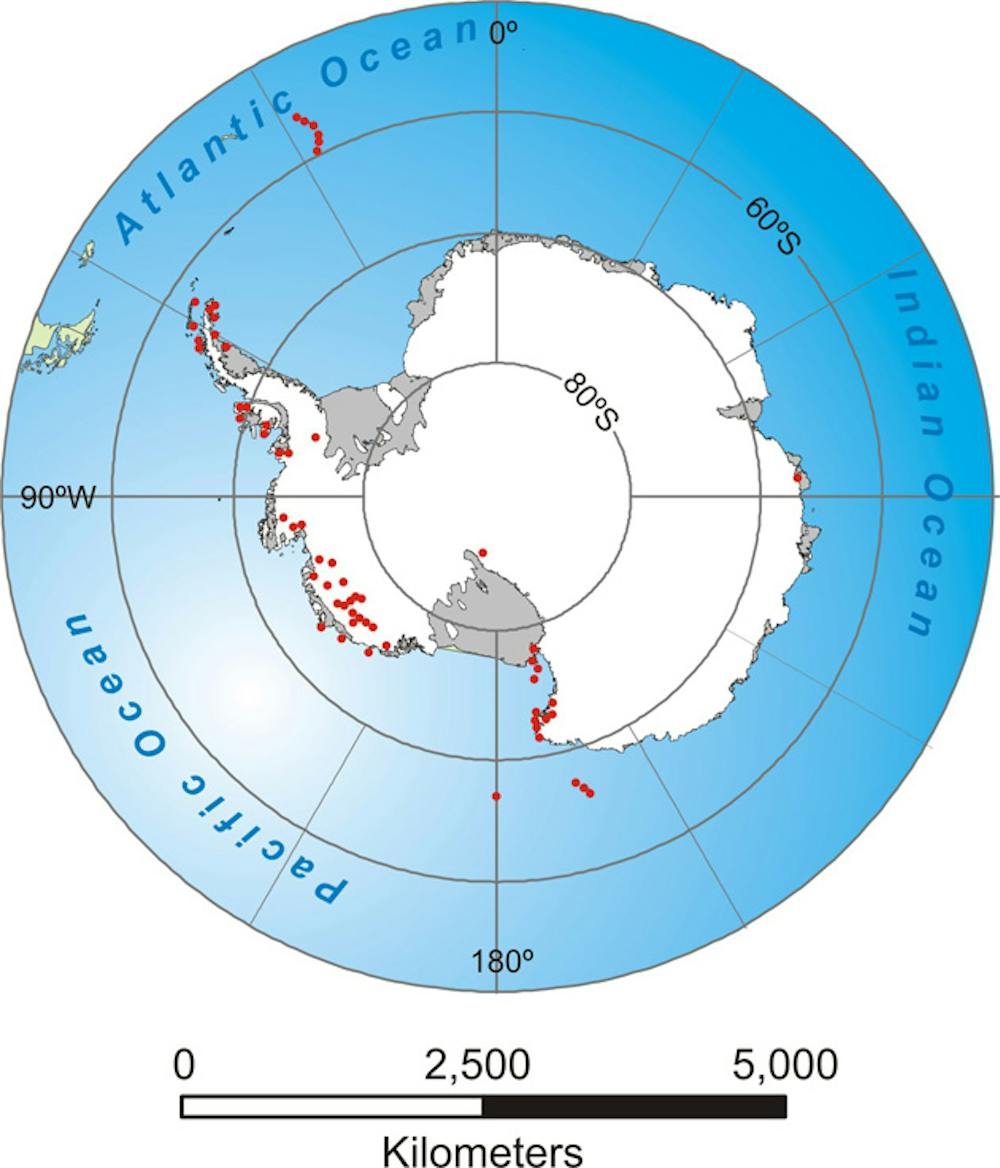
Less well known is that Antarctica is also host to several active volcanoes, part of a huge “volcanic province” which extends for thousands of kilometres along the western edge of the continent. Although the volcanic province has been known and studied for decades, about 100 “new” volcanoes were recently discovered beneath the ice by scientists who used satellite data and ice-penetrating radar to search for hidden peaks.
Some of the volcanoes known about before the latest discovery.antarcticglaciers.org, Author provided
These sub-ice volcanoes may be dormant. But what would happen if Antarctica’s volcanoes awoke?
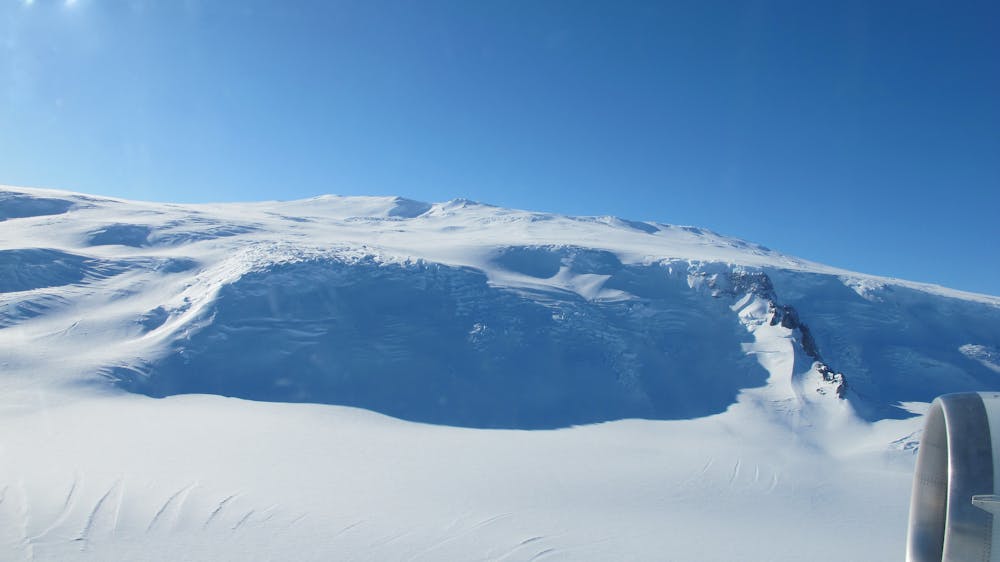
We can get some idea by looking to the past. One of Antarctica’s volcanoes, Mount Takahe, is found close to the remote centre of the West Antarctic Ice Sheet. In a new study, scientists implicate Takahe in a series of eruptions rich in ozone-consuming halogens that occurred about 18,000 years ago.
These eruptions, they claim, triggered an ancient ozone hole, warmed the southern hemisphere which caused glaciers to melt, and helped bring the last ice age to a close.
Mt Takahe grew over hundreds of thousands of years and its 8km-wide caldera now towers above the ice sheet.NASA / Jim Yungel, CC BY-SA
This sort of environmental impact is unusual. For it to happen again would require a series of eruptions, similarly enriched in halogens, from one or more volcanoes that are currently exposed above the ice. Such a scenario is unlikely although, as the Takahe study shows, not impossible. More likely is that one or more of the many subglacial volcanoes, some of which are known to be active, will erupt at some unknown time in the future.
Eruptions below the ice
Because of the enormous thickness of overlying ice, it is unlikely that volcanic gases would make it into the atmosphere. So an eruption wouldn’t have an impact like that postulated for Takahe. However, the volcanoes would melt huge caverns in the base of the ice and create enormous quantities of meltwater. Because the West Antarctic Ice Sheet is wet rather than frozen to its bed – imagine an ice cube on a kitchen work top – the meltwater would act as a lubricant and could cause the overlying ice to slip and move more rapidly. These volcanoes can also stabilise the ice, however, as they give it something to grip onto – imagine that same ice cube snagging onto a lump-shaped object.
In any case, the volume of water that would be generated by even a large volcano is a pinprick compared with the volume of overlying ice. So a single eruption won’t have much effect on the ice flow. What would make a big difference, is if several volcanoes erupt close to or beneath any of West Antarctica’s prominent “ice streams”.
A velocity map of Antarctic ice streams as they move toward the ocean.NASA/JPL, CC BY-SA
Ice streams are rivers of ice that flow much faster than their surroundings. They are the zones along which most of the ice in Antarctica is delivered to the ocean, and therefore fluctuations in their speed can affect the sea level. If the additional “lubricant” provided by multiple volcanic eruptions was channelled beneath ice streams, the subsequent rapid flow may dump unusual amounts of West Antarctica’s thick interior ice into the ocean, causing sea levels to rise.
Under-ice volcanoes are probably what triggered rapid flow of ancient ice streams into the vast Ross Ice Shelf, Antarctica’s largest ice shelf. Something similar might have occurred about 2,000 years ago with a small volcano in the Hudson Mountains that lie underneath the West Antarctica Ice Sheet – if it erupted again today it could cause the nearby Pine Island Glacier to speed up.
The volcano–ice melt feedback loop
Most dramatically of all, a large series of eruptions could destabilise many more subglacial volcanoes. As volcanoes cool and crystallise, their magma chambers become pressurised and all that prevents the volcanic gases from escaping violently in an eruption is the weight of overlying rock or, in this case, several kilometres of ice. As that ice becomes much thinner, the pressure reduction may trigger eruptions. More eruptions and ice melting would mean even more meltwater being channelled under the ice streams.
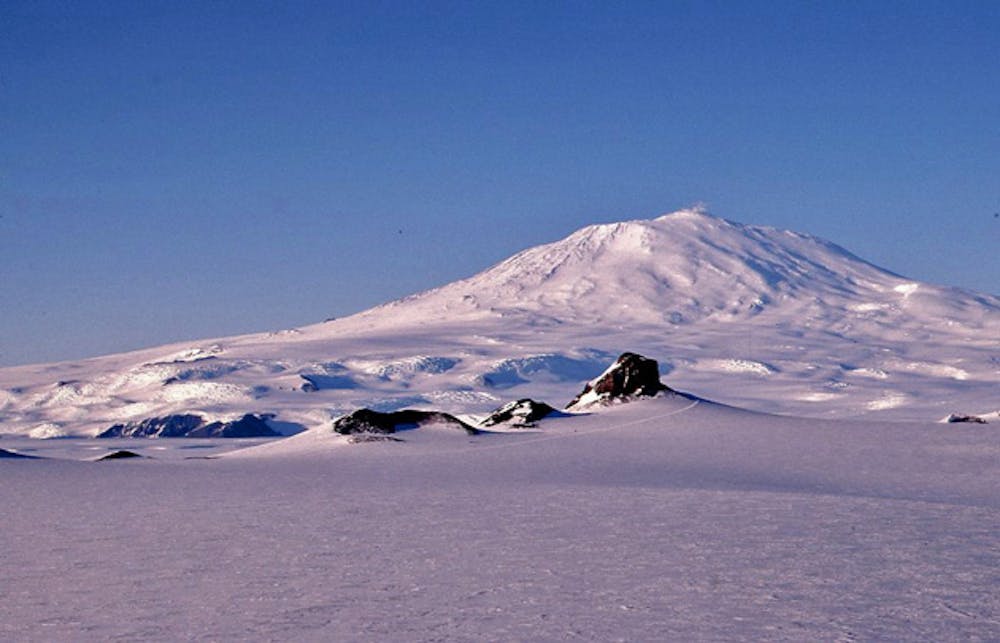
Mt Erebus is one of Antarctica’s most active volcanoes. The rocks in the foreground are the remnants of several younger subglacial volcanoes.antarcticglaciers.org, Author provided
Potentially a runaway effect may take place, with the thinning ice triggering more and more eruptions. Something similar occurred in Iceland, which saw an increase in volcanic eruptions when glaciers began to recede at the end of the last ice age.
So it seems the greatest threat from Antarctica’s many volcanoes will be if several erupt within a few decades of each other. If those volcanoes have already grown above the ice and their gases were rich in halogens then enhanced warming and rapid deglaciation may result. But eruptions probably need to take place repeatedly over many tens to hundreds of years to have a climatic impact.
More likely is the generation of large quantities of meltwater during subglacial eruptions that might lubricate West Antarctica’s ice streams. The eruption of even a single volcano situated strategically close to any of Antarctica’s ice streams can cause significant amounts of ice to be swept into the sea. However, the resulting thinning of the inland ice is also likely to trigger further subglacial eruptions generating meltwater over a wider area and potentially causing a runaway effect on ice flow. John Smellie, Professor of Volcanology, University of Leicester
You’ve been drinking the fascist, white supremacist, white neo-Nazi milk … To be a successful antifa soldier, you have to become a soy boy.
In one of his satirical YouTube videos, alt-right commentator James Allsup suggests that what epitomises the anti-fascist, feminist, politically correct people he lambasts is that they drink soy instead of dairy milk.
Allsup is one of many members of the so-called alt-right, many of whom use social media and ironic humour to promote racist, sexist, antisemitic and other offensive views. Allsup himself attended last summer’s infamous Unite the Right gathering of neo-Nazis and white supremacists. His Twitter account was suspended last December on the grounds that his political views violated the company’s terms of use.
Allsup’s video is part of a viral flurry of tweets, memes, and videos depicting the battle between dairy and soy milk and all they represent.
The #MilkTwitter hashtag went viral after an incident that’s since been dubbed the “milk party”, in which a large gathering of white men descended on an anti-Trump art installation a few weeks after Trump’s inauguration. The men carried cartons of milk and voiced everything from off-colour taunts to explicitly racist, sexist, anti-Semitic and homophobic rants. After taking a swig of milk from his carton, one bare-chested man approached the camera and sneered. “An ice cold glass of pure racism,” he growled into the lens.
After that night, milk quickly went viral, joining the ranks of Pepe the Frog and the “okay” emoji as symbols of 21st century, post-Obama white supremacy. Pro-Trump supporters began carrying cartons of it to rallies and Richard Spencer and other prominent figures of the “alt-right” movement added milk-bottle emojis to their Twitter profiles. The #SoyBoy hashtag followed a few months later, going viral in the spring of 2017 and remains popular today.
For members of the alt-right, dairy milk symbolises strength of body and society; drinking it reinforces notions of white superiority and idealised visions of masculinity. Soy milk represents weakness, emasculation, and all things politically correct. The hashtags #MilkTwitter and #SoyBoy celebrate traditional gender norms and the “good old days” of white-dominated patriarchy, while ridiculing diversity and feminism.
Alt-right rhetoric
But #MilkTwitter and #SoyBoy don’t exist in a vacuum: milk has long been used as a symbol for and tool of oppression and exploitation. Even the verb “to milk” means “to exploit”.
There’s a long history of association between dairy milk and white supremacy, as legal scholar Andrea Freeman explores. Freeman traces the link back a century, with official US government documents from the 1920s suggesting a link between white people, milk-drinking and a superior intellect.
Similarly, sociologist Melanie DuPuis has described how milk was central to the construction of the modern Western nation state. The nutritionally “perfect” white drink was symbolically linked to the white-skinned bodies that were better able to digest it due to a genetic mutation known as lactase persistence. Early 20th century milk advertisements perpetuated this trope, often juxtaposing images of healthy-looking, light-skinned people with sickly-looking, darker-skinned ones. “By declaring milk perfect,” says DuPuis, “white northern Europeans announced their own perfection”.
Where dairy has symbolised white superiority, soy has long represented notions of weakness, nonwhiteness, and emasculation. Feminist and animal rights advocate Carol Adams has discussed how 19th century scholars justified British colonialism in part by dividing the world into “intellectually superior meat eaters and inferior plant eaters”. Asian cultures heavy in soy and rice consumption occupied the latter category.
In contemporary discussions, scientific studies linking phytoestrogens in soybeans to lower sperm count have been used – by alt-right trolls and mainstream media alike – to create a narrative that soy emasculates men who consume it.
“This is gonna fill you full of estrogen, this is gonna block all your testosterone,” Allsup pronounces on YouTube, holding up a carton of soy milk. “We’re gonna be drinking only soy milk, and it’s gonna flush all that testosterone – which is a word that means white supremacy – out of your body.” While Allsup obviously intends his video to be funny, screen shots from a Men’s Health article about soy’s potential to “undermine everything it means to be male” suggests he nevertheless takes the threat of soy seriously.
Taking alt-right irony seriously
Many dismiss the racist, sexist, anti-Semitic and homophobic rants on #MilkTwitter and #SoyBoy as being nothing more than ironic antics targeting politically correct “normies” who can’t take a joke. But irony and ambiguity are worth taking seriously: they are established strategies of alt-right trolls who seek to exploit Poe’s Law, the notion that it’s virtually impossible to distinguish between satire and sincerity online. Irony allows for extremist views to hide in plain sight – in the words of prominent neo-Nazi Andrew Anglin, “non-ironic Nazism masquerading as ironic Nazism”.
The danger of Poe’s Law, explained by Jason Wilson in an article for The Guardian about alt-right tactics, isn’t that satire may be mistaken for sincerity, but that “every ‘ironic’ repetition of far-right ideals contributes to a climate in which racism, misogyny, or Islamophobia is normalised”. Because of that, says Angela Nagle, who studies the alt-right’s online culture wars, “the best response is to stubbornly take the ‘alt-right’ at their word”.
Vegan vs. dairy masculinities
The strategy of those using #MilkTwitter and #SoyBoy is to mix a carefully constructed view of history and cherry-picked science to reinforce sexist and racist beliefs, while fostering a fear of contemporary shifts in power away from white males and towards women, people of colour, and those occupying space outside the cultural mainstream.
Vegans are often the target of #MilkTwitter and #SoyBoy taunts, with “the vegan agenda” being code for all things weak, effeminate and politically correct. Vegans, after all, drink soy (or other plant milk) instead of dairy, typically for ethical reasons related to caring about animals’ welfare – another female-coded trait.
The irony of #MilkTwitter and #SoyBoy casting vegan men as less masculine is that it is hard to imagine a more feminine-coded substance than estrogen-filled animal milk, coming from the breasts of female mammals. But in the identity politics of the alt-right, linking dairy milk to white supremacy, such complexities are taken lightly. After all, they are only joking, right?
Frankenstein’s monster in the Hollywood Wax Museum. The fictional character first appeared in Mary Shelley’s novel in 1818.
www.shutterstock.com
Motherhood is getting considerable attention, even if much of the news is concerning. Fertility rates are falling in America as millennials decide not to have children. This should hardly come as a surprise. The cost of raising a child to adulthood has been increasing and real median household income has only just regained its 1999 level.
At this time, when it could be argued that maternity is in decline, Mary Shelley’s classic work of literature, “Frankenstein,” celebrating its 200th anniversary this year, invites us to reflect on the deeper importance of mothers in our lives.
Shelley, who published the work at the age of only 19, had many reasons to make motherhood a major theme. Her mother, the feminist Mary Wollstonecraft, had died from complications arising from her birth. Shelley’s own attempts at motherhood would result in multiple miscarriages and the deaths of three children. Not surprisingly, mothers in “Frankenstein” are conspicuous by their absence – with disastrous consequences.
The creation of Frankenstein
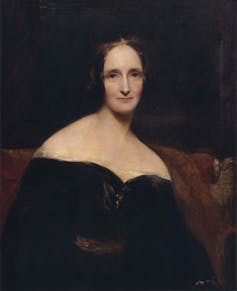
Portrait of Mary Shelley.Richard Rothwell
Frankenstein tells the tale of young scientist Victor Frankenstein, who is so horrified at the prospect of death that he seeks a means of restoring life to the deceased. He creates an 8-foot-tall humanoid creature, whose appearance renders it loathsome to all and to which he never gives a proper name. Spurned by its creator, the creature develops a desire for revenge and soon takes the lives of everyone dear to Victor.
At numerous points, the novel highlights the devastating effects of maternal absence.
To begin with, mothers in Frankenstein are quite short-lived. Victor Frankenstein’s mother, an orphan, dies of scarlet fever while nursing Victor’s “cousin” and eventual wife, Elizabeth. While on their honeymoon, Elizabeth too is killed by the monster. Justine, the Frankensteins’ housekeeper, is falsely convicted of the murder of Victor’s younger brother, also grows up motherless.
Frankenstein’s most dramatic instance of motherlessness is the monster itself, a human being created by a man alone. Reflecting on this feat, Victor remarks that “no father could claim the gratitude of his child so completely” as he would deserve of the new race of creatures he sought to create.
Simply put, he devises a new way of bestowing life that completely sidesteps the need for conception, pregnancy and childbirth.
Yet Victor had not done away entirely with the need for maternity. For though he had “selected the creature’s features as beautiful,” the moment he beholds it stirring, he recoils.
“The beauty of the dream vanished, and breathless horror and disgust filled my heart.”
Unbound by any maternal affection or calling, Victor is “unable to endure” the being he had created and rushes out of the room. His creation was never part of him, and he feels at liberty to abandon it.
When the creator matters more
The roots of the problem lie largely in the fact that Victor has moved procreation from the domain of the natural – the purview of Mother Nature – to that of the technological.
His quest is a purely scientific one – a study of chemistry, anatomy and the decay of the human body. It is so devoid of any regard for the sanctity of life that Victor came to regard a churchyard as nothing more than a “receptacle of bodies deprived of life,” implying that a living child might be little more than a body not yet deprived of life.
To him, there is nothing mysterious about life and death. The animation of lifeless matter looms before him as nothing more than a daunting but purely technical challenge. He dreams of the power “to renew life” and becomes so engrossed in this one pursuit that his eyes “become insensible to the charms of nature,” including the unfolding of the seasons around him. A “single great object” swallows up “every habit of his nature.” In short, his scientific quest has left him with no appreciation for life’s beauty and mystery.
What long reigned as one of the most mysterious and awe-inspiring experiences in human life – the birth of a human being – has in Victor’s mind become little more than proof of his own greatness:
“I was surprised that among so many men of genius who had directed their enquiries toward the same science, I alone should be reserved to discover so astonishing a secret.”
To Victor, the act of creation says much less about the creature than the creator.
Devoid of the feminine, bringing forth new life becomes a completely masculine act, an exercise of mastery and control over a reluctant but ultimately compliant nature. Victor’s cold detachment from his creation contrasts sharply with the experience of childbirth as described by those who have been through it – a description not of conquest but endurance and the unfolding of something that resists control.
The experience of labor and birth
Consider this account of labor by the 20th-century activist Dorothy Day in her essay, “Having a Baby: A Christmas Story”:
“Where before there had been waves, there were now tidal waves. Earthquake and fire swept my body. My spirit was a battleground on which thousands were butchered in a most horrible manner.”
It is not difficult to imagine Day having just read Frankenstein’s account of bringing forth new life when she penned these lines about men giving birth:
“‘What do they know about it, the idiots?’ I thought. And it gave me pleasure to imagine one of them in the throes of childbirth. How they would groan and holler and rebel. And wouldn’t they make everybody else miserable around them?”
In Day’s account, gestation and child birth are not like pushing buttons on a control panel but a journey along which the mother is swept – something she does not so much choose as endure. And when it is over, she is presented with a baby fashioned less by her than in her and through her. The form of the baby, from its generic sex to its distinctive features, is a joyful surprise even to the woman who has served as the home of its development for over three-quarters of a year.
Dorothy Day in a 1916 photo.Unknown photographer
For Victor, the process is quite different. He too is surprised, but his surprise reflects the fact that, although he has in fact painstakingly selected each of the creature’s features, the end result turns out radically different from what he envisioned. He thought every aspect of the creature was subject to his control, but instead of a superman he has produced a monster. His horror is magnified by the fact that his creature is his product, while Dorothy Day receives her daughter as something more akin to a gift.
What does a mother add?
Thanks to “Frankenstein,” we can pose a question the answer to which would have seemed obvious throughout most of the course of human history: What does a mother add? The answer, in simplest terms, is that mothers add to life something that Victor Frankenstein – who treats the whole process of creation as nothing more than a challenge to his own ingenuity – is unable even to recognize, let alone wield: the power of a love that puts creature before creator.
Victor has made something new, but it was never a part of him, and from the moment he lays eyes on it he seeks to disassociate himself from it. Because the creature’s appearance disappoints him, he feels within his rights to turn his back on it – to abandon it to a world utterly unprepared to receive it. The circumstances of the creature’s birth may be monstrous, but it is not yet a monstrosity. Only by depriving it of any semblance of love does Victor create a true monster.
By showing us a world from which mothers are largely absent, Mary Shelley reminds us that the genius of motherhood lies less in biological reproduction than in the capacity to love. Human beings need love to develop and thrive. We honor this capacity of mothers when we say that someone has a face that “only a mother could love.”
Perhaps Victor’s creature would never had developed into a monster in the first place, if only it had enjoyed the love of a mother.
 But if you can stomach it, it’s OK to have spiders in your home. In fact, it’s normal. And frankly, even if you don’t see them, they’ll still be there. So consider a live-and-let-live approach to the next spider you encounter.


 More likely is the generation of large quantities of meltwater during subglacial eruptions that might lubricate West Antarctica’s ice streams. The eruption of even a single volcano situated strategically close to any of Antarctica’s ice streams can cause significant amounts of ice to be swept into the sea. However, the resulting thinning of the inland ice is also likely to trigger further subglacial eruptions generating meltwater over a wider area and potentially causing a runaway effect on ice flow.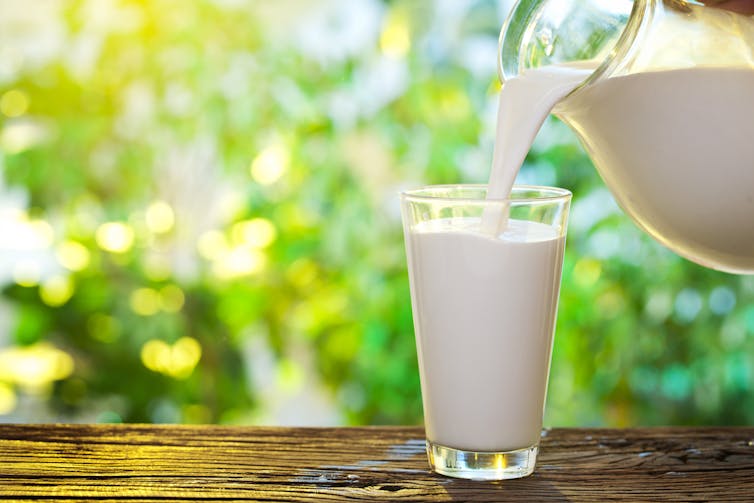
 The irony of #MilkTwitter and #SoyBoy casting vegan men as less masculine is that it is hard to imagine a more feminine-coded substance than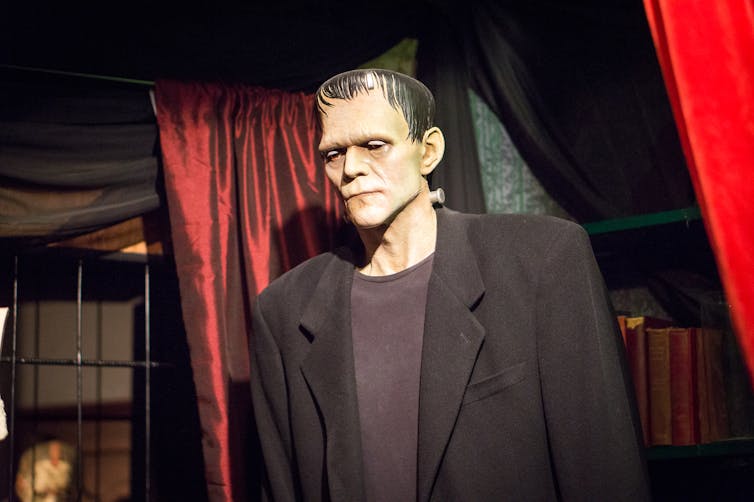

 Perhaps Victor’s creature would never had developed into a monster in the first place, if only it had enjoyed the love of a mother.