Tuesday, April 28, 2020

Our research shows why it's vital to protect older South Africans from coronavirus


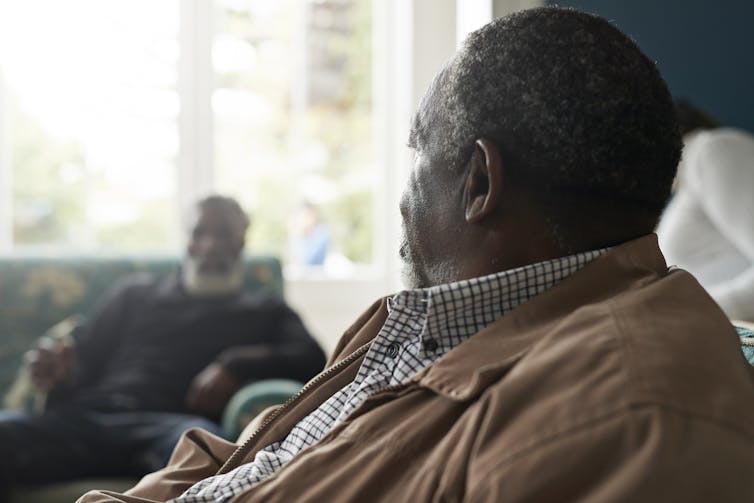
Elderly people form part of families and households, and fulfil important caregiving and economic roles. Getty/Klaus Vedfelt

Evidence is building around the world that elderly people are the most vulnerable group in the COVID-19 pandemic. They are more likely to develop severe symptoms and to die from this viral disease, especially if they have other medical conditions like heart disease or high blood pressure.

Globally, the death rate from COVID-19 increases most sharply for those aged 70 or higher. But this data comes primarily from high income countries with strong health care systems. In less developed countries, which have shorter life expectancies, high levels of pre-existing conditions known to worsen outcomes, and generally weaker health systems, mortality is likely to rise earlier.

The Gauteng City-Region Observatory, an independent research and analysis unit in Johannesburg, South Africa, conducts a survey every two years to measure people’s quality of life in the Gauteng city-region, the country’s economic centre. This mostly urban region has had the highest number of COVID-19 cases in South Africa so far. Because of the particularly high risk that the elderly face, we have used the data from the latest Quality of Life survey to understand more about their lives. This work forms part of the GCRO’s response to the COVID-19 pandemic.

This picture of older people’s lives in Gauteng can inform welfare and health responses to the coronavirus pandemic. Decision makers need to understand the lives of the vulnerable, to ensure that policies provide appropriate protection and support.

We looked at how the elderly form part of families and households, and fulfil important caregiving and economic roles. Our findings show that a very large proportion of people over the age of 60 identify themselves as head of the household. An equally high proportion identify themselves as the primary caregiver.

Our findings point to the fact that households headed by the elderly are likely to be particularly vulnerable in the COVID-19 pandemic.

A closer look at households in Gauteng province

South Africa’s apartheid history created substantially different population-age structures for different population groups. As household structure and the distribution of care-giving roles also vary by population group, we present separate data for African elders, for whom we have the largest sample size.

We focused our analysis on those aged 60 and above – about 13% of all the 24,889 people in our Quality of Life survey.

Key results of our analysis can be explored in our interactive visualisation below.
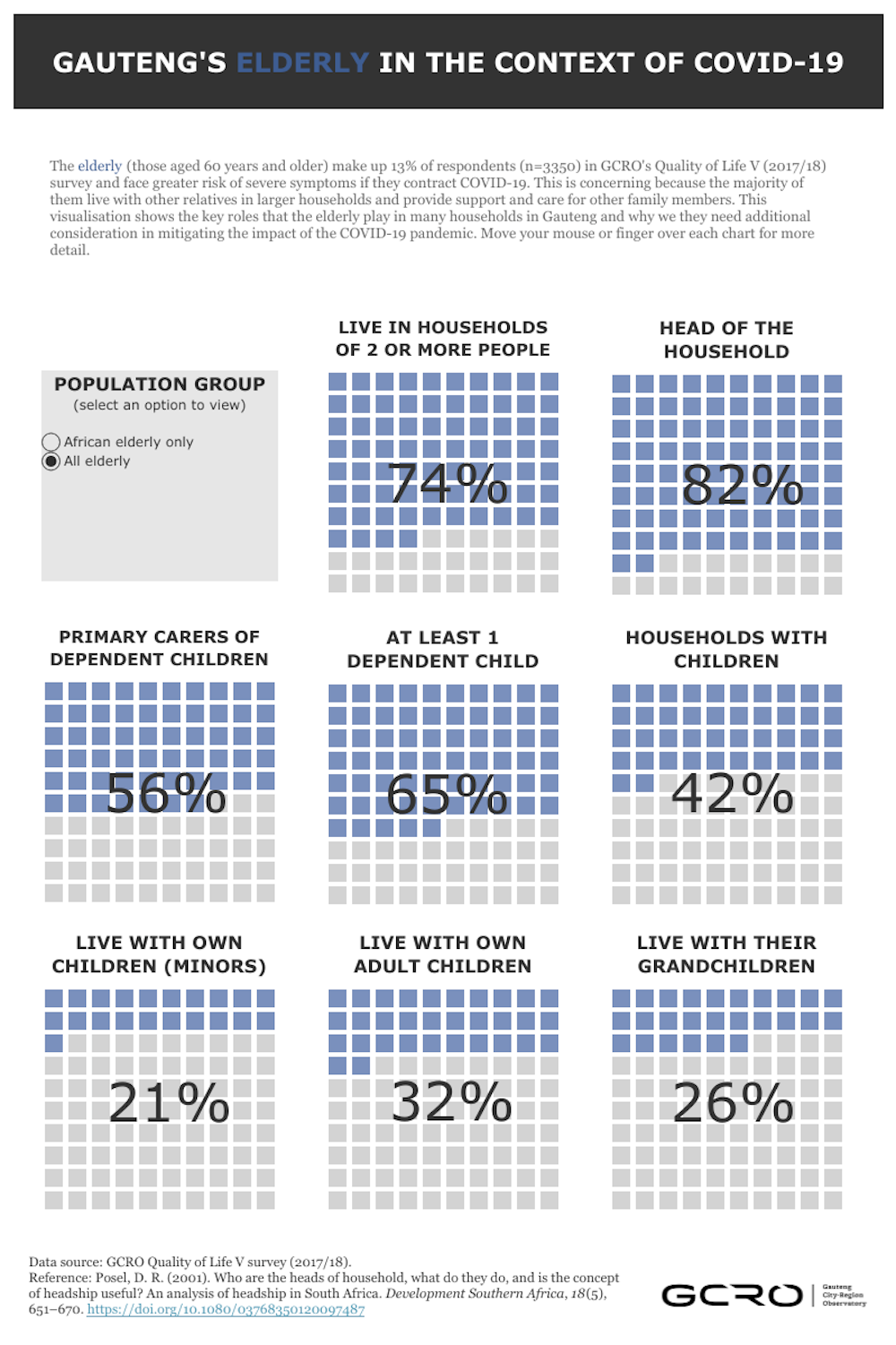
Dashboard. GCRO

Like South Africa as a whole, Gauteng has a high prevalence of medical conditions believed to worsen COVID-19 outcomes, such as high blood pressure, diabetes, heart disease, TB and untreated HIV/AIDS. Life expectancy is already low (63.8 years for males and 69.2 years for females).

We found that most (74%) of the over-60s live in households of two or more people. Just 16% live only with their spouse. Their households are likely to contain several generations: 59% of the elderly live with family members other than their spouse, and 42% live in households with children under 18 years. Africans were even more likely (54%) to share the household with children.

The elderly frequently support children financially, including their own adult children. This is in part due to South Africa’s high unemployment rate and the fact that South Africans over 60 qualify for a social grant. Some 65% of elderly respondents (74% of African elderly) reported having at least one dependent child, and those with dependent children had an average of three.

Of elderly respondents who report having dependent children, 87% fulfil the role of primary carer. That makes up 56% of all elders.

As many as 85% of elderly respondents identify themselves as the head of their household and 48% of these are male.

What lockdown means for these households

With South Africa now under lockdown, the social and economic implications of the pandemic, and efforts to contain it, are becoming increasingly clear. Evidence of growing levels of hunger and income insecurity raises concerns about spiralling poverty, social unrest and economic collapse as a result of long term shutdowns.

This has led some commentators to suggest that in countries like South Africa, there is a choice to be made between policies of lockdown, with wide economic and social impacts, and simply allowing the disease to run its course, which would increase deaths among the elderly. Others have convincingly highlighted the flaws in this argument and point to the social and economic costs of an overwhelmed health system and large numbers of deaths in a short period.

The relatively youthful population (South Africa’s median age is 25 and Gauteng’s is 29) may provide some protection against the impact of COVID-19. But the elderly do not exist in isolation from the rest of the population. Our analysis (consistent with national-level data) suggests that without intervention, this pandemic will have significant implications for many households that include the elderly, or rely on their support.

Even with intervention, the risks are substantial. South Africa’s current lockdown will inevitably need to be eased in coming weeks. Measures to protect the elderly and other at-risk groups, for example through “shielding”, must be considered. Understanding the location of the elderly – both physically and within families, households and communities – will be critical to establishing how to do this.
Household structure, along with population age distribution, is relevant to the risk of transmission. There is evidence that a large proportion of infections occur within households.

Our analysis highlights some of the difficulties of isolating the elderly in South Africa. It also shows that policies must take into account the financial and social support that the elderly provide.

The lives of Gauteng’s elderly are almost certainly intertwined with those of younger residents in numerous other ways beyond those presented here. Along with the pandemic’s economic and social costs, the human and emotional impacts of disrupted relationships between generations will be substantial.

Ways to support the elderly and their dependants

President Ramaphosa, in his address of Tuesday 21 April, announced several interventions to provide social and economic support. New interventions include expanded food assistance, temporary increases in social grant amounts, and temporary social distress grants for other unemployed individuals. If implemented rapidly and impartially, these interventions will relieve some pressure on the elderly and the households they support.

But if the virus causes large numbers of hospitalisations and deaths, further support to the families of those affected will be needed. This may include continuing to pay out old age grants for six months after a beneficiary passes away, and psycho-social support to deal with illness and loss. Ongoing careful, data-driven and localised analysis of challenges and potential solutions will remain essential. The importance of protecting and supporting Gauteng’s elderly is clear.

The Conversation
Alexandra Parker, Researcher of urban & cultural studies, Gauteng City-Region Observatory and Julia de Kadt, Senior Researcher, Gauteng City-Region Observatory
This article is republished from The Conversation under a Creative Commons license.

Monday, April 27, 2020

Diary of Samuel Pepys shows how life under the bubonic plague mirrored today's pandemic


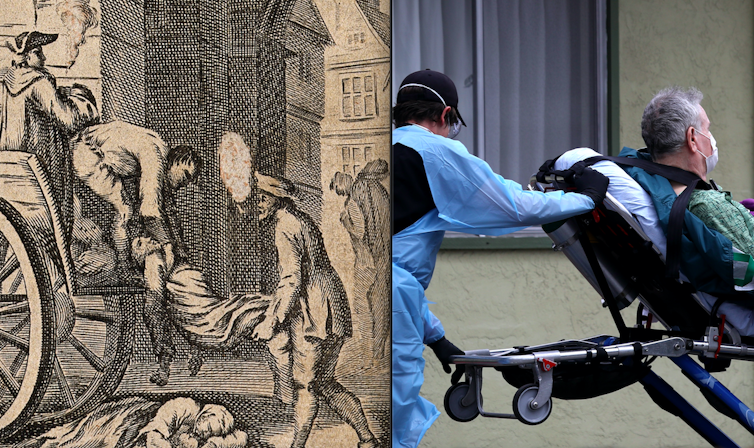
There were eerie similarities between Pepys’ time and our own. Justin Sullivan/Getty Images

In early April, writer Jen Miller urged New York Times readers to start a coronavirus diary.
“Who knows,” she wrote, “maybe one day your diary will provide a valuable window into this period.”

During a different pandemic, one 17th-century British naval administrator named Samuel Pepys did just that. He fastidiously kept a diary from 1660 to 1669 – a period of time that included a severe outbreak of the bubonic plague in London. Epidemics have always haunted humans, but rarely do we get such a detailed glimpse into one person’s life during a crisis from so long ago.

There were no Zoom meetings, drive-through testing or ventilators in 17th-century London. But Pepys’ diary reveals that there were some striking resemblances in how people responded to the pandemic.

A creeping sense of crisis

For Pepys and the inhabitants of London, there was no way of knowing whether an outbreak of the plague that occurred in the parish of St. Giles, a poor area outside the city walls, in late 1664 and early 1665 would become an epidemic.

The plague first entered Pepys’ consciousness enough to warrant a diary entry on April 30, 1665: “Great fears of the Sickenesse here in the City,” he wrote, “it being said that two or three houses are already shut up. God preserve us all.”


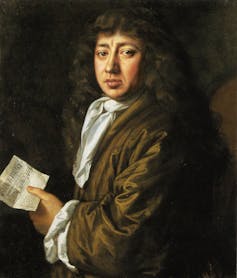
Portrait of Samuel Pepys by John Hayls (1666). National Portrait Gallery

Pepys continued to live his life normally until the beginning of June, when, for the first time, he saw houses “shut up” – the term his contemporaries used for quarantine – with his own eyes, “marked with a red cross upon the doors, and ‘Lord have mercy upon us’ writ there.” After this, Pepys became increasingly troubled by the outbreak.

He soon observed corpses being taken to their burial in the streets, and a number of his acquaintances died, including his own physician.

By mid-August, he had drawn up his will, writing, “that I shall be in much better state of soul, I hope, if it should please the Lord to call me away this sickly time.” Later that month, he wrote of deserted streets; the pedestrians he encountered were “walking like people that had taken leave of the world.”

Tracking mortality counts

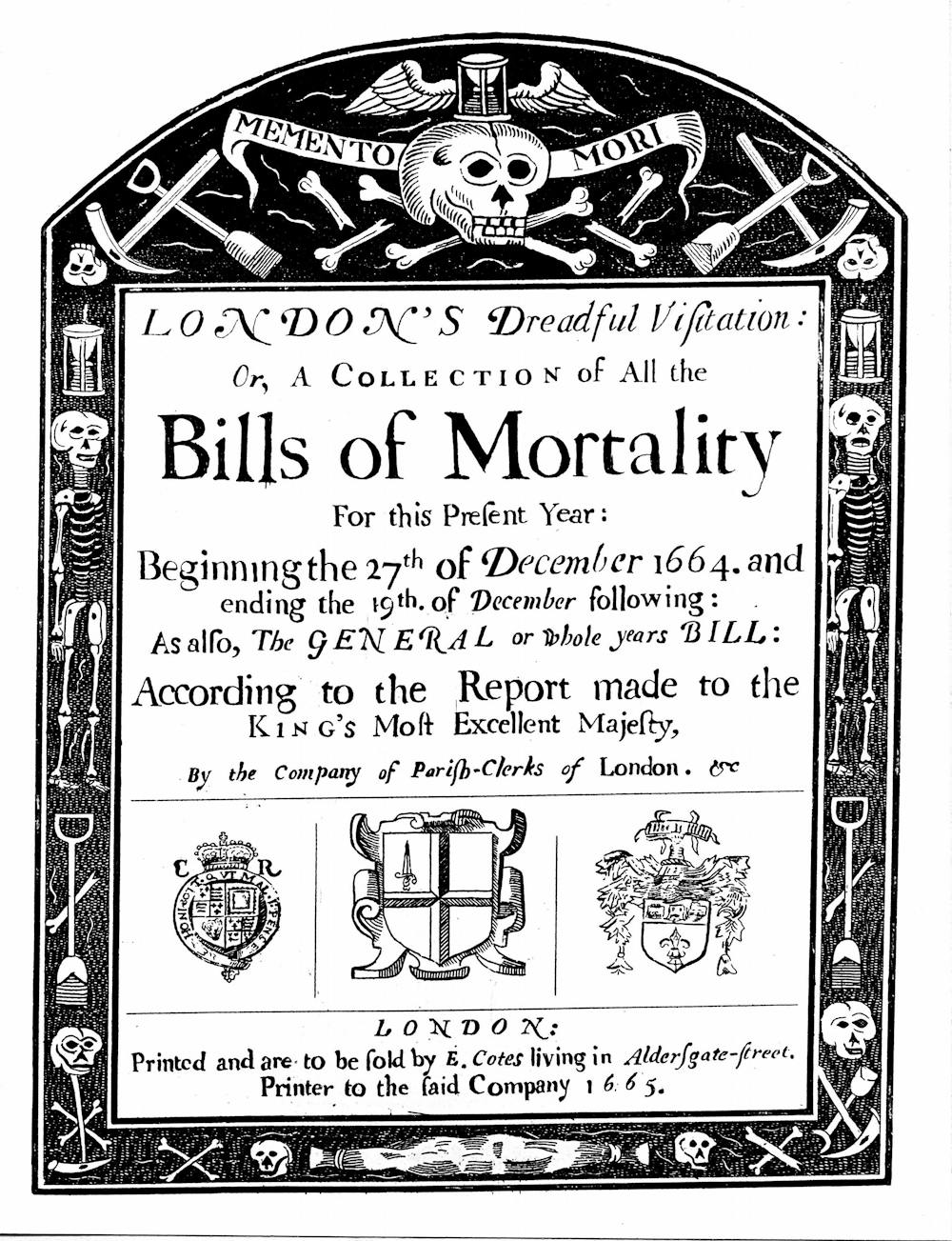
In London, the Company of Parish Clerks printed “bills of mortality,” the weekly tallies of burials.
Because these lists noted London’s burials – not deaths – they undoubtedly undercounted the dead.
Just as we follow these numbers closely today, Pepys documented the growing number of plague
victims in his diary.


‘Bills of mortality’ were regularly posted. Photo 12/Universal Images Group via Getty Image

At the end of August, he cited the bill of mortality as having recorded 6,102 victims of the plague, but feared “that the true number of the dead this week is near 10,000,” mostly because the victims among the urban poor weren’t counted. A week later, he noted the official number of 6,978 in one week, “a most dreadfull Number.”

By mid-September, all attempts to control the plague were failing. Quarantines were not being enforced, and people gathered in places like the Royal Exchange. Social distancing, in short, was not happening.

He was equally alarmed by people attending funerals in spite of official orders. Although plague victims were supposed to be interred at night, this system broke down as well, and Pepys griped that burials were taking place “in broad daylight.”

Desperate for remedies

There are few known effective treatment options for COVID-19. Medical and scientific research need time, but people hit hard by the virus are willing to try anything. Fraudulent treatments, from teas and colloidal silver, to cognac and cow urine, have been floated.

Although Pepys lived during the Scientific Revolution, nobody in the 17th century knew that the Yersinia pestis bacterium carried by fleas caused the plague. Instead, the era’s scientists theorized that the plague was spreading through miasma, or “bad air” created by rotting organic matter and identifiable by its foul smell. Some of the most popular measures to combat the plague involved purifying the air by smoking tobacco or by holding herbs and spices in front of one’s nose.

Tobacco was the first remedy that Pepys sought during the plague outbreak. In early June, seeing shut-up houses “put me into an ill conception of myself and my smell, so that I was forced to buy some roll-tobacco to smell … and chaw.” Later, in July, a noble patroness gave him “a bottle of plague-water” – a medicine made from various herbs. But he wasn’t sure whether any of this was effective. Having participated in a coffeehouse discussion about “the plague growing upon us in this town and remedies against it,” he could only conclude that “some saying one thing, some another.”


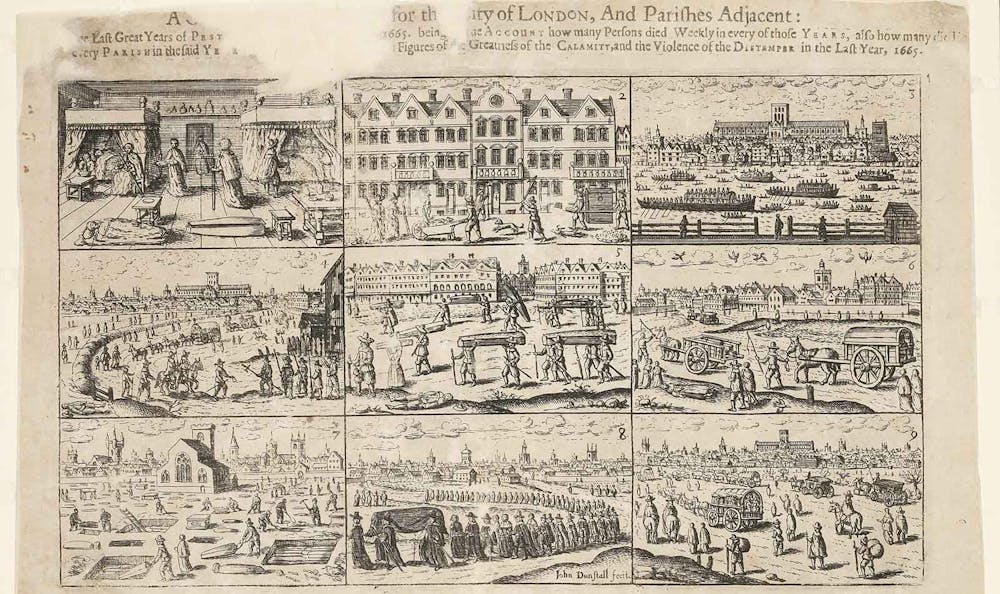
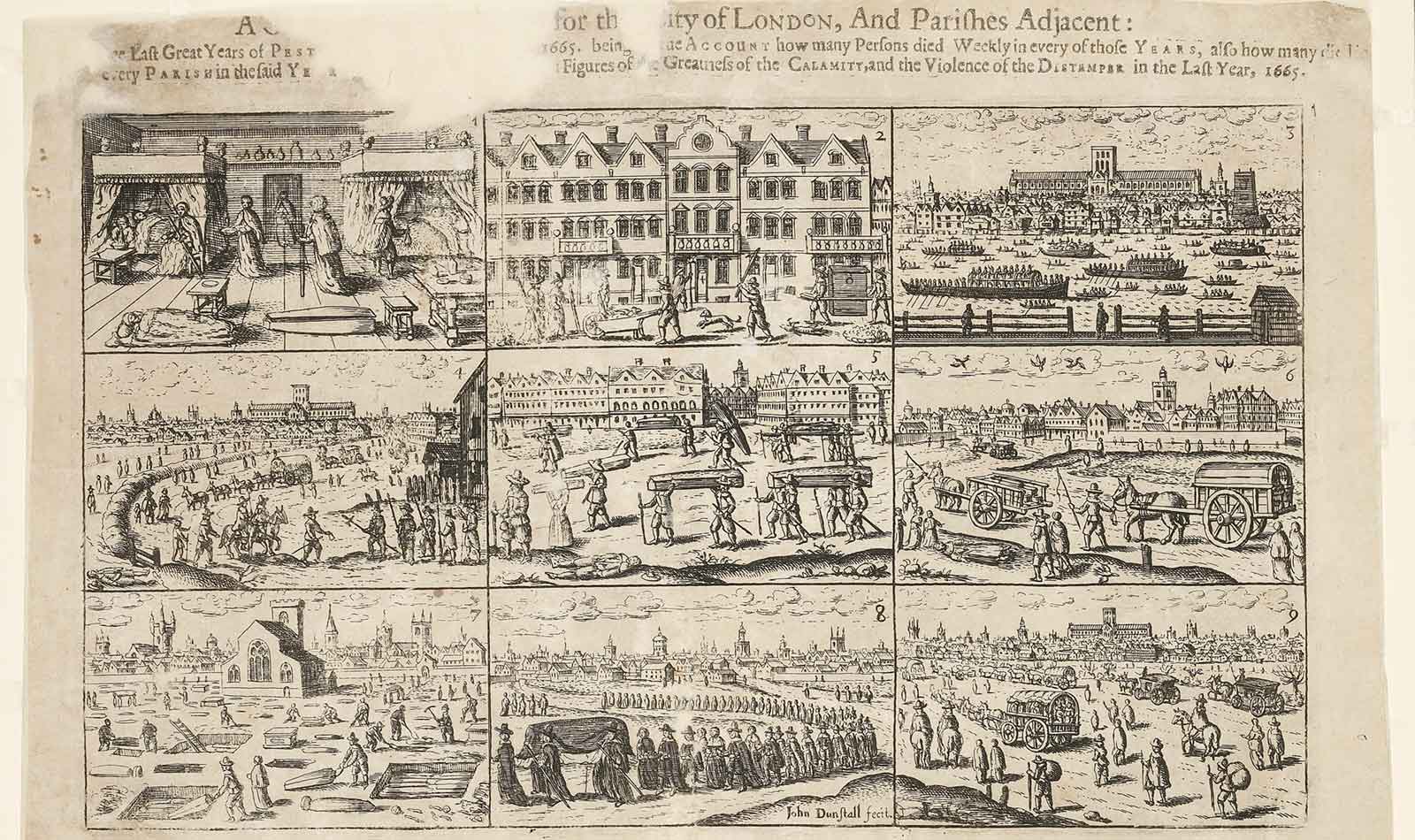
A 1666 engraving by John Dunstall depicts deaths and burials in London during the bubonic plague. Museum of London

During the outbreak, Pepys was also very concerned with his frame of mind; he constantly mentioned that he was trying to be in good spirits. This was not only an attempt to “not let it get to him” – as we might say today – but also informed by the medical theory of the era, which claimed that an imbalance of the so-called humors in the body – blood, black bile, yellow bile and phlegm – led to disease.

Melancholy – which, according to doctors, resulted from an excess of black bile – could be dangerous to one’s health, so Pepys sought to suppress negative emotions; on Sept. 14, for example, he wrote that hearing about dead friends and acquaintances “doth put me into great apprehensions of melancholy. … But I put off the thoughts of sadness as much as I can.”

Balancing paranoia and risk

Humans are social animals and thrive on interaction, so it’s no surprise that so many have found social distancing during the coronavirus pandemic challenging. It can require constant risk assessment: How close is too close? How can we avoid infection and keep our loved ones safe, while also staying sane? What should we do when someone in our house develops a cough?

During the plague, this sort of paranoia also abounded. Pepys found that when he left London and entered other towns, the townspeople became visibly nervous about visitors.

“They are afeared of us that come to them,” he wrote in mid-July, “insomuch that I am troubled at it.”
Pepys succumbed to paranoia himself: In late July, his servant Will suddenly developed a headache. Fearing that his entire house would be shut up if a servant came down with the plague, Pepys mobilized all his other servants to get Will out of the house as quickly as possible. It turned out that Will didn’t have the plague, and he returned the next day.

In early September, Pepys refrained from wearing a wig he bought in an area of London that was a hotspot of the disease, and he wondered whether other people would also fear wearing wigs because they could potentially be made of the hair of plague victims.

And yet he was willing to risk his health to meet certain needs; by early October, he visited his mistress without any regard for the danger: “round about and next door on every side is the plague, but I did not value it but there did what I could con ella.”

Just as people around the world eagerly wait for a falling death toll as a sign of the pandemic letting up, so did Pepys derive hope – and perhaps the impetus to see his mistress – from the first decline in deaths in mid-September. A week later, he noted a substantial decline of more than 1,800.

Let’s hope that, like Pepys, we’ll soon see some light at the end of the tunnel.

[You need to understand the coronavirus pandemic, and we can help. Read The Conversation’s newsletter.]The Conversation
Ute Lotz-Heumann, Heiko A. Oberman Professor of Late Medieval and Reformation History, University of Arizona
This article is republished from The Conversation under a Creative Commons license.
Book raises poignant questions about the future of Nelson Mandela's party


The African National Congress fought against the evils of apartheid, but couldn’t escape the sins of power itself. EFE-EPA/Yeshiel Panchia

My instinctive reaction on first laying my eyes on Mcebisi Ndletyana’s new book, Anatomy of the ANC in Power: Insights from Port Elizabeth, 1990-2019, was to wonder if the African National Congress (ANC), which has governed South Africa since the end of apartheid in 1994, was destined to atrophy.

The book is set to heighten the debate about the future of the party, whose dominance has been in decline since 2009. Ingenuously titled, it adds to the growing body of knowledge on liberation movements in power.

It explains how the party, which had fought against the injustice of the brutal system of apartheid, became so absorbed by the sins of incumbency when it came to power.

The book is a distillation of analytical savvy, intellectual prowess, wit and the fine pen of an outstanding pundit.

The political scientist Anthony Butler and sociologist Roger Southall have bemoaned analyses of the ANC for lacking practical and intuitive knowledge of its institutional life, complexity and informal networks. Ndletyana’s book attempts to fill that void.

As emeritus professor of historical studies Chris Saunders has put it, the
ANC’s history is a large mosaic of many different parts.
But can these different parts be knitted together into a complete historical narrative?

Making history

The history of political organisations is made every day of their existence, and continues even after their demise. The ink that writes history does not dry up.

Ndletyana gives the history of power politics in the ANC interpretation. He answers the vexing question that Joel Netshitenzhe, a national executive committee member of the party, asked in 2018:
how do liberation movements lose sense of idealism that included a preparedness to pay the ultimate price?
The book analyses the internal workings of the ANC, starting at the time when it reestablished itself inside the country, after it was unbanned in 1990, and ends in 2019.


It covers the two decades of the ANC in power. It is, therefore, wide-ranging and large in scope. I am not aware of any other other book that has gone to this length in analysing the ANC in power.

Port Elizabeth – the populous seaport city in the Eastern Cape province – is the contextual setting of the narrative. It has since been renamed Nelson Mandela Bay or simply called The Bay.

The place has always been the fulcrum of political activism, from the earliest days of African nationalism. This, coupled with the ANC’s popularity there, gives the historical reason for its choice as the scene for the book’s narrative.

The strength of the book comes from its causal processes approach and ethnography as a means used to gather information, including studying theoretical literature, official documents and archival materials.

Ndletyana argues that the decline of the ANC, as shown in various electoral outcomes, especially from 2009, is the function of its very political dominance as a governing party. It created the illusion of invincibility.

Oligarchic tendencies

When the ANC took control in Port Elizabeth in 1995, it reconfigured its internal workings to align them with the structure of power in the governance of the municipality. The party became the city government and city government became the party.

This spawned oligarchic tendencies and marked the onset of the scramble for the resources of the city. The platform for this is factionalism – a phenomenon which started to show glaringly in the ANC’s 52nd national conference in 2007 in Polokwane, when Jacob Zuma replaced then ANC president Thabo Mbeki.

Ndletyana shows how these tendencies belie the essence of democracy, including the party’s self-characterisation as a leader of society. His view is that these aberrations are a
manifestation of systematic weaknesses occasioned by the party’s inability to adapt to being a party-in-government.
Of course, being unable to adapt to being in power and sustaining political dominance by keeping a hand in the cookie jar – sheer corruption, which has assumed proportions of state capture – are two distinct factors. But, in building the thesis of his book, to explain the decline of the ANC in Port Elizabeth, Ndletyana talks of these as conflations in a blended way, not as binaries. This makes the narrative plausible.

This is ingenuity of thought and interpretation, coupled with a no-holds- barred approach – a function of unencumbered scholarship. The book may ruffle the feathers of those it implicates.

They are revealed as hurdles to the reform of the party. Their resistance goes to the extent of sabotaging the electoral prospects of the party to protect their sanctuaries, which are sustained through access to municipal resources.

This is how the ANC lost the “jewel of the crown” – Nelson Mandela Bay Municipality – in the 2016 local government elections. This is where the ANC had enjoyed historical popularity. The Democratic Alliance performed better than the ANC, and cobbled together a coalition to form government. The ANC lost because it had hollowed out its political capital.

Self-correction

But can the party of Nelson Mandela self-correct? Ndletyana is understandably unconvinced. That’s because attempts to reform the party are thwarted by those wielding an invisible hand in the affairs of the government, to maintain their networks of patronage.

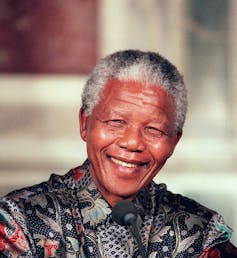
Former ANC leader and South African President Nelson Mandela. Piere Verydy/AFP/GettyImages

Unfortunately, this mirrors the state of the ANC nationally, which is at war with itself. The greed of unscrupulous leaders and party members is in contestation with its historical mission of social justice. Ndletyana lays bare this insidiousness of power.

The distinction of his book lies in the strength and clarity of elucidation. It engages the reader in a topic of profound historical significance. But its resonance is in the problems of the day.

I strongly recommend the book to anybody with an interest in South Africa’s future. After reading it, they’ll no doubt wonder: will the ANC survive the future, or is it destined for inevitable demise?

Read more: 'ANC Spy Bible': a real-life South African thriller, but too much left unsaid The Conversation

Mashupye Herbert Maserumule, Professor of Public Affairs, Tshwane University of Technology
This article is republished from The Conversation under a Creative Commons license.
How the rich reacted to the bubonic plague has eerie similarities to today's pandemic


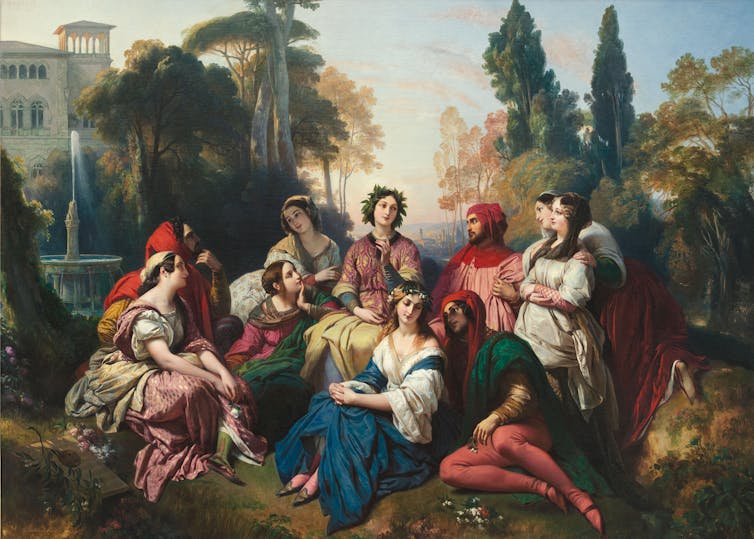
Franz Xavier Winterhalter’s ‘The Decameron’ (1837). Heritage Images via Getty Images

The coronavirus can infect anyone, but recent reporting has shown your socioeconomic status can play a big role, with a combination of job security, access to health care and mobility widening the gap in infection and mortality rates between rich and poor.

The wealthy work remotely and flee to resorts or pastoral second homes, while the urban poor are packed into small apartments and compelled to keep showing up to work.

As a medievalist, I’ve seen a version of this story before.

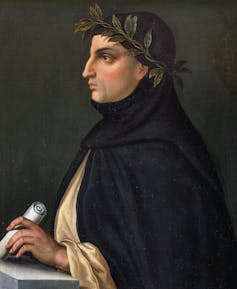
Following the 1348 Black Death in Italy, the Italian writer Giovanni Boccaccio wrote a collection of 100 novellas titled, “The Decameron.” These stories, though fictional, give us a window into medieval life during the Black Death – and how some of the same fissures opened up between the rich and the poor. Cultural historians today see “The Decameron” as an invaluable source of information on everyday life in 14th-century Italy.

Giovanni Boccaccio. Leemage via Getty Images

Boccaccio was born in 1313 as the illegitimate son of a Florentine banker. A product of the middle class, he wrote, in “The Decameron,” stories about merchants and servants. This was unusual for his time, as medieval literature tended to focus on the lives of the nobility.

“The Decameron” begins with a gripping, graphic description of the Black Death, which was so virulent that a person who contracted it would die within four to seven days. Between 1347 and 1351, it killed between 40% and 50% of Europe’s population. Some of Boccaccio’s own family members died.

In this opening section, Boccaccio describes the rich secluding themselves at home, where they enjoy quality wines and provisions, music and other entertainment. The very wealthiest – whom Boccaccio describes as “ruthless” – deserted their neighborhoods altogether, retreating to comfortable estates in the countryside, “as though the plague was meant to harry only those remaining within their city walls.”

Meanwhile, the middle class or poor, forced to stay at home, “caught the plague by the thousand right there in their own neighborhood, day after day” and swiftly passed away. Servants dutifully attended to the sick in wealthy households, often succumbing to the illness themselves. Many, unable to leave Florence and convinced of their imminent death, decided to simply drink and party away their final days in nihilistic revelries, while in rural areas, laborers died “like brute beasts rather than human beings; night and day, with never a doctor to attend them.”

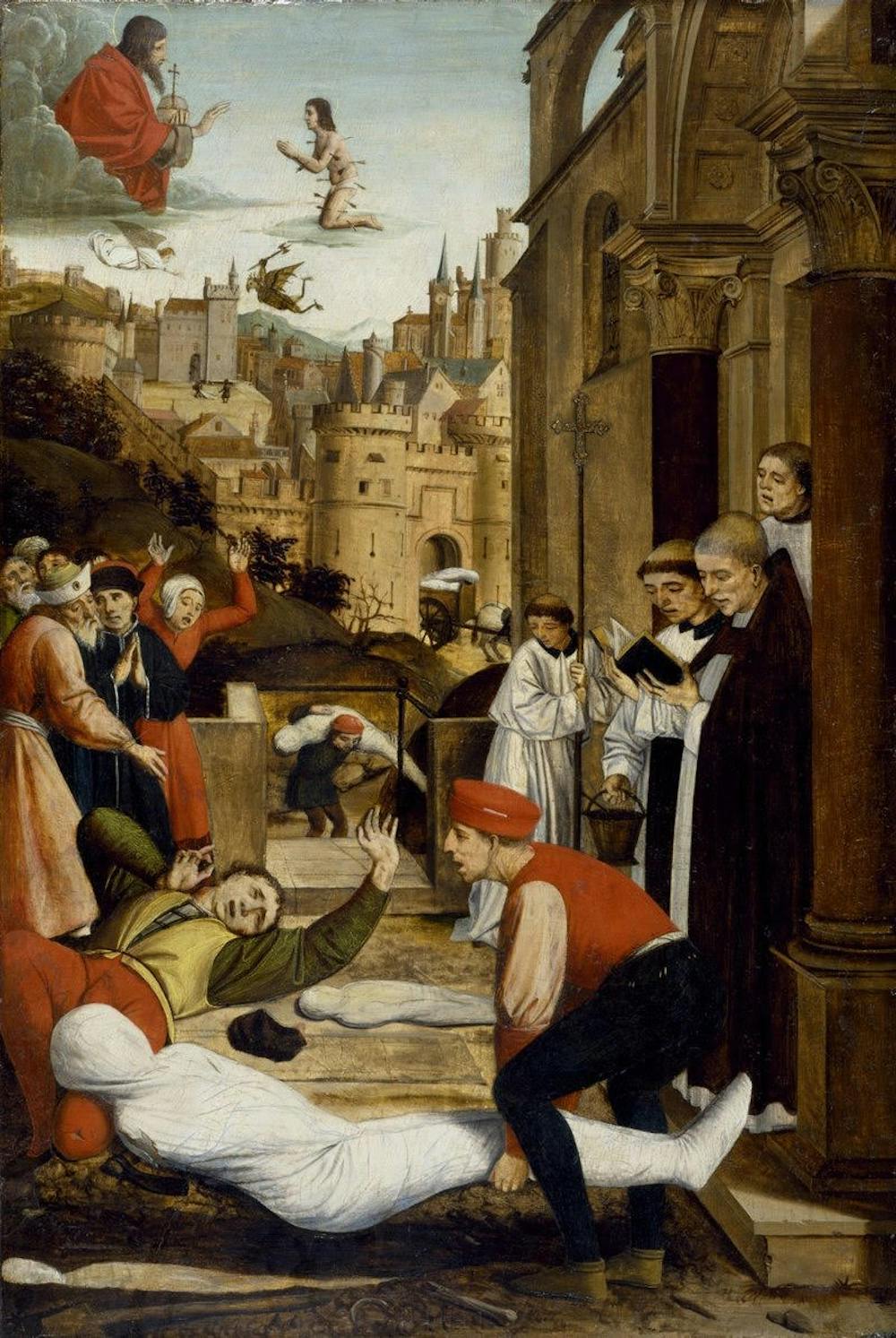
Josse Lieferinxe’s ‘Saint Sebastian Interceding for the Plague Stricken’ (c. 1498). Wikimedia Commons

After the bleak description of the plague, Boccaccio shifts to the 100 stories. They’re narrated by 10 nobles who have fled the pallor of death hanging over Florence to luxuriate in amply stocked country mansions. From there, they tell their tales.

One key issue in “The Decameron” is how wealth and advantage can impair people’s abilities to empathize with the hardships of others. Boccaccio begins the forward with the proverb, “It is inherently human to show pity to those who are afflicted.” Yet in many of the tales he goes on to present characters who are sharply indifferent to the pain of others, blinded by their own drives and ambition.

In one fantasy story, a dead man returns from hell every Friday and ritually slaughters the same woman who had rejected him when he was alive. In another, a widow fends off a leering priest by tricking him into sleeping with her maid. In a third, the narrator praises a character for his undying loyalty to his friend when, in fact, he has profoundly betrayed that friend over many years.

Humans, Boccaccio seems to be saying, can think of themselves as upstanding and moral – but unawares, they may show indifference to others. We see this in the 10 storytellers themselves: They make a pact to live virtuously in their well-appointed retreats. Yet while they pamper themselves, they indulge in some stories that illustrate brutality, betrayal and exploitation.

Boccaccio wanted to challenge his readers, and make them think about their responsibilities to others. “The Decameron” raises the questions: How do the rich relate to the poor during times of widespread suffering? What is the value of a life?

In our own pandemic, with millions unemployed due to a virus that has killed thousands, these issues are strikingly relevant.

This is an updated version of an article originally published on April 16, 2020.
[Deep knowledge, daily. Sign up for The Conversation’s newsletter.]The Conversation
Kathryn McKinley, Professor of English, University of Maryland, Baltimore County
This article is republished from The Conversation under a Creative Commons license.